
Irish Rebellion of 1798
A popular uprising in Ireland against British rule in 1798 led mainly by the United Irishmen, influenced by revolutionary ideas and aided by a French expedition; suppressed with heavy losses and long-term political effects.
Overview
The Irish Rebellion of 1798 was a widespread insurrection against British rule that erupted in the summer of 1798. It was driven by a coalition of reformers and radicals who sought to end British domination and to create a more representative government in Ireland. Often called the United Irishmen Rebellion, it combined republican political aims with local grievances and erupted in several provinces rather than as a single coordinated campaign. The uprising is discussed in many surveys of late 18th‑century Atlantic revolutions; for a general introduction see accounts of the 1798 revolt.
Image gallery
10 Images
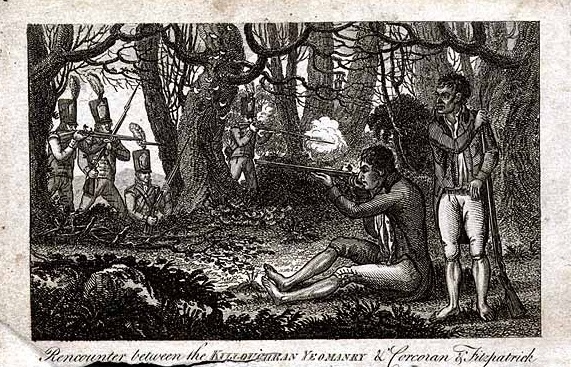


Background and causes
The movement grew from political and social tensions that accumulated over decades: sectarian divisions between Protestants and Catholics, the legacy of penal laws that limited Catholic civil rights, economic hardship in rural areas, and the influence of revolutionary ideas from abroad. The Society of United Irishmen was founded as a reform group in the early 1790s and gradually moved toward the goal of an inclusive Irish republic. Its program drew inspiration from the American and French Revolutions and the wider age of reform and revolution in Europe and North America; contemporary international influences are discussed in studies of revolutions in America and France (see and see).
Organization and leadership
The United Irishmen began as an open political society and later developed a network of secret cells to coordinate insurrection. Leadership came from a mix of Catholics, Presbyterians and Anglicans who prioritized national reform over sectarian identity. Notable figures associated with the movement include Wolfe Tone, who remains a central symbolic leader, and a range of regional commanders and organizers. Efforts were made to secure military backing from France: a small French expeditionary force did land in Ireland in 1798, offering limited support to the insurgents.
Course of the uprising
Outbreaks occurred in several counties with particularly intense fighting in Wexford and parts of Ulster. The rebellion unfolded through a mixture of pitched battles, skirmishes and guerrilla actions, and it was accompanied in some areas by local reprisals and harsh repression. British military and militia forces moved to suppress the rebellion, and encounters such as the fighting at Vinegar Hill and later the surrender of French troops after their limited landings became defining episodes. For summaries of military events and their aftermaths see summaries of key engagements (further reading).
Casualties and aftermath
Estimates of casualties vary and remain the subject of historical caution; contemporary and later accounts give a wide range of figures for deaths on both sides as well as civilian losses. The rebellion was ultimately crushed within months, but its consequences were long lasting. The uprising prompted a tightening of security and legislation in Ireland, and it helped set the stage for constitutional changes during the following years, including a reconfiguration of Irish governance within the United Kingdom. The French intervention was limited and did not secure the insurgents' objectives, but it did reinforce the international dimension of the conflict and British anxieties about revolutionary contagion.
Legacy and significance
The 1798 rebellion occupies an important place in Irish memory and historiography. It is remembered variously as a failed republican revolution, a popular uprising against oppression, and a complex episode shaped by sectarian and regional differences. Commemorations and historical interpretations have stressed different aspects: political ideals, social conditions, military sacrifice, or the harshness of repression. Over the longer term, the rebellion influenced later movements for Irish self‑government and shaped debates about how to reconcile Ireland's religious and political communities. For overviews and interpretive essays, consult introductory resources and specialist studies that place the 1798 events in their British, Irish and European contexts (overview, context).
- Principal organizers: United Irishmen and local commanders.
- Notable incidents: uprisings in Wexford, fighting at Vinegar Hill, limited French landings and subsequent surrenders.
- Aftereffects: repression, legal and constitutional change, long-term nationalist memory.
Questions and answers
Q: What was the Irish rebellion of 1798?
A: The Irish rebellion of 1798 was an uprising of Irish people against British rule in Ireland.
Q: Who led the Irish rebellion of 1798?
A: The Irish rebellion of 1798 was led by Wolfe Tone.
Q: What was the main driving force behind the Irish rebellion of 1798?
A: The main driving force behind the Irish rebellion of 1798 was a secret society called the United Irish.
Q: Was the Irish rebellion of 1798 successful?
A: No, the Irish rebellion of 1798 was not successful.
Q: Why did most Irish Catholics support the Crown during the Irish rebellion of 1798?
A: Most Irish Catholics supported the Crown during the Irish rebellion of 1798 because of the issue of Revolutionary France's involvement and the perception that the Crown was the lesser of two evils.
Q: What is another name for the Irish rebellion of 1798?
A: Another name for the Irish rebellion of 1798 is the United Irishmen Rebellion.
Q: How many casualties were there in the Irish rebellion of 1798?
A: Between 10.000 and 50.000 people died as casualties on the Irish side, between 500 and 2000 on the English side.
Related articles
Author
AlegsaOnline.com Irish Rebellion of 1798 Leandro Alegsa
URL: https://en.alegsaonline.com/art/48181
Sources
- bbc.co.uk : The 1798 Irish Rebellion