
Istanbul pogrom of September 1955
A large-scale anti-Greek riot in Istanbul on 6–7 September 1955 that targeted Greek, Armenian and Jewish communities, caused extensive destruction and accelerated the decline of the city’s Greek population.
The Istanbul pogrom refers to the mass attacks carried out on the evening of 6 September and during 7 September 1955 that primarily targeted the city’s Greek minority but also affected Armenians, Jews and other non-Muslim residents. Over the course of roughly nine hours, organized mobs looted, beat and burned homes, shops, churches and community institutions. The events are widely remembered for the scale of property damage, episodes of physical and sexual violence, and for their long-term impact on Istanbul’s historic minorities.
Image gallery
5 Images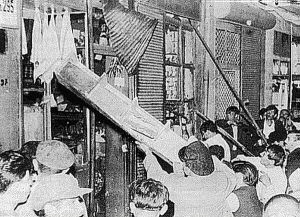


Background and immediate trigger
The attacks occurred against a backdrop of nationalist tensions related to Cyprus and the status of minorities in Turkey during the 1950s. The immediate pretext was a widely publicized, but later disputed, report that the house where Mustafa Kemal Atatürk was born in Thessaloniki had been bombed. The news, disseminated through radio and press, helped inflame public anger. Scholars, contemporary observers and survivors have also pointed to political organization and prior planning that channeled that anger toward the Greek community.
Course of the violence
Groups of assailants, many reportedly transported into the city, moved through working-class neighborhoods and commercial districts over several hours. Attacks included beatings, arson, smashing of windows and systematic looting. While leaders did not widely call for killings, fatalities occurred: contemporary counts record between 13 and 16 ethnic Greeks and at least one Armenian dying as a result of beatings or fires. Thirty-two Greeks were reported severely wounded, and there were numerous accounts of sexual assault and other brutalities.
Scale of material damage
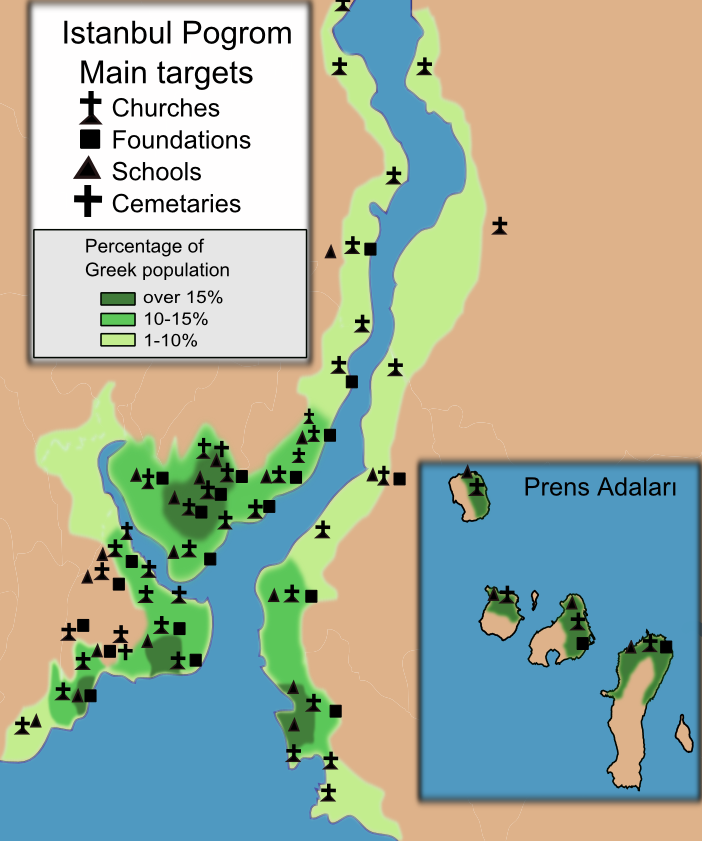
The destruction was extensive and targeted community infrastructure as well as private property. Documented losses include thousands of businesses and large numbers of hotels, pharmacies, schools, factories, churches and homes. Contemporary estimates of the economic cost varied considerably: the Turkish government put the loss at about 24.8 million US dollars, while diplomatic and religious organizations suggested figures ranging from the tens to hundreds of millions of dollars. Such divergences reflect differences in valuation methods and the political contexts of assessments.
Consequences and accountability
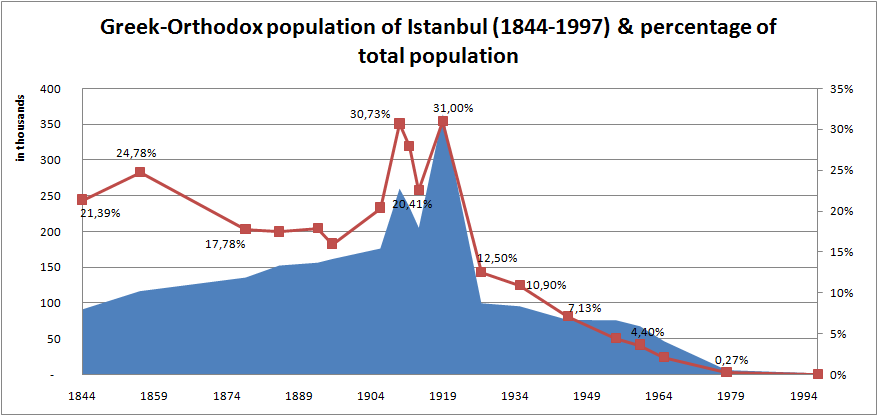
The pogrom accelerated a steep decline in Istanbul’s Greek population: a community counted in the hundreds of thousands in the early 20th century dwindled sharply over the following decades as many emigrated, fearful for safety and livelihoods. Responses at the time included diplomatic protests and expressions of concern from foreign governments and international bodies. Debates continue about the extent to which state organs or security services were involved in organizing or facilitating the violence; historians have documented both spontaneous mob dynamics and evidence suggesting some degree of orchestration. Legal accountability was limited and contested, with relatively few prosecutions and an enduring legacy of grievance among survivors and their descendants.
Notable facts and remembrance
The events are frequently referred to by the Greek community and many historians as the "Istanbul pogrom" and also appear in accounts under other names. The attacks damaged not only property but also the cultural and social fabric of Istanbul’s plural communities, marking a pivotal moment in the transformation of the city’s demographics in the mid-20th century. For further contextual reading on concepts and minority histories see pogrom, the city of Istanbul, impacts on Armenians and Jews, the role of arson and destruction in collective violence, reports of forced circumcision and patterns of emigration.
Questions and answers
Q: What was the Istanbul Pogrom?
A: The Istanbul Pogrom was a pogrom directed primarily against the Istanbul's Greek minority on September 6 and 7, 1955. Jews and Armenians living in the city and their businesses were also targeted.
Q: Who orchestrated the pogrom?
A: According to some circles, it was orchestrated by the Turkish government.
Q: How long did it last?
A: It lasted for nine hours.
Q: How many people died as a result of beatings and arson during or after the pogrom?
A: Between 13 and 16 Greeks (including two Orthodox clerics) and at least one Armenian died during or after the pogrom as a result of beatings and arson.
Q: What other atrocities occurred during this event?
A: Dozens of Greek women were raped, and a number of men were forcibly circumcised by the mob.
Q: What kind of damage occurred to buildings in Istanbul?
A: 4,348 Greek-owned businesses, 110 hotels, 27 pharmacies, 23 schools, 21 factories, 73 churches and over a thousand Greek-owned homes were badly damaged or destroyed.
Q: What is estimated to be the economic cost of this damage?
A: Estimates vary from Turkish government's estimate of 24.8 million US$, British diplomat estimates of 100 million GBP (about 200 million US$), World Council of Churches’ estimate of 150 million USD, and Greek government's estimate of 500 million US$.
Related articles
Author
AlegsaOnline.com Istanbul pogrom of September 1955 Leandro Alegsa
URL: https://en.alegsaonline.com/art/48535
Sources
- washingtonpost.com : In Turkey, a Clash of Nationalism and History
- greekworks.com : Greekworks.com
- ceterisparibus.net : Turkish currency exchange rates 1923-1990
- home.att.net : "From “Denying Human Rights and Ethnic Identity” series of Human Rights Watch"