
Edmund Muskie — U.S. Senator, Governor, and environmental leader
Edmund S. Muskie (1914–1996) was an American Democratic politician from Maine who served as governor, U.S. senator, and U.S. secretary of state and helped shape major environmental laws.
Edmund Sixtus Muskie (March 28, 1914–March 26, 1996) was a prominent American politician and member of the Democratic Party. He is best known for a long public career that included service as governor of Maine, a multi‑term United States senator, and a brief tenure as United States Secretary of State. Muskie combined pragmatic politics with a reputation for integrity and played a significant role in federal policy during the mid‑20th century.
Image gallery
10 Images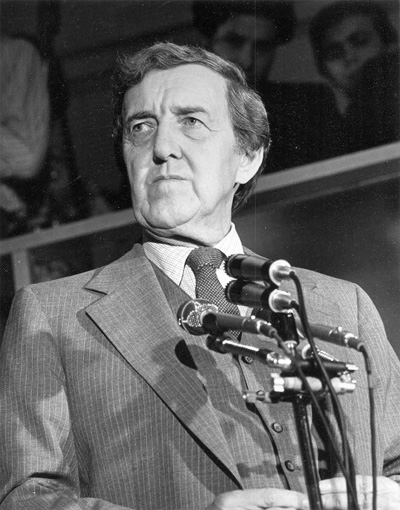



Early life and education
Muskie was born and raised in Rumford, Maine, into a family of Polish immigrants. He attended local schools before completing undergraduate studies and later earning a law degree. His background as the son of working‑class immigrants shaped his political outlook and connection with small‑town New England communities.
Political career and accomplishments
Muskie served as Governor of Maine from 1955 to 1959 and was elected to the U.S. Senate in 1958, where he served until 1980. In the Senate he became especially influential on environmental and public‑works issues. He helped advance major federal measures to control air and water pollution and was widely credited with leadership that contributed to the passage of comprehensive environmental statutes in the late 1960s and early 1970s. He also served on important budget and oversight panels and was regarded as a centrist Democrat who worked across the aisle on many practical reforms.
1972 presidential campaign and later service
Muskie was one of the leading figures of his party in the late 1960s and early 1970s and was a leading candidate for the 1972 Democratic presidential nomination. His campaign, which began with strong prospects, ran into difficulties during the early primary season and he eventually withdrew from the race. In 1980 he accepted President Jimmy Carter's appointment as Secretary of State and served during the final months of the Carter administration.
- Known for legislative work on pollution control and conservation.
- Respected by colleagues for procedural skill and cautious temperament.
- Received national honors after leaving public office, including the Presidential Medal of Freedom.
After leaving federal office Muskie remained active as a public figure and advisor. He died in Washington, D.C. in 1996 from congestive heart failure, at the age of 81. His legacy endures most visibly in modern environmental law and in the example he set as a moderate, policy‑focused leader whose career spanned local, state, and national government.
For further reading on his life and legislative record consult major biographies and collections of congressional history that document his role in mid‑20th century American governance. Additional archival materials and speeches are available through institutional repositories and historical projects dedicated to U.S. political history.
Questions and answers
Q: Who was Edmund Muskie?
A: Edmund Muskie was an American politician who served as Governor of Maine, a United States Senator, and United States Secretary of State.
Q: When was Edmund Muskie born?
A: Edmund Muskie was born on March 28, 1914.
Q: Where was Edmund Muskie born?
A: Edmund Muskie was born in Rumford, Maine to a Polish family.
Q: Which party did Edmund Muskie belong to?
A: Edmund Muskie was a member of the Democratic Party.
Q: What was Edmund Muskie's role as Governor of Maine?
A: Edmund Muskie served as Governor of Maine from 1955 to 1959.
Q: When did Edmund Muskie die?
A: Edmund Muskie died on March 26, 1996.
Q: What was the cause of Edmund Muskie's death?
A: Edmund Muskie died from congestive heart failure.
Related articles
Author
AlegsaOnline.com Edmund Muskie — U.S. Senator, Governor, and environmental leader Leandro Alegsa
URL: https://en.alegsaonline.com/art/118105
Sources
- history.state.gov : "Biographies of the Secretaries of State: Edmund Muskie"
- bioguide.congress.gov : "Muskie, Edmund Sixtus, (1914 - 1996)"
- pbs.org : "Remembering Ed Muskie"
- nbcnews.com : "Yes, there's crying in politics"
- findbiography.org : "EDMUND MUSKIE Biography - Politicians"
- independent.co.uk : "Obituary: Edmund Muskie"
- boston.com : "Jane Muskie, 77, widow of Maine senator"