
Ronald Reagan: American actor, governor, and 40th President of the United States
Ronald Reagan (1911–2004) was an American actor and politician who served as California governor and as the 40th U.S. president (1981–1989). His tenure reshaped economic policy and Cold War diplomacy and remains widely debated.
Ronald Wilson Reagan (February 6, 1911 – June 5, 2004) was an American actor and statesman who served as the 40th president of the United States from 1981 to 1989. His public career spanned Hollywood, labor leadership and elective office. Reagan's presidency is associated with a shift toward conservative domestic policy, a robust anti-communist foreign policy, and a style of communication that shaped modern political campaigning. Historians and commentators continue to debate the long-term effects of his economic agenda and diplomatic strategies.
Image gallery
10 Images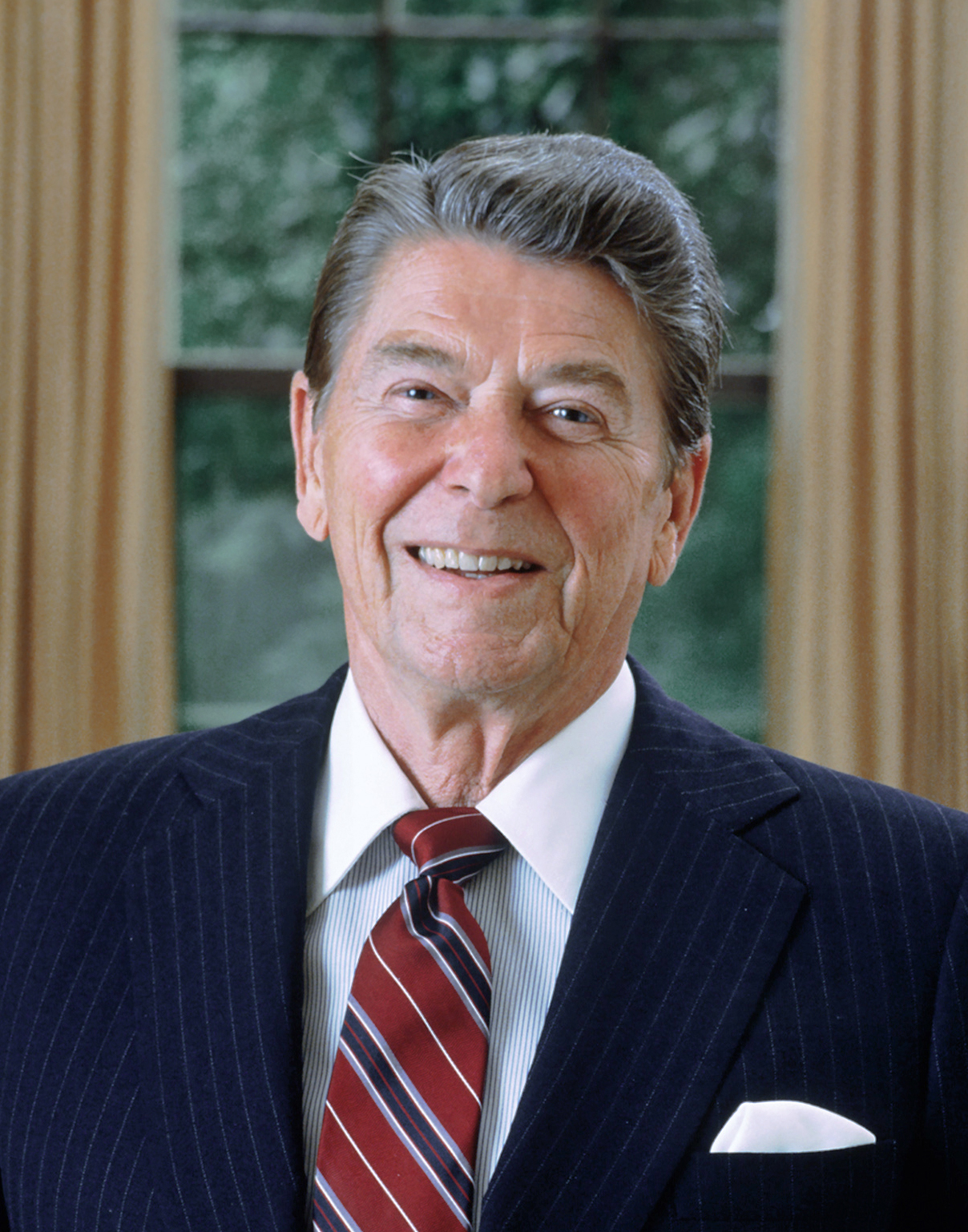


Early life, acting career and union leadership
Born in Tampico, Illinois, Reagan worked in radio and film during the 1930s and 1940s, becoming a familiar screen presence and a union figure. He appeared in dozens of motion pictures and performed on radio and early television, building a public persona that later transferred to politics. He served two terms as president of the Screen Actors Guild, where he negotiated studio disputes and gained experience in organizational leadership. This combination of entertainment experience and labor politics informed his later abilities as a public speaker and campaigner.
Political rise and governorship
Reagan began his political life as a Democrat but shifted to the Republican Party in the early 1960s. He first sought the presidency in the late 1960s and 1970s, gaining national prominence as a conservative spokesman. He was elected governor of California in 1966 and served two terms, where his administration emphasized fiscal restraint, law-and-order policies, and a business-friendly approach to regulation. As governor he cultivated a national network of supporters that helped him mount a successful presidential campaign in 1980.
The presidency: domestic policy
In office from 1981 to 1989, Reagan implemented supply-side economic policies commonly called "Reaganomics." These policies centered on broad tax cuts, deregulation of industry, and reductions in the growth of some domestic programs while increasing defense spending. Supporters credit this agenda with stimulating economic growth and reducing inflation in the 1980s; critics point to rising federal deficits and greater income inequality as important consequences. His administration also prioritized a high-profile campaign against illegal drugs and pursued measures intended to roll back federal oversight in a range of areas.
Foreign policy, the Cold War and controversies
Reagan's foreign policy emphasized a strong U.S. military posture and a hard line against what he described as the evils of Soviet communism. Early in his presidency he survived an assassination attempt and soon after ordered U.S. military interventions and actions intended to blunt perceived Soviet influence, including a U.S. operation in Grenada and air strikes in Libya. He launched the Strategic Defense Initiative as a research program for missile defense. During his second term, Reagan engaged directly with Soviet leader Mikhail Gorbachev; their negotiations produced arms-control agreements that reduced certain classes of nuclear weapons and helped ease Cold War tensions. His administration was also marked by the Iran–Contra affair, a covert policy scandal that produced intense domestic political controversy and multiple investigations.
Legacy and assessment
Reagan left office in January 1989 and remained an influential figure in conservative politics for decades. He earned nicknames such as the "Great Communicator" for his rhetorical style and the "Teflon President" because scandals seemed to have limited effect on his personal popularity. Evaluations of his record vary: admirers cite economic renewal and a decisive role in ending the Cold War, while critics emphasize budget deficits, social policy outcomes, and controversial covert operations. Reagan ranks highly in many public approval measures and presidential opinion polls, and his presidency is often treated as a turning point in late-20th-century American politics.
Personal life, health and death
Reagan was married twice, first to actress Jane Wyman and later to Nancy Davis; his marriage to Nancy lasted until his death. He was the first U.S. president to have been divorced. In later life he announced a diagnosis of Alzheimer’s disease and retreated from public life. Reagan died on June 5, 2004 in his Bel Air home at the age of 93, after complications from pneumonia following a long illness.
Further reading and references
- Biographical overview and timeline
- Acting career and filmography
- Early political activities
- Presidency of the United States (1981–1989)
- Governor of California (1967–1975)
- Major film roles and reviews
- Television appearances and broadcasts
- Radio work and early media
- Early life in Tampico, Illinois
- Hollywood career and context
- Selected film list
- Marriage to Jane Wyman
- Divorce and personal history
- Public speaking and rhetorical style
- Public controversies and responses
- Historical rankings and public opinion
- Political philosophy and optimism
- Personal anecdotes and humor
- Inauguration and early administration
- Supply-side economics explained
- Reaganomics: tax policy and debate
- Economic indicators in the 1980s
- War on Drugs policies
- 1984 re-election and campaign
- Cold War strategy and diplomacy
- Iran–Contra affair investigations
- Relations with Mikhail Gorbachev
- Arms control agreements and impacts
- U.S.–Soviet relations
- Party affiliation and ideological shift
- Republican Party leadership and influence
- Reports on Reagan's death
- Bel Air home and later residence
- Cause of death and medical details
- Alzheimer’s disease diagnosis and timeline
Questions and answers
Q: Who was Ronald Reagan?
A: Ronald Reagan was an American actor and politician who served as the 40th President of the United States from 1981 to 1989. He was also the 33rd Governor of California from 1967 to 1975.
Q: How did Reagan become president?
A: Before winning his presidential election in 1980, Reagan ran for president two times in 1968 and 1976. He was re-elected in 1984 at the age of 73, making him the oldest person elected President of the United States at that time.
Q: What is Reagan known for?
A: Reagan is known as the "Great Communicator" because he was a good public speaker. He is also known as the "Teflon president" because any criticism or scandals against him never stuck or affected his popularity.
Q: What economic policies did Reagan create?
A: As president, Reagan helped create a new political and economic idea called supply-side economics which lowered tax rates and created an economic growth while lowering inflation.
Q: What other accomplishments did he have during his presidency?
A: During his presidency, Reagan ordered an invasion of Grenada to end a Communist coup, declared a War on Drugs, worked on ending the Cold War with Soviet General Secretary Mikhail Gorbachev leading to signing of INF Treaty which lowered number of nuclear weapons in US & Soviet Union, and faced Iran–Contra affair scandal in 1987.
Q: When did Ronald Reagan die?
A: Ronald Reagan died on June 5th 2004 at his Bel Air home from pneumonia after a ten-year battle with Alzheimer's disease at 93 years old.
Author
AlegsaOnline.com Ronald Reagan: American actor, governor, and 40th President of the United States Leandro Alegsa
URL: https://en.alegsaonline.com/art/130016