
Inauguration of Jimmy Carter (January 20, 1977)
The swearing-in ceremony on January 20, 1977, that began Jimmy Carter's presidency and Walter Mondale's vice presidency, marking the transition from Gerald Ford and notable changes in inaugural arrangements.
Overview
The inauguration of Jimmy Carter as the 39th President of the United States took place on January 20, 1977. The ceremony marked the formal start of a four-year administration for President Jimmy Carter and Vice President Walter Mondale and completed the transfer of power from outgoing President Gerald Ford. Contemporary reports and official records describe the event as both a constitutional formality and a public transition of leadership; see the ceremony summary here and the presidential biography here.
Image gallery
3 Images
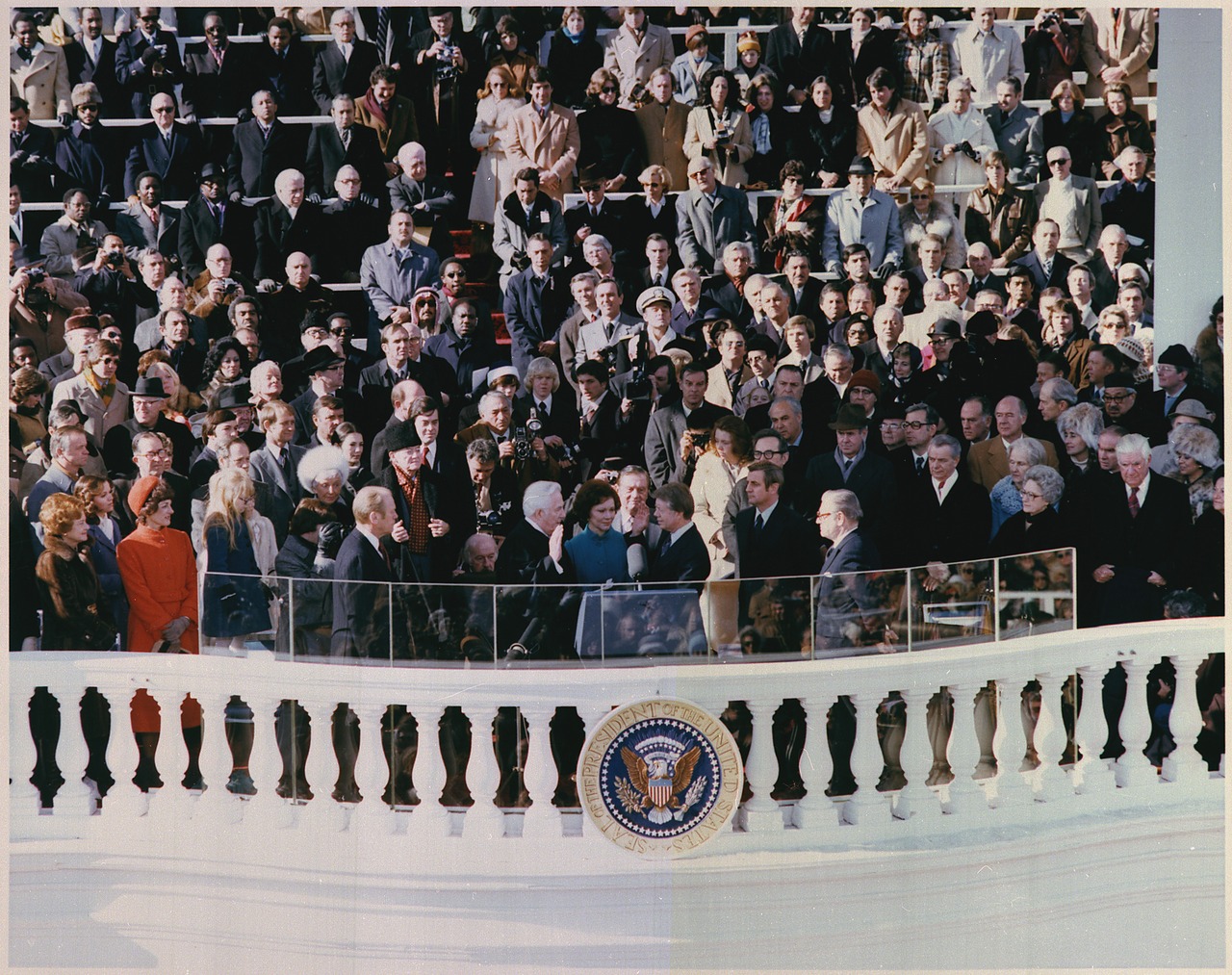

Ceremonial details and participants
The presidential oath was administered by Chief Justice Warren E. Burger, in keeping with longstanding constitutional practice, and the vice presidential oath was given by House Speaker Tip O'Neill. The roles of these officials and other dignitaries are documented in contemporary accounts and procedural summaries about Carter and about Mondale. The outgoing president, Gerald Ford, attended and participated in the customary transfer of responsibility; see the historical note on the outgoing administration here and on President Ford here.
Location, staging and public program
The public swearing-in was held at the East side of the United States Capitol, on the East Portico. Notably, Carter's inauguration was the last to be staged on that East section of the Capitol for a president's public oath and address; subsequent inaugurations were moved to the West Front to better accommodate larger crowds and modern broadcast needs. Official ceremonial arrangements and changes in location are discussed in ceremonial guides here and in accounts of inaugural planning here.
The inaugural address and themes
In his inaugural address, the new president emphasized the tone and values he intended to bring to the office: a focus on honesty in government, a commitment to human rights and a call for civic responsibility. While inaugurals are customarily brief and thematic rather than programmatic, commentators highlighted Carter's emphasis on public service and moral leadership. For background on the address and commentary from the time, see contemporary analyses here and archival summaries here.
Legacy and notable facts
- Transition: The ceremony completed the peaceful transfer of executive power following the 1976 election.
- Platform: Carter's inaugural tone set expectations for a government focused on transparency and human rights.
- Location change: Carter's was the last East Portico inauguration; future inaugurations made the West Front the more common site to accommodate media and audiences.
- Traditions: As with other inaugurations, the day included the official oath, a public address, a parade and evening inaugural events that celebrated the incoming administration.
Together these elements place the January 20, 1977, inauguration in the continuing history of American presidential transitions: a constitutionally required oath, public ceremonies to mark the change in leadership, and practical adjustments to how inaugurations are staged in response to technology and crowd needs.
Related articles
Author
AlegsaOnline.com Inauguration of Jimmy Carter (January 20, 1977) Leandro Alegsa
URL: https://en.alegsaonline.com/art/46981
Sources
- senate.gov : "U.S. Senate: 404 Error Page"