
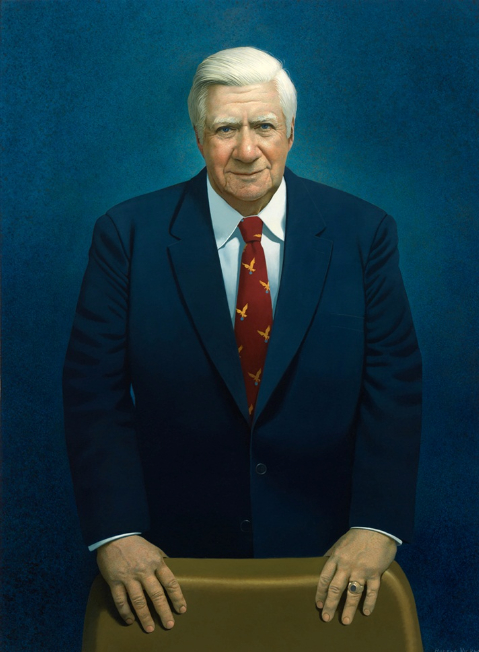
Tip O'Neill (Thomas P. O'Neill Jr.) — U.S. House Speaker and Democratic leader
Thomas 'Tip' O'Neill Jr. (1912–1994) was a prominent liberal Democratic congressman from Massachusetts who served as Speaker of the U.S. House from 1977 to 1987 and remained an influential public figure after retirement.
Overview
Thomas Phillip "Tip" O'Neill Jr. (December 9, 1912 – January 5, 1994) was an American politician best known for his decade as Speaker of the United States House of Representatives. A leading liberal voice in Congress and a loyal member of the Democratic Party, he represented districts in Massachusetts for more than three decades and played a central role in shaping domestic legislation during the 1970s and 1980s. Biographical and reference materials provide a fuller account of his career and public life at authoritative sources (biography).
Image gallery
9 Images


Early life and political rise
O'Neill's roots in neighborhood politics and labor-oriented communities informed his approach to public service. He rose through local and state offices before winning election to the U.S. House of Representatives, where he became known for attentive constituent service and an emphasis on social programs. His steady climb in House leadership reflected both legislative skill and the ability to build coalitions across party factions. Several modern summaries of his early career and electoral record are available for context (House history).
Congressional leadership and speakership
O'Neill served as Speaker from 1977 until his retirement in 1987, a period that encompassed five complete consecutive Congresses. That tenure makes him unique among modern Speakers and the second-longest-serving Speaker in U.S. history after Sam Rayburn. As Speaker he managed the House during contentious debates over budget, social policy, and the relationship between Congress and the executive branch. His leadership combined institutional knowledge with a willingness to defend traditional New Deal and Great Society priorities.
Political positions and style
Known for plainspoken rhetoric, political wit, and sometimes blunt interpersonal style, O'Neill articulated a liberal vision that prioritized social welfare, labor issues, and urban concerns. He was also noted for his pragmatic approach to the day-to-day business of the House and for maintaining personal relationships across ideological lines; his public rapport with presidents and opponents became a hallmark of his institutional stewardship. Commentaries and retrospectives discuss both his policy stances and his approach to governing (Speaker role).
Legacy and later life
After leaving Congress in 1987, O'Neill remained active in public life through commentary, occasional teaching, and writing; he continued to be a touchstone for discussions about congressional authority and the role of liberalism in late 20th-century American politics. He died of cardiac arrest on January 5, 1994. His long service and outspoken advocacy left a recognizable imprint on House procedures and Democratic politics, and numerous analyses and memorials assess his influence (retrospectives, party history).
Notable distinctions
Key facts often highlighted about O'Neill include his decades-long tenure in the House, his decade as Speaker spanning five consecutive Congresses, and his reputation as a champion of constituent service and liberal policy goals. For those researching congressional leadership or the modern evolution of the House, O'Neill's career is frequently cited as a case study in the exercise of legislative power and institutional stewardship (regional politics, comparative leadership, legislative archives).
Author
AlegsaOnline.com Tip O'Neill (Thomas P. O'Neill Jr.) — U.S. House Speaker and Democratic leader Leandro Alegsa
URL: https://en.alegsaonline.com/art/131977