
Jimmy Carter: Governor, U.S. President, and Humanitarian Leader
Comprehensive summary of Jimmy Carter’s life, political career, presidency (1977–1981), post-presidential humanitarian work and legacy, with key milestones and resources.
Overview
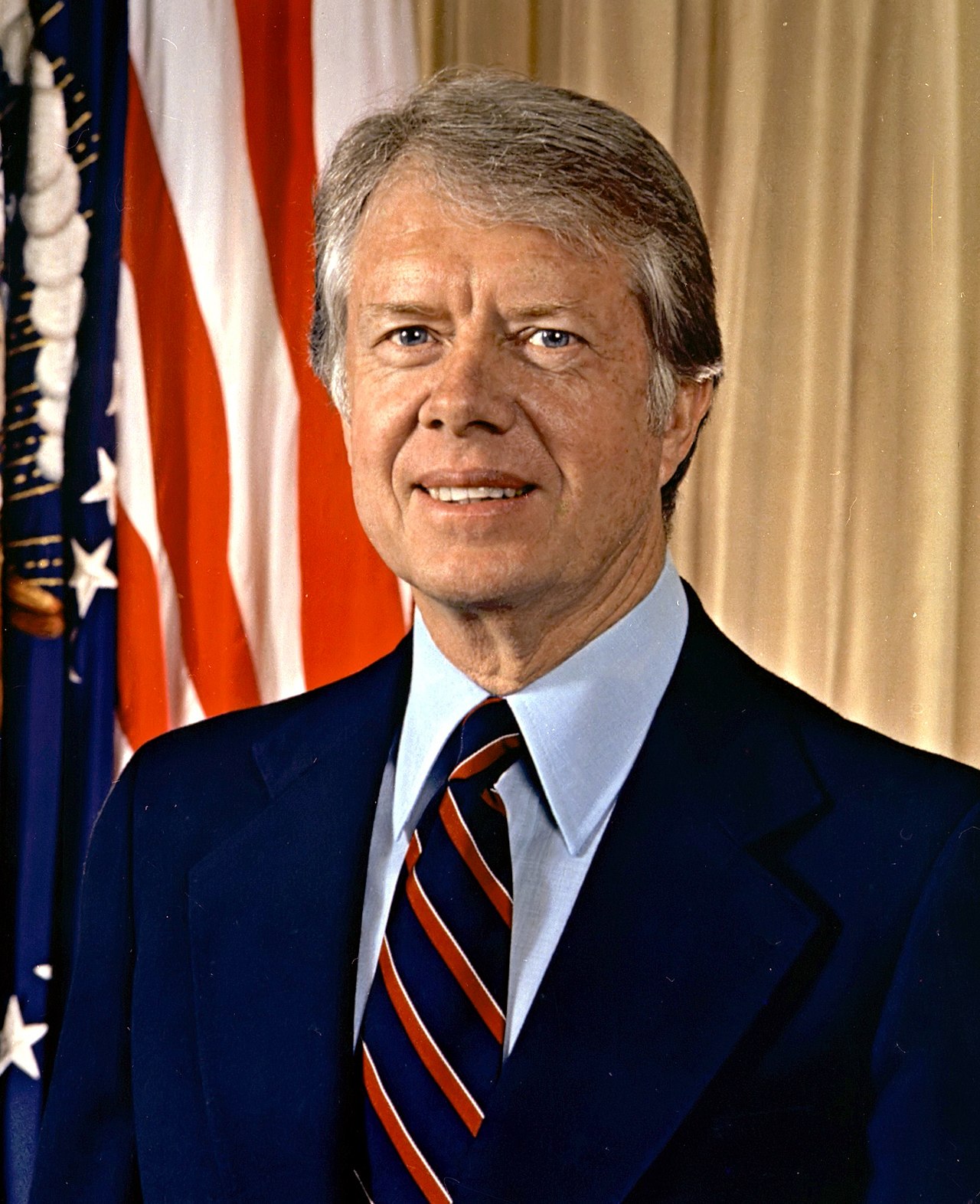
James Earl "Jimmy" Carter Jr., born October 1, 1924, in Plains, Georgia, is an American politician, public servant and humanitarian best known for serving as the 39th president of the United States from 1977 to 1981. A member of the Democratic Party, Carter moved from state-level office into the White House on a platform that emphasized government efficiency, human rights in foreign policy, and energy conservation. His presidency coincided with significant foreign-policy achievements and complex domestic economic challenges, and his long post-presidential career in diplomacy and humanitarian causes has reshaped how Americans view former presidents.
Image gallery
10 Images




Early life and political rise
Carter grew up in a small town in southwestern Georgia where his family operated a peanut farm. He graduated from the United States Naval Academy and served as a naval officer before returning to Georgia to manage the family business. Carter entered politics in the 1960s, opposing racial segregation and aligning himself with reform-minded Democrats. He served in the Georgia State Senate and later was elected governor of Georgia, where he promoted government reform, educational improvement and racial integration in state institutions. These positions raised his profile nationally and set the stage for a presidential bid.
The presidency (1977–1981)
As president, Carter sought to address energy shortages and economic stagnation while projecting a moral foreign policy. His administration established the Department of Energy and the Department of Education, advanced a national energy program emphasizing conservation and alternative sources, and attempted to control costs through regulatory measures. In foreign affairs he brokered the Camp David Accords between Egypt and Israel, negotiated treaties to return the Panama Canal Zone to Panama, and pursued arms limitation talks with the Soviet Union. At the same time, the U.S. economy faced high inflation, rising unemployment and slow growth—a mix often called "stagflation." The later years of his term were marked by international crises, including a major energy disruption, the Three Mile Island nuclear accident, the Soviet invasion of Afghanistan, and the prolonged Iran hostage crisis, which affected public confidence and electoral politics.
Post-presidential work and humanitarian efforts
After leaving office, Carter established the Carter Center with a focus on advancing human rights, monitoring elections, mediating international disputes and combating neglected diseases. Over decades he observed elections around the world, engaged in diplomacy for peace and worked on public-health campaigns aimed at eradicating illnesses such as Guinea worm disease. Carter also became closely associated with Habitat for Humanity and continued writing on public affairs, politics and personal reflections. In recognition of his peacemaking and human-rights work, he received the Nobel Peace Prize, and his post-presidential career is widely cited as a model for the positive influence a former head of state can have.
Legacy, distinctions and notable facts
Evaluations of Carter's presidency by historians and political scientists tend to range from mixed to positive on specific achievements, while his standing has generally improved because of his humanitarian contributions after leaving office. He influenced U.S. energy policy, emphasized human rights in diplomacy, and negotiated important Middle East agreements. Carter is also notable for his longevity and the length of his retirement; in recent decades he has held several longevity records for U.S. presidents. He authored numerous books, ranging from memoirs to reflections on faith and public life, and has remained an active voice on civic issues for many years.
Further reading and resources
- Source 1 — politics and philanthropy
- Source 2 — presidential overview
- Source 3 — Democratic Party affiliation
- Source 4 — Georgia State Senate service
- Source 5 — tenure as governor of Georgia
- Source 6 — Plains, Georgia background
- Source 7 — United States Naval Academy
- Source 8 — academic credentials
- Source 9 — naval service
- Source 10 — family farming and peanuts
- Source 11 — stance on segregation and civil rights
- Source 12 — 1970 gubernatorial election
- Source 13 — regional reputation
- Source 14 — 1976 Democratic nomination
- Source 15 — 1976 presidential election
- Source 16 — Republican opponents
- Source 17 — Gerald Ford and the 1976 contest
- Source 18 — Vietnam War context
- Source 19 — presidential pardon of draft evaders
- Source 20 — Department of Energy
- Source 21 — Department of Education
- Source 22 — national energy policy
- Source 23 — conservation initiatives
- Source 24 — Camp David Accords
- Source 25 — SALT II negotiations
- Source 26 — Panama Canal treaties
- Source 27 — transfer of the Canal Zone
- Source 28 — economic challenges: stagflation
- Source 29 — inflationary pressures
- Source 30 — Iran hostage crisis
- Source 31 — 1980 primary challenge
- Source 32 — 1980 Democratic Convention
- Source 33 — 1980 general election
- Source 34 — Ronald Reagan
- Source 35 — election margin and context
- Source 36 — scholarly assessments
- Source 37 — the Carter Center
- Source 38 — human rights work
- Source 39 — disease eradication efforts
- Source 40 — Habitat for Humanity involvement
- Source 41 — published books and memoirs
- Source 42 — longevity and historical milestones
Questions and answers
Q: Who is James Earl Carter Jr.?
A: James Earl Carter Jr. is an American politician and philanthropist who served as the 39th President of the United States from 1977 to 1981. He is a member of the Democratic Party.
Q: What was his background before becoming president?
A: Before becoming president, Carter was a Georgia state senator from 1963 to 1967 and the 76th governor of Georgia from 1971 to 1975. He also graduated from the United States Naval Academy in 1946 with a Bachelor of Science degree and joined the United States Navy. After leaving the military, he returned home to Georgia to take charge of his family's peanut-growing business.
Q: What were some accomplishments during his presidency?
A: During his term as president, he created the Department of Energy and the Department of Education, developed a national energy policy that included conservation, price control, and new technology, helped create Camp David Accords, Panama Canal Treaties, Strategic Arms Limitation Talks (SALT II), and return of Panama Canal Zone to Panama.
Q: How did people view him as a presidential candidate initially?
A: Initially people did not see him as a serious presidential candidate since not many people knew him outside of Georgia.
Q: What events occurred during his presidency?
A: During his presidency there was stagflation (high inflation combined with high unemployment), slow economic growth, Iran hostage crisis 1979 energy crisis Three Mile Island nuclear accident Soviet invasion of Afghanistan.
Q: How has he been viewed by historians and political scientists?
A: Polls by historians and political scientists usually view Carter as an average president; however he has become more popular for his humanitarian work after leaving office.
Q: What are some things that Carter has done since leaving office?
A: Since leaving office in 1982 ,Carter created The Carter Center which focuses on human rights across the world; he has traveled to support peace talks look over elections support ending deadly diseases; written over 30 books including memoirs and poetry; won Nobel Peace Prize 2002; important person in Habitat for Humanity charity .
Related articles
Author
AlegsaOnline.com Jimmy Carter: Governor, U.S. President, and Humanitarian Leader Leandro Alegsa
URL: https://en.alegsaonline.com/art/121987
Sources
- presidentsusa.net : "Jimmy Carter Birthplace - Plains, Georgia"
- history.com : "Jimmy Carter is born"
- usna.edu : "James Earl "Jimmy" Carter"
- wargs.com : "Ancestry of Sen. John Kerry"
- jimmycarter.info : "The Carter Family"
- wsj.com : "Jimmy Carter's Early Life on a Georgia Farm"
- wspa.com : "Museum built in former Pres. Jimmy Carter's old high school has grand opening in Georgia"
- farmprogress.com : "Future Farmers of America continues to build ag leaders"
- popularwoodworking.com : "A Visit with Woodworker/President Jimmy Carter"
- books.google.com : Jimmy Carter, American Moralist
- gtalumni.org : "Jimmy Carter"
- millercenter.org : "JIMMY CARTER: LIFE BEFORE THE PRESIDENCY"
- phillymag.com : "Why This Princeton Football Team Won't Be Suiting Up Next Season"