
Inauguration of John F. Kennedy, January 20, 1961
Overview of John F. Kennedy's 1961 inauguration: ceremony, location, address, notable participants, cultural context and historical significance.
The inauguration of John F. Kennedy as the 35th President of the United States took place on Friday, January 20, 1961. The public swearing-in and ceremonies were held on the East Front of the United States Capitol in Washington, D.C., a traditional site for presidential inaugurations. This event marked the formal start of the administrations of President John F. Kennedy and Vice President Lyndon B. Johnson.
Image gallery
7 Images


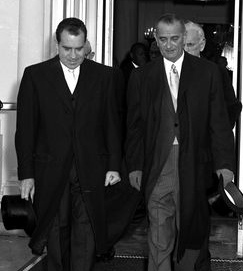
Ceremony and setting
The inauguration combined constitutional formality with planned public spectacle. The oath of office was administered on the Capitol steps by the Chief Justice of the United States. The program included musical performances, an inaugural parade, and other official elements typical of American presidential inaugurations. The sequence of events—oath, inaugural address, and parade—followed familiar ceremonial patterns while also reflecting the Cold War era atmosphere of 1961.
Inaugural address and themes
Kennedy's address is widely remembered for its rhetorical energy and concise formulation of public duty, including the famous exhortation to "ask not what your country can do for you—ask what you can do for your country." The speech framed his presidency around themes of civic responsibility, national renewal, and international leadership at a time of economic prosperity and geopolitical tension. It articulated priorities for domestic progress and a robust response to global challenges.
Participants and cultural notes
- Vice President: Lyndon B. Johnson, sworn in as Vice President.
- Chief Justice: the oath was given by the sitting Chief Justice.
- Cultural contributions: the poet Robert Frost participated in the program, providing a literary moment that highlighted the ceremony's blend of politics and culture.
The inauguration reached a large television audience, helping shape the image of the new administration for viewers across the nation and beyond.
Historical significance and legacy
Kennedy's inauguration is often cited as a turning point in modern American politics because of its emphasis on youthful leadership, activist rhetoric, and media presentation. The event consolidated a transition of power and set the tone for the early 1960s, influencing public expectations about presidential style and priorities. For further reading on the inauguration itself and related topics see inauguration overview, the United States Capitol, and the city context of Washington, D.C.
Additional resources on the broader occasion include descriptions of the 44th inaugural ceremonies, biographical material about John F. Kennedy and Lyndon B. Johnson, and commentaries on the role of the inaugural address in the vice presidential transition and campaign themes articulated during the speech (campaign themes).
While rooted in its specific historical moment, the 1961 inauguration remains a frequently discussed example of how ceremony, oratory, and media can combine to influence political memory.
Related articles
Author
AlegsaOnline.com Inauguration of John F. Kennedy, January 20, 1961 Leandro Alegsa
URL: https://en.alegsaonline.com/art/46983