
Inauguration of Gerald Ford (August 9, 1974)
Account of Gerald Ford's inauguration after Richard Nixon's resignation, the oath in the White House East Room, constitutional context, and the event's significance for presidential succession.

The inauguration of Gerald Ford as the 38th president of the United States took place on Friday, August 9, 1974. It occurred inside the East Room of the White House in Washington, D.C., following the resignation of President Richard Nixon. This oath marked the start of Ford's single partial term in the presidency (approximately 2 years and 164 days) and was a defining moment in 20th‑century American constitutional practice.
Image gallery
4 Images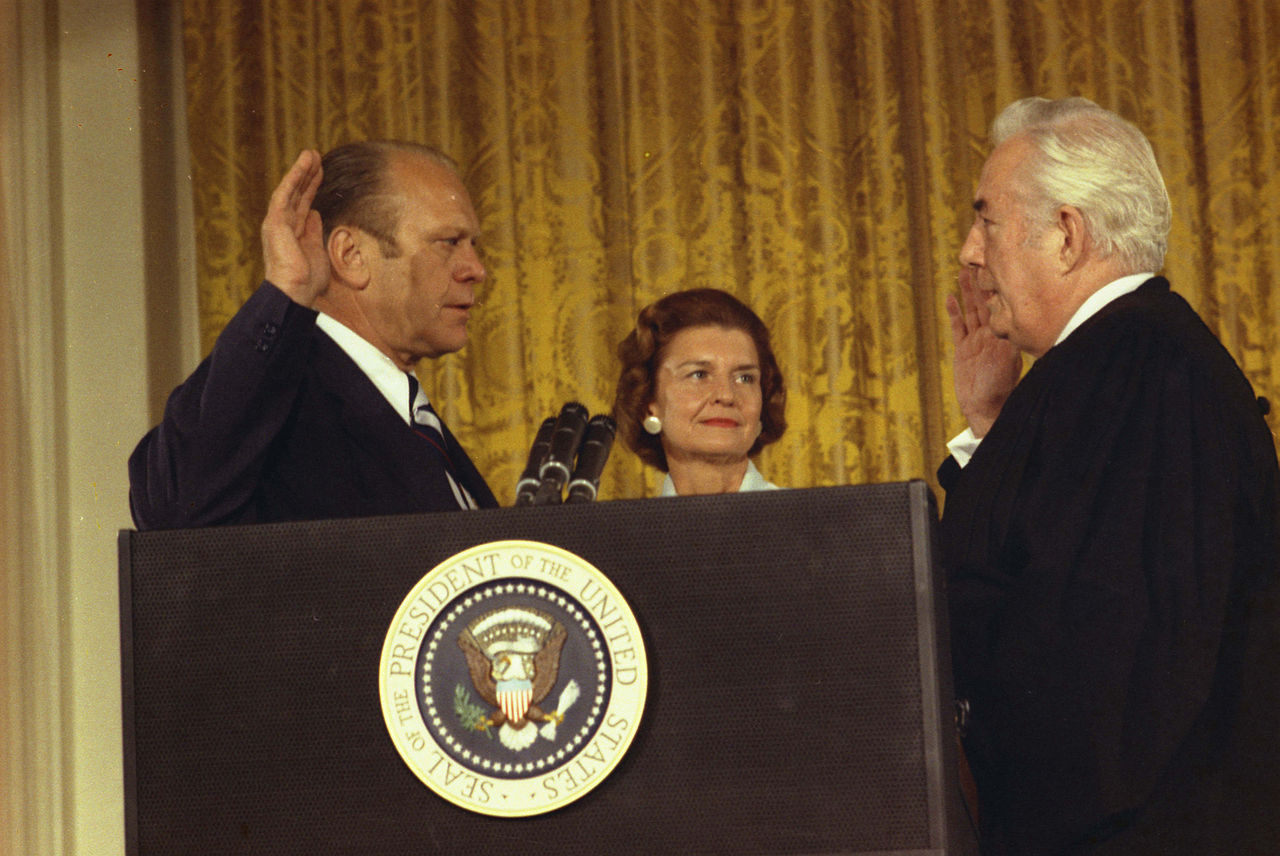



Background
Gerald Ford became vice president in December 1973 after Spiro Agnew resigned. He was the first vice president appointed under the procedures of the 25th Amendment, and when Nixon stepped down amid the Watergate controversy, Ford succeeded to the presidency without an election. The transition tested constitutional mechanisms for continuity of government and public trust following a constitutional crisis.
The Ceremony
The oath of office was administered in a brief, private ceremony by Chief Justice Warren Burger. The event was somewhat atypical compared with traditional January inaugurations: it was held indoors, on short notice, and performed to ensure an orderly and immediate transfer of power. The inauguration is often described as restrained and functional, reflecting the urgency of restoring stable leadership.
Significance and Context
Ford's accession is notable for several reasons. He was the only person to serve as both vice president and president without being elected to either office, and his rise highlighted the practical application of constitutional succession. Within weeks, decisions made by the new president—most prominently a pardon of his predecessor—shaped public debate about accountability and reconciliation. The inauguration itself emphasized legal continuity and the peaceful transfer of executive power.
Key Facts
- The oath was given on August 9, 1974.
- Location: East Room, White House (White House).
- Administered by Chief Justice Warren Burger (see also Chief Justice).
- The ceremony followed the unexpected departure of President Nixon.
- Ford had been confirmed as vice president under the 25th Amendment; his accession is an example of vice presidential succession (vice president to replace an incumbent).
For readers seeking more detailed accounts or primary documents related to the event, contemporary reports and official records are available through government archives and historical collections (inauguration records, Gerald Ford materials). The inauguration remains a compact but important episode illustrating how constitutional provisions and institutional norms operate in moments of executive transition.
Related articles
Author
AlegsaOnline.com Inauguration of Gerald Ford (August 9, 1974) Leandro Alegsa
URL: https://en.alegsaonline.com/art/46980
Sources
- memory.loc.gov : "Presidential Oaths of Office"
- inaugural.senate.gov : "The swearing in of Gerald R. Ford, August 09, 1974"