
Impala (Aepyceros melampus): Overview, Behavior, and Conservation
Medium-sized African antelope (Aepyceros melampus) known for agility, mixed feeding and adaptable social systems. Widespread in savannas and woodlands; generally common but regionally affected by habitat change.
Overview
The impala (Aepyceros melampus) is a medium-sized African ungulate commonly called an antelope. The name "impala" comes from the Zulu language. Taxonomically it belongs to kingdom Animalia, phylum Chordata and class Mammalia; its family is Bovidae. Impalas are widely distributed across suitable habitats in sub-Saharan Africa where water and mixed grasses or browse are available.
Image gallery
10 Images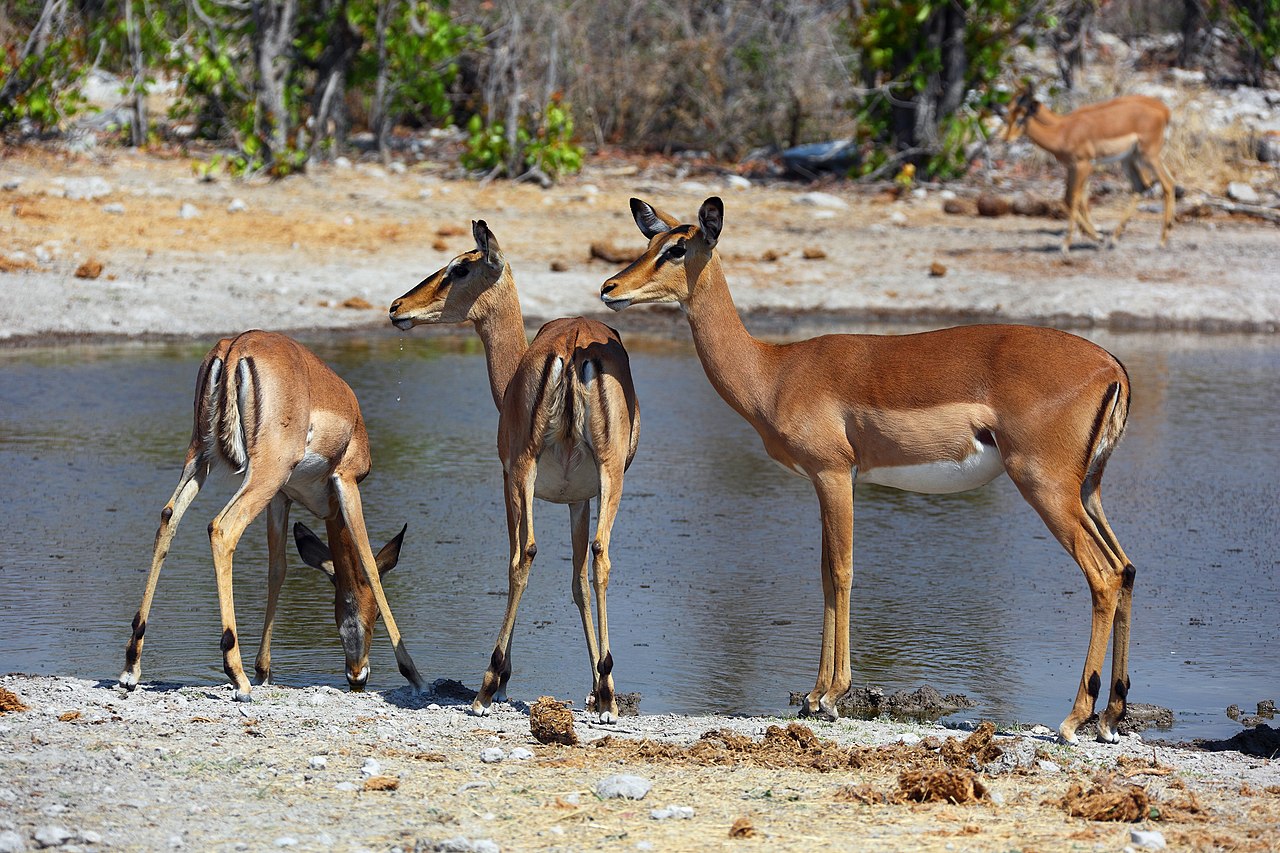


Physical characteristics
Impalas have a slender, graceful build with a reddish-brown coat, lighter underparts and characteristic facial and rump markings. Adult males typically carry lyre-shaped, ringed horns; females are hornless. Their limb proportions and musculature give them notable agility: they can make rapid bursts of speed and high, arcing leaps and often display springing or "pronking" behavior when alarmed.
Distribution, subspecies and habitat
Across their range impalas occupy open woodlands, floodplains and savanna mosaics. There is geographic variation and a small number of recognized subspecies, including forms adapted to drier or more wooded localities; some populations are locally restricted and require habitat connectivity to remain viable.
Feeding and ecology
Impalas are flexible feeders, switching seasonally between grazing on grasses and browsing shrubs and herbs. This mixed feeding allows them to exploit seasonal changes in forage quality and contributes to their resilience in varied environments. As a common mid-sized ungulate, impalas are a keystone prey species for large carnivores and influence plant communities through selective grazing and browsing.
Social behavior and reproduction
Social organization is flexible: outside the breeding season large mixed herds may form, while during the rut territorial males defend harems or small groups and bachelor herds persist. Females typically hide newborn calves for the first days before joining them to the herd; young grow quickly and become capable of keeping pace with adults within weeks. Reproductive timing can be seasonal and often coincides with periods of improved food availability.
Predation and adaptations
Predators include lions, leopards, cheetahs, hyenas and African wild dogs. Impalas use alertness, rapid flight, leaping and tight group formations to reduce individual risk. As ruminants they possess a multi-chambered stomach that supports efficient digestion of fibrous plant material.
Conservation and human interactions
Impalas are common within many protected areas and game reserves and are widely used in sustainable wildlife management, including regulated hunting and ecotourism. Although the species is generally abundant over much of its range, local threats—such as habitat loss, fencing that restricts movement and illegal hunting—can depress populations. Conservation measures focus on habitat management, maintaining migration routes where relevant and anti-poaching efforts.
Notable facts
- Sexual dimorphism: males bear horns, females typically do not.
- Dietary flexibility: both grazing and browsing help them through seasonal variation.
- Social flexibility: herd composition changes with season and breeding cycles.
- Important prey species: their abundance affects predator populations and ecosystem dynamics.
For authoritative species accounts, field identification guides and regional management guidance consult reputable sources and wildlife authorities via online portals and reserve publications (ungulate references, antelope guides, or regional checklists at taxonomic databases). Additional cultural and linguistic context for the name is available from resources on southern African languages (Zulu references), and broader mammal or bovid overviews can be found through educational and conservation organizations (mammal overviews, bovid resources).
Related articles
Author
AlegsaOnline.com Impala (Aepyceros melampus): Overview, Behavior, and Conservation Leandro Alegsa
URL: https://en.alegsaonline.com/art/46868
Sources
- oldredlist.iucnredlist.org : "Aepyceros melampus"
- doi.org : 10.2305/IUCN.UK.2016-2.RLTS.T550A50180828.en