
Indian elephant (Elephas maximus indicus)
Subspecies of the Asian elephant native to mainland South and Southeast Asia; endangered due to habitat loss, fragmentation and human–elephant conflict, and important in regional cultures.
Overview
The Indian elephant (Elephas maximus indicus) is a recognized subspecies of the Asian elephant and a large terrestrial mammal native to mainland South and Southeast Asia. It is treated as part of the broader taxon of subspecies within the species commonly called the Asian elephant. Conservation assessments list this subspecies as endangered, reflecting substantial long-term declines in many parts of its range.
Image gallery
10 Images


Taxonomy and identification
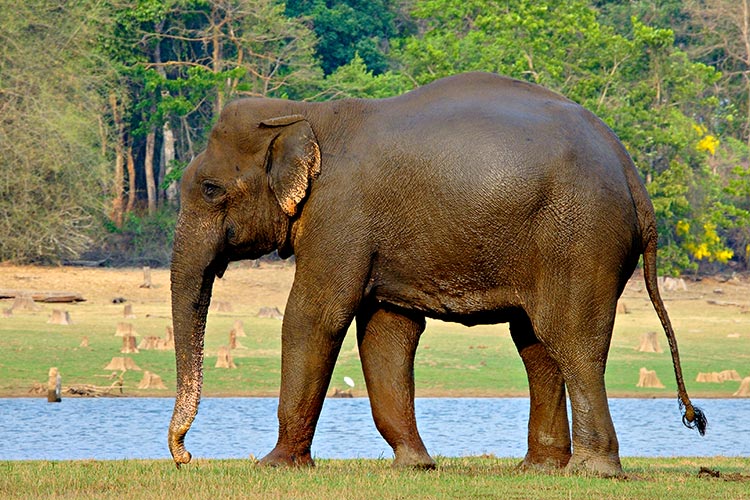
Indian elephants have the characteristic form of Asian elephants but are distinguishable from African elephants by smaller ears, different head shape and a single prehensile "finger" at the tip of the trunk. Both sexes can have tusks; however, tusklessness is more common in females. Body colour varies from grey to brown and can include depigmented patches on the trunk, face and ears.
Distribution and habitat
This subspecies historically occupied a wide belt across mainland Asia but its distribution is now fragmented into smaller populations. It uses a mix of habitats, including tropical and subtropical forests, grasslands, riverine corridors and cultivated landscapes where available. Remaining populations are often associated with protected areas, forest fragments and habitat corridors that link them across the landscape; see regional summaries for mainland Asia conservation contexts at mainland Asia.
Behaviour and ecology
Indian elephants are social and typically form matriarchal family groups of related adult females and their offspring. Adult males are more solitary or form loose bachelor associations. They are primarily herbivorous, feeding on grasses, leaves, bark and fruit, and they play important ecological roles such as modifying vegetation and dispersing seeds.
Life history
Reproduction and care of young are shaped by long lifespans and slow maturation. Females give birth to a single calf after a prolonged gestation, and calves are dependent on the mother and the group for several years. These life-history traits mean that recovery from population decline is typically slow without effective protection.
Threats
- Habitat loss and fragmentation from agriculture, infrastructure and development;
- Human–elephant conflict arising where elephants use croplands and settlements;
- Illegal killing and historical capture for use in work and ceremonial roles;
- Population isolation, which can reduce genetic exchange and increase local extinction risk.
Conservation and management
Conservation measures include protected areas, landscape-scale planning to maintain and restore corridors, community-based conflict mitigation, anti-poaching action and legal protection. International and national listings note the subspecies' threatened status; authoritative assessments and guidance are available through conservation organisations such as IUCN. Effective conservation combines habitat protection with efforts to reduce conflict and to support coexistence with people.
Cultural significance and research
Indian elephants have deep cultural and religious importance across their range and feature in traditional ceremonies, iconography and local histories. Scientific research focuses on ecology, behaviour, human–elephant interactions and corridor design to inform policy and management. Continued study and coordinated conservation are central to safeguarding remaining populations and their habitats.
Related articles
Author
AlegsaOnline.com Indian elephant (Elephas maximus indicus) Leandro Alegsa
URL: https://en.alegsaonline.com/art/47099
Sources
- iucnredlist.org : "Elephas maximus"