
Indian cormorant (Phalacrocorax fuscicollis)
Medium-sized cormorant of the Indian subcontinent and Southeast Asia; a gregarious, fish-eating waterbird with a distinctive sloping forehead, blue eye and hooked bill.
Overview
The Indian cormorant, also called the Indian shag (Phalacrocorax fuscicollis), is a medium-sized waterbird in the cormorant family. It is primarily associated with inland freshwater habitats but also occurs in coastal wetlands. It is known for its social behaviour, often seen in small to large flocks while roosting, flying or fishing.
Image gallery
5 Images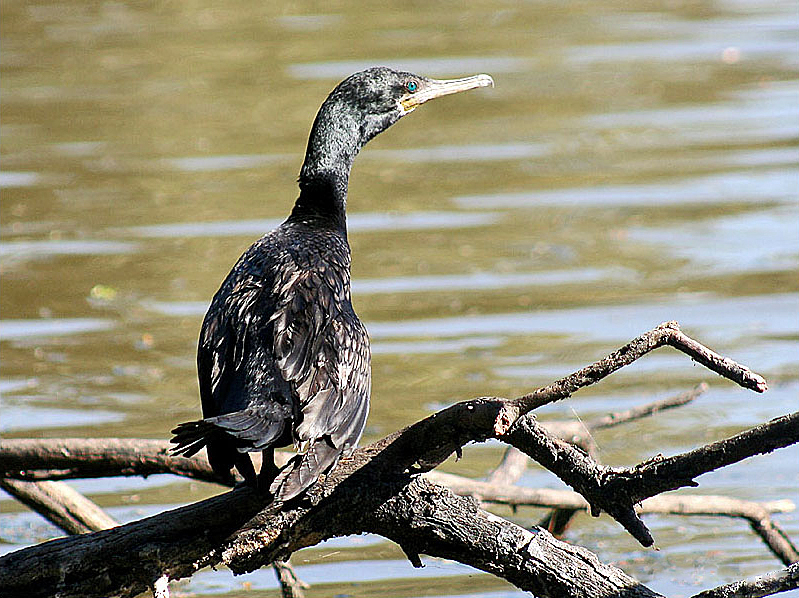


Identification and characteristics
This species has a relatively small head with a gently sloping forehead and a long, narrow bill that ends in a subtle hooked tip. The eye is conspicuously blue, a useful field mark when separating it from other dark waterbirds. Plumage is generally dark with a slight gloss; juveniles may appear browner and duller. In flight the body shape and slim bill help distinguish it from bulkier relatives.
Distribution and habitat
The Indian cormorant is found across much of the Indian subcontinent, extending westward into Sindh in southern Pakistan and eastward into parts of mainland Southeast Asia, including Thailand and Cambodia. It frequents rivers, lakes, reservoirs, marshes and flooded fields, and will use estuaries and sheltered coastal lagoons where suitable feeding opportunities exist.
Behaviour and diet
Indian cormorants are predominantly fish-eaters and catch prey by diving and swimming underwater. They often fish cooperatively in groups, herding small fish into shallows. When not feeding they perch on branches, rocks or posts to rest and dry their plumage. They are vocal at colonies and roost sites but generally quiet while feeding.
Breeding and social life
Breeding typically occurs in colonies, sometimes mixed with other waterbirds. Nests are constructed from sticks and vegetation and are placed in trees or dense scrub over or near water. Both adults participate in nest building and feeding of chicks. Young are dependent on parental care until capable of sustained flight and independent foraging.
Distinguishing notes and conservation
- Similar species: The Indian cormorant can be confused with the little cormorant, but the blue eye, smaller sloping head and narrow hooked bill are reliable differences.
- Conservation: As a wetland-dependent species, it benefits from healthy inland waters. Local declines can result from habitat degradation, pollution and reduced fish stocks; maintaining wetlands supports its populations.
Related articles
Author
AlegsaOnline.com Indian cormorant (Phalacrocorax fuscicollis) Leandro Alegsa
URL: https://en.alegsaonline.com/art/47097