
Ice climbing: techniques, equipment, history and safety
Ice climbing is a technical form of climbing on ice and frozen terrain. This article explains styles, gear, history, hazards, and distinctions from related alpine activities.
Ice climbing is a specialized discipline of mountaineering that involves ascending features composed of frozen water or ice-covered rock. Climbs take place on vertical or near-vertical faces such as frozen waterfalls, icefalls, seracs, and steep glacier ice. Routes range from short spurts of near-vertical frozen flows to long, sustained alpine ice on high mountains; conditions can change daily with temperature and precipitation.
Image gallery
10 Images


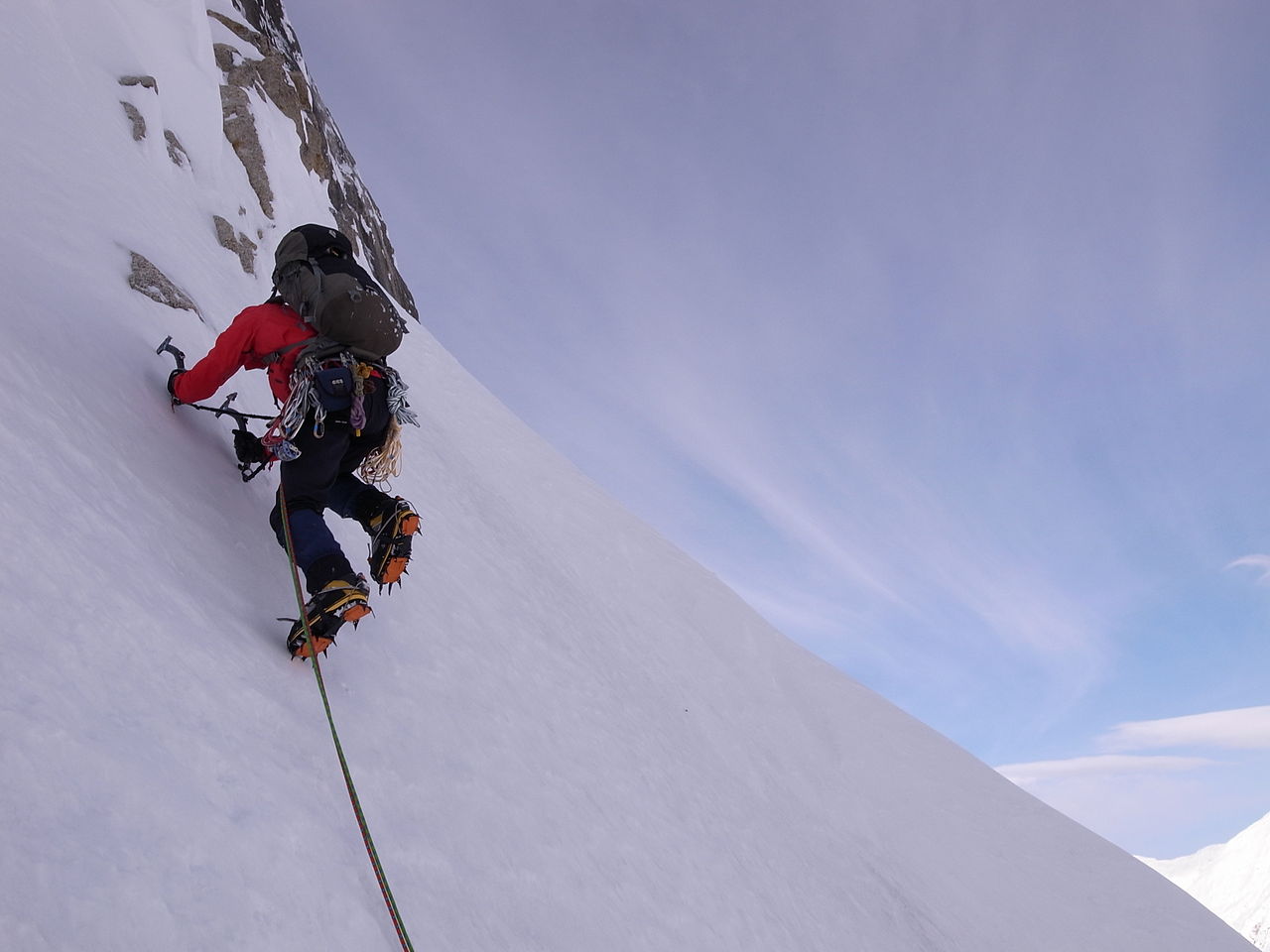


Equipment and techniques
Participants rely on tools adapted to bite and stand on ice. Typical equipment includes technical ice axes (or ice tools), crampons with front points for kicking steps, dynamic ropes, ice screws for protection, helmets, and stiff boots designed for step-in crampon systems. Climbers use swinging, stabbing, and hooking motions with ice tools, coordinated with precise foot placements using crampons. Techniques differ depending on whether the ice is brittle, hollow, layered with snow, or thin over rock.
Common settings and styles
Ice climbing appears in several settings: frozen waterfalls and steep water-sculpted flows; alpine ice on glaciated mountain faces; and mixed routes where thin ice overlays rock or vegetation. Climbs on frozen waterfalls are often called "waterfall ice" and demand precise tool placement. Ascents on glaciers and long ice faces require route-finding, crevasse awareness and sustained endurance. For more on glacier travel and hazards see glaciers.
History and organized competition
As a formal sport, organized ice climbing competitions emerged in the late 20th century. Early competitive events were held in Russia and other parts of Europe; some sources note that winter competitions there have occurred regularly since 1970. Competitive formats have evolved to include speed, lead and mixed climbing on artificial and natural venues, while recreational ice climbing developed alongside alpine mountaineering traditions.
Safety, hazards and environmental notes
- Common hazards: falling ice, tool or crampon failure, avalanches, crevasses and unstable ice conditions.
- Protective measures: wearing helmets, using redundant anchors and proper belay techniques, testing ice placements, and avoiding climbs in warming conditions.
- Environmental considerations: climbers should minimize rock scarring and avoid fragile winter vegetation; route choice and seasonal timing affect safety and impact.
Distinctions and why it matters
Ice climbing overlaps with but differs from snow mountaineering and rock climbing: it requires equipment and body mechanics tailored to fragile, changing surfaces. It tests tool precision, balance on small front points, and the ability to judge ice quality. The discipline has produced its own grading systems, ethics and community practices, and remains both a recreational pursuit and a competitive sport. For introductions to techniques and local resources, see general mountaineering guides and local ice-climbing organizations (ice information, frozen waterfall routes, competition history).
Related articles
Author
AlegsaOnline.com Ice climbing: techniques, equipment, history and safety Leandro Alegsa
URL: https://en.alegsaonline.com/art/46418
Sources
- theuiaa.org : International Mountaineering and Climbing Federation
- beginnersguide.com : The Beginner’s Guide to Ice Climbing