
Hydrogen cyanide (prussic acid)
Hydrogen cyanide (HCN), also called prussic acid, is a colorless, highly toxic, volatile chemical used as a precursor in industry and occurring naturally in some plants. It inhibits cellular respiration.
Hydrogen cyanide (chemical formula HCN), commonly known as prussic acid, is a simple molecular compound in the cyanide family. It is a colorless liquid or gas at ambient conditions with a faint bitter‑almond odor that some people cannot detect. As a small, volatile molecule that dissolves in water to give hydrocyanic acid, HCN is both industrially useful and acutely hazardous.
Image gallery
8 Images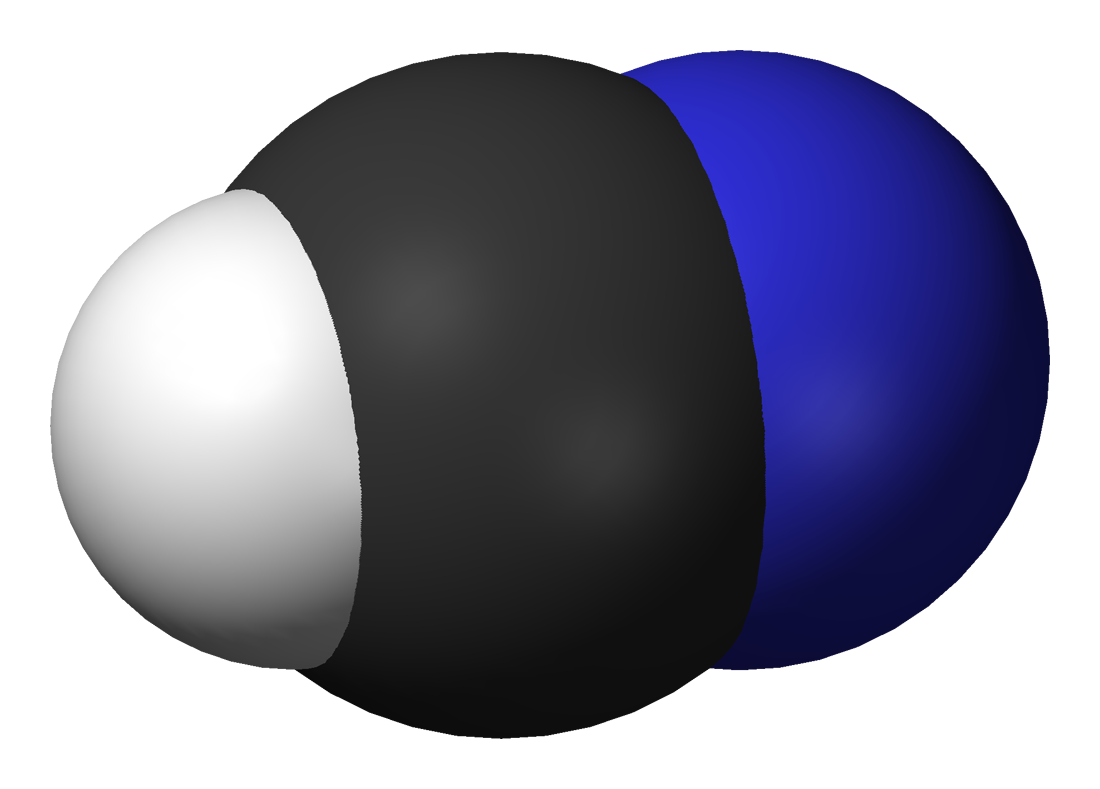






Physical and chemical characteristics
HCN is a molecular gas under slightly warmed conditions and forms an acidic aqueous solution when dissolved. It releases the cyanide anion under suitable conditions, which is the chemical species responsible for most toxic effects. The compound is volatile at ordinary temperatures, readily evaporates from liquid form, and can be transported in air as a toxic vapour. It reacts with many metal ions and organic substrates to form a variety of nitrile and cyanide derivatives.
History and naming
The common name prussic acid reflects historical connections to Prussian blue, a well‑known iron cyanide pigment from which chemists originally obtained cyanide compounds. Over time HCN became recognized both for its chemical utility and for its role in poisoning incidents and deliberate uses in the 19th and 20th centuries.
Uses and examples
Hydrogen cyanide is an important precursor in chemical manufacture and appears in several industrial contexts:
- As a feedstock to make nitriles that are intermediates for plastics, fibres and dyes.
- As a starting material for production of metal cyanide salts used in metal processing and mining.
- In laboratory synthesis processes to introduce the cyanide group into organic molecules.
Because of its hazards, industrial handling is strictly controlled and typically confined to closed systems. For technical details and properties, see chemical data.
Toxicity, health effects and safety
Hydrogen cyanide is highly toxic by inhalation, ingestion or skin contact. The cyanide ion interferes with cellular respiration by inhibiting key enzymes in mitochondrial electron transport, rapidly depriving tissues of usable oxygen. Symptoms of exposure can include headache, dizziness, shortness of breath, confusion, and loss of consciousness; heavy exposures can be fatal.
- Emergency measures include immediate removal from exposure, fresh air, and trained medical care.
- Specific antidotes and treatments (administered by professionals) can include hydroxocobalamin and agents that facilitate cyanide conversion to less toxic forms.
- Prevention relies on detection, containment, personal protective equipment and established industrial safety procedures.
For recommended protective measures and regulatory guidance consult authoritative safety guidance resources.
Notable facts: HCN occurs naturally in certain plants and foods as cyanogenic glycosides (for example in bitter almonds and some cassava varieties), which can release hydrogen cyanide if improperly processed. Its combination of industrial importance and extreme toxicity makes it a substance of ongoing regulatory and forensic interest.
Related articles
Author
AlegsaOnline.com Hydrogen cyanide (prussic acid) Leandro Alegsa
URL: https://en.alegsaonline.com/art/46096
Sources
- onlinelibrary.wiley.com : Ullmann's Encyclopedia of Industrial Chemistry
- doi.org : 10.1002/14356007.a08_159.pub2
- pubchem.ncbi.nlm.nih.gov : "Hydrogen cyanide"