
Howitzer: purpose, design, history, and modern types
A howitzer is a type of artillery piece optimized for high-angle and indirect fire. This article covers its characteristics, historical development, common uses, and how it differs from guns and mortars.
A howitzer is a class of artillery designed to deliver shells on high-angle trajectories at ranges between those of short-barreled mortars and long-barreled guns. Traditionally used by armies to support troops, destroy enemy positions, and interdict movement, howitzers combine aspects of direct and indirect fire. They are built to vary elevation and charge so that crews can place fire onto targets that are not in the line of sight.
Image gallery
10 Images

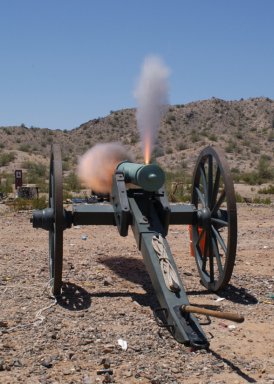


Characteristics and components
Howitzers typically feature a relatively short to medium-length barrel compared with field guns, often described by the ratio of barrel length to bore diameter (caliber). Historically, that ratio fell roughly in the range of 15 to 25 calibers, though modern designs vary. Key components include a rifled barrel, a breech mechanism for loading projectiles, a recoil system to absorb firing forces, and a carriage or mounting that provides traverse and elevation. Ammunition types commonly used include high-explosive, smoke, illumination, and fragmentation shells; modern systems can also fire guided projectiles for precision strikes.
Types and deployments
- Towed howitzers: moved by vehicles and emplaced for firing; valued for simplicity and light weight.
- Self-propelled howitzers: mounted on tracked or wheeled chassis to provide mobility and faster shoot-and-scoot capability.
- Mountain and pack howitzers: lightweight pieces broken into loads for transport by animals or helicopters.
- Gun-howitzers: hybrid designs with longer barrels and higher muzzle velocities that blur the line between guns and howitzers.
Examples of widely known systems include lightweight 155 mm towed howitzers and tracked self-propelled artillery that provide maneuver forces with sustained indirect fire.
History and development
The term howitzer comes from an old Czech word, haufnice, which referred to a medieval stone-throwing engine. Over centuries, the basic concept evolved from simple siege and fortress guns into more sophisticated field artillery. In the 19th and 20th centuries, advances in metallurgy, breech-loading mechanisms and recoil control transformed howitzers into more mobile and accurate weapons. Throughout the World Wars and later conflicts, howitzers played a central role in shaping battlefield tactics and providing suppressive and destructive fire support.
Roles, tactics, and distinctions
Howitzers are primarily used for indirect fire support: delivering plunging fire onto entrenched positions, suppressing enemy artillery (counter-battery), interdiction of supply routes, and illumination or smoke for concealment. They occupy a middle ground between straight-shooting guns, which favor direct fire and long range, and mortars, which are optimized for very high angles and short ranges. Modern doctrine integrates howitzers into combined-arms operations and networked fire-control systems to improve responsiveness and accuracy.
Further reading and context
For more on related topics, see general discussions of artillery and big guns, the design and operation of artillery ammunition and shells, comparisons with the field gun and the mortar, and the etymology tracing back to the Czech haufnice and earlier siege engines. These resources provide broader technical and historical background useful for understanding how howitzers function within military systems.
Related articles
Author
AlegsaOnline.com Howitzer: purpose, design, history, and modern types Leandro Alegsa
URL: https://en.alegsaonline.com/art/45447
Sources
- thefreedictionary.com : "howitzer - definition"