
Indian Air Force
The Indian Air Force (IAF) is the air arm of India's armed forces, responsible for air defence, strategic strike, transport and humanitarian missions, with a mix of imported and indigenously developed aircraft.
Overview
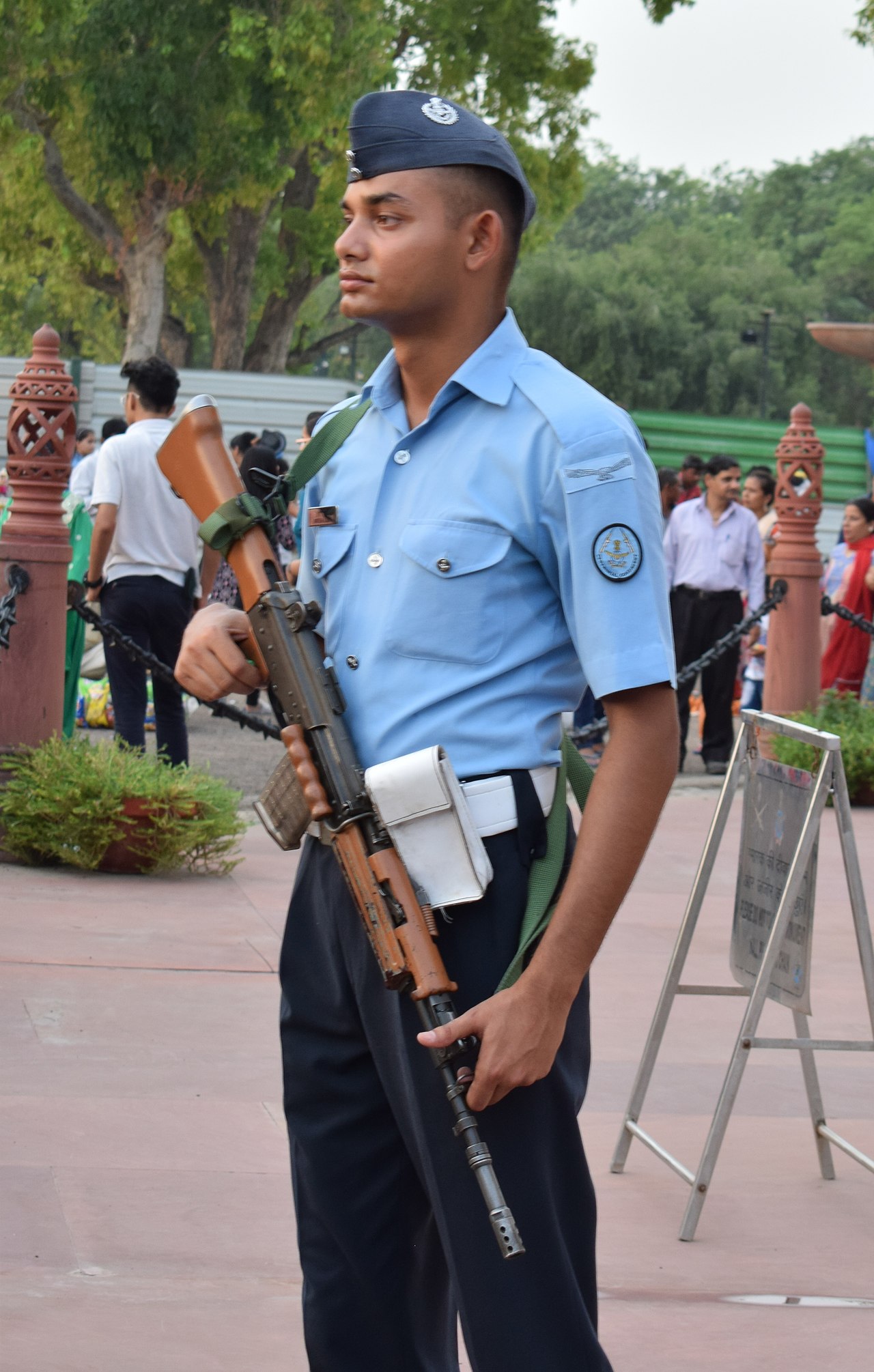
The Indian Air Force (IAF) is the air arm of the Indian state and a principal component of the country's armed forces. Formed in 1932 as the Royal Indian Air Force, it became the Indian Air Force after India became a republic in 1950 and removed the prefix "Royal". The service performs air defence, offensive counter-air, strategic strike, airlift, aerial reconnaissance and humanitarian assistance, using fighters, transports, helicopters, tankers and unmanned aircraft.
Image gallery
10 Images




History and development
The force traces its origins to 1 April 1932, when it was established under British rule as part of the British Empire military structure. After independence in 1947 the IAF expanded rapidly to meet regional security challenges. During the second half of the 20th century it took part in major regional conflicts, supported internal security operations and adapted to changing technologies and doctrines. Over decades the IAF moved from propeller-driven aircraft to jets and then to modern multi-role combat aircraft and airborne systems.
Organisation and equipment
The IAF is organised into operational commands, wings and squadrons, with training and maintenance formations supporting front-line units. Its fleet comprises a range of types to fulfil different roles:
- Fighter and strike aircraft for air superiority and ground attack;
- Strategic and tactical transport aircraft for mobility and logistics;
- Helicopters for troop lift, search-and-rescue and close support;
- Aerial refuellers, airborne early-warning platforms and unmanned systems for force multiplication.
Examples of aircraft in service include long-serving fighters and modern types acquired or developed to meet operational needs. The IAF operates a mix of foreign-made and indigenous types and continues to modernise its inventory to maintain capability. It is often listed among the world's larger air forces by inventory of aircraft and personnel, fielding around 1,700 aircraft and some 170,000 personnel in broad estimates.
Roles, operations and international activity
The IAF's principal missions include defending national airspace, supporting ground forces, delivering strategic strikes when required, and conducting humanitarian and disaster-relief operations. It has been engaged in several wars and crises on the subcontinent and has taken part in multinational exercises and logistical support for international relief efforts. The service also contributes resources and expertise to peacekeeping and cooperative missions under the auspices of the United Nations and other international bodies.
Indigenous programmes and future trends
India has pursued domestic aerospace development to reduce dependence on imports. Indigenous projects range from light combat aircraft to trainer types and advanced conceptual designs for future fighters. The emphasis is on improving avionics, weapons integration, sustainment and the ability to manufacture key subsystems locally. Continued modernization includes acquisition of newer generation combat aircraft, transport and support platforms, and investment in sensors, networking and unmanned aerial systems.
Notable facts and identity
The IAF's motto, Nabhah Sprsham Diptam, is often translated as "Touch the sky with glory" and is taken from classical Indian scripture. As a service it maintains a public profile through air displays, ceremonial events and disaster response. The IAF works closely with other branches of India's defence establishment, including the Indian Army and Navy, to provide integrated defence and rapid response capabilities across the region.
Further reading and official resources are available through service publications and national defence sources. For historical context, operational summaries and current procurement programmes consult authoritative defence analyses and official statements.
IAF overview | India | Armed forces | Founding era | UN operations | Aircraft types
Related articles
Author
AlegsaOnline.com Indian Air Force Leandro Alegsa
URL: https://en.alegsaonline.com/art/47090