
Horses in World War I: Roles, Hardships, and Legacy
How horses were used in World War I, their roles in cavalry and logistics, the hardships they endured, the scale of losses and veterinary care, and how mechanization and conditions shaped their wartime experience.
Overview
Horses were an essential part of the armies that fought in World War I, performing a wide range of tasks from cavalry action to hauling artillery, supplies and wounded. At the start of the war many armies still expected traditional mounted units to play a fighting role. As the conflict evolved into static trench warfare, animals were mainly employed for transport and haulage where motor vehicles could not operate reliably.
Image gallery
10 Images




Primary roles and characteristics
Horses worked behind the lines and at the front. They pulled field guns, ammunition wagons, ambulances and supply convoys; they hauled engineers' equipment and helped move artillery into position. Cavalry units continued to exist and conducted reconnaissance and occasional charges early in the war, but their tactical importance declined as machine guns, barbed wire and artillery made mounted assault costly and often futile.
Conditions, care and veterinary services
Maintaining tens of thousands of animals created immense logistical demands. Horses required regular feeding, shoeing and veterinary attention. Armies established remount depots, farriers and veterinary corps to treat wounds, disease and exhaustion. Long supply lines meant that fodder — hay, oats and grain — had to be shipped to front areas, and shortages sometimes threatened operations when rations were cut or transport was disrupted. Contemporary accounts note that a single horse consumed many times the food of a human soldier, placing additional strain on supply systems.
Hardships and causes of loss
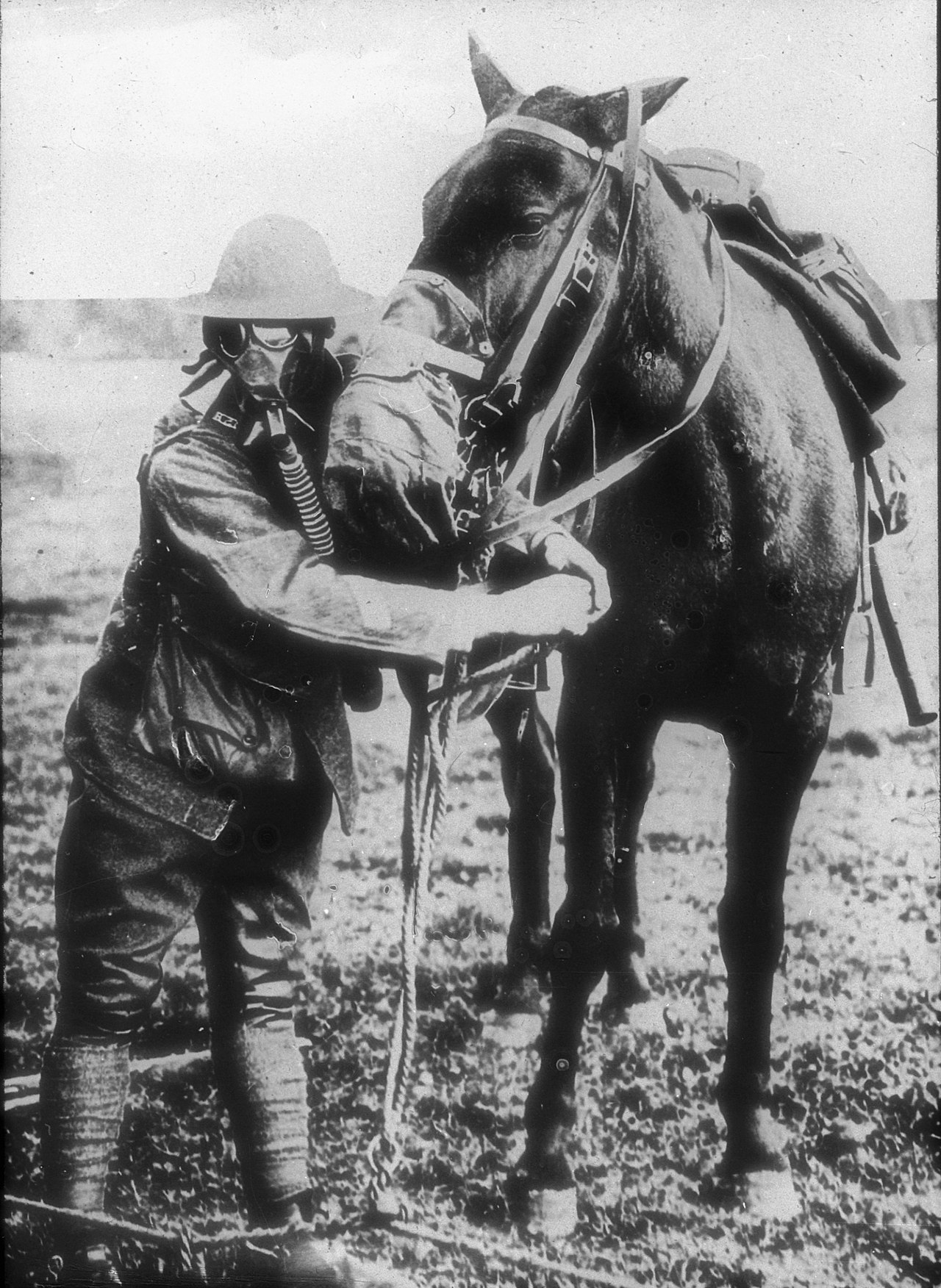
Horses faced lethal dangers on the battlefield: shellfire, small arms and machine-gun fire, artillery barrages, and chemical weapons. They also died from exhaustion, disease, and getting trapped in mud or shell craters. Many drowned while crossing rivers or during transport at sea. Some contemporary records, memorials and later histories enumerate thousands of equine casualties, but estimates vary widely between sources. Individual reports record losses and causes such as death by gas or drowning, while broader historical estimates put total losses in the hundreds of thousands to millions when combining horses and mules across all combatant nations.
Impact on operations and notable challenges
Because horses could negotiate rough, muddy terrain better than early trucks and were quieter than combustion engines, they remained useful throughout the war despite their vulnerability. Their continued use influenced battlefield tempo, logistics planning and medical services. In 1917, for example, reductions in available feed and transport capacity were reported to have threatened some allied operations, illustrating how dependent armies were on animal power.
Aftermath and legacy
After the armistice, many surviving animals were repatriated, sold locally, or euthanized when recovery or transport was impractical. The scale of equine suffering and loss left a lasting impression on soldiers and civilians; memorials and literature from the period remember the animals' service and suffering. The war also accelerated mechanization: improved trucks and tractors reduced reliance on horses in subsequent decades, though animal transport remained important in some theatres and postwar reconstruction.
Further reading and sources
- Contemporary casualty and remount records — see casualty reports and archival summaries such as veterinary corps documents.
- Studies of logistics and supply showing the effect of fodder shortages on operations: logistics analyses.
- Firsthand accounts and regimental histories that describe conditions in the stables, on the march and at artillery positions: soldier memoirs and unit diaries.
- Research on chemical warfare effects on animals and subsequent veterinary responses: chemical warfare studies.
- Collections of photographs and war memorial projects that record the horses' service: memorial archives and curatorial resources.
- Comparative international data and reassessments that discuss differing loss estimates and postwar consequences: historical overviews.
Note: Sources from the period and later histories differ on precise casualty totals. Where figures are cited in archives or eyewitness reports they should be understood in the context of record-keeping limits, differing definitions (horses versus mules included), and the scale of multinational mobilization.
Related articles
Author
AlegsaOnline.com Horses in World War I: Roles, Hardships, and Legacy Leandro Alegsa
URL: https://en.alegsaonline.com/art/45168