
Household Cavalry (United Kingdom)
Senior British Army regiments combining mounted ceremonial duties and armoured reconnaissance. Formed from The Life Guards and The Blues and Royals, they serve in the Household Division for state and operational roles.
Overview
The Household Cavalry is the collective name for the senior cavalry units of the British Army, drawn from two historic regiments. As an army corps-level formation in practical terms, it performs both ceremonial and operational roles. It is distinctive for maintaining a full-time mounted ceremonial regiment while simultaneously fielding a mechanised regiment trained for armoured reconnaissance and other operational tasks.
Image gallery
10 Images



Organization and components
The Household Cavalry is organised around two regiments: The Life Guards and The Blues and Royals. Soldiers from these regiments are posted across two principal formations: the Household Cavalry Mounted Regiment, responsible for equestrian public duties and ceremonial escorts, and the Household Cavalry Regiment, which operates light armoured vehicles for reconnaissance and battlefield roles. Administrative, training and ceremonial responsibilities are shared between the two parent regiments and their distinct operational units.
Historical development
The Household Cavalry traces its origins to the royal bodyguard units that protected the sovereign and royal household. Cavalry regiments were traditionally horse-mounted and performed both battlefield and close-protection duties. Following the advent of modern mechanised warfare in the twentieth century — particularly after World War I — most mounted units converted to vehicles and armoured platforms. The Household Cavalry retained its ceremonial equestrian traditions while adapting an operational role using armoured reconnaissance vehicles and modern military equipment.
Ceremonial role and dress
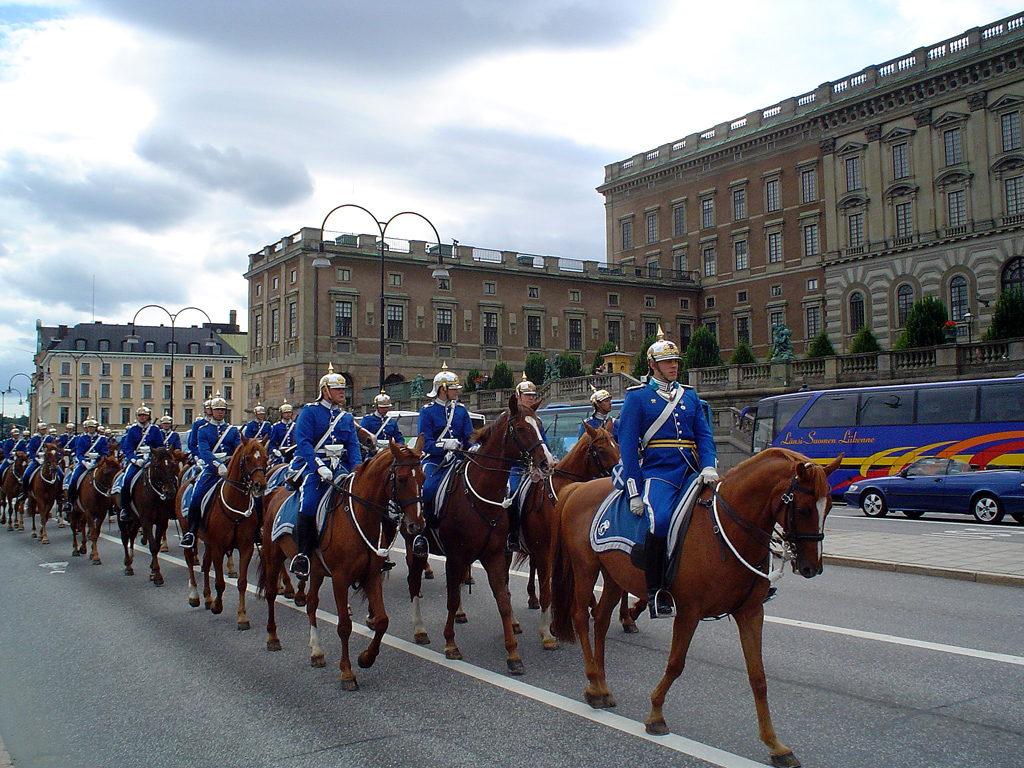
The mounted regiment performs a wide range of public duties: state processions, the Sovereign's Birthday Parade, the Changing of the Guard at royal residences and escorts for visiting heads of state. Ceremonial uniforms, silvered cuirasses, plumed helmets and harnessed horses are maintained as living links to historic practice. These public displays are staged to a precise drill and involve specialist training in riding, drill and ceremonial protocol. Visitors and researchers seeking official schedules and descriptions often consult regimental pages and formal guidance from government or military heritage organisations.
Operational role and equipment
In operational settings the Household Cavalry Regiment is trained and equipped for reconnaissance, liaison and mobility tasks within the Army's force structure. Its soldiers perform tactical reconnaissance, perform security tasks and provide commanders with forward information. These capabilities are delivered using light armoured vehicles and training that emphasises mobility, observation and communication rather than ceremonial drill. The transition from horses to mechanised platforms reflects broader defence needs while preserving regimental identity.
Training, recruitment and traditions
Personnel selected for the Household Cavalry undergo specialist training in both mounted ceremonial duties and operational skills. Riding schools, ceremonial drill rehearsals and armoured reconnaissance exercises form parts of the training cycle. Traditions, customs and regimental history play an important role in esprit de corps, with public events and museums documenting lineage for both regiments. Further detail is available through official and heritage resources, including armoury and museum references.
Role within the Household Division and international parallels
Both regiments form part of the Household Division, the formation charged with guarding the Sovereign and performing state ceremonial duties. Comparable units exist in other countries where presidential or royal guards combine ceremonial functions with operational roles; such formations may be found in Commonwealth and European states and beyond. The broad concept of royal or presidential guards can be explored via Commonwealth material (Commonwealth), state-protocol sources (head of state) and studies of ceremonial practice (ceremonial).
Public engagement and further information
The Household Cavalry remains one of the most visible elements of British military heritage, combining pageantry and professional capability. Public performances, regimental museums, educational outreach and authorised publications provide accessible ways to learn about its history and contemporary duties. For authoritative schedules, recruiting information and historical background consult official army pages and regimental heritage sites such as official army pages and regimental records.
Questions and answers
Q: What is the British Household Cavalry?
A: The British Household Cavalry is an army corps of two regiments of soldiers.
Q: What were cavalry regiments "mounted" on before World War I?
A: Cavalry regiments were always "mounted" on horses before World War I.
Q: What are cavalry regiments mounted on nowadays?
A: Nowadays cavalry regiments are mounted on tanks.
Q: Why is the British Household Cavalry unusual?
A: The British Household Cavalry is unusual because half of them are still mounted on horses.
Q: What are the two Regiments of Household Cavalry?
A: The two Regiments of Household Cavalry are the Household Cavalry Mounted Regiment and the Household Cavalry Regiment.
Q: What is the special privilege of the "Household Division" in Britain?
A: The special privilege of the "Household Division" in Britain is guarding the Sovereign and the Royal Household.
Q: Where else can we find similar army corps?
A: Similar army corps can be found in Australia, Brunei, Belgium, Canada, Denmark and many other countries.
Related articles
Author
AlegsaOnline.com Household Cavalry (United Kingdom) Leandro Alegsa
URL: https://en.alegsaonline.com/art/45356