
Hel — Norse goddess and ruler of the dead
Hel is a figure in Old Norse tradition who presides over an underworld for those who die of age or illness; she appears in medieval sources as the daughter of Loki and Angrboða.
Overview
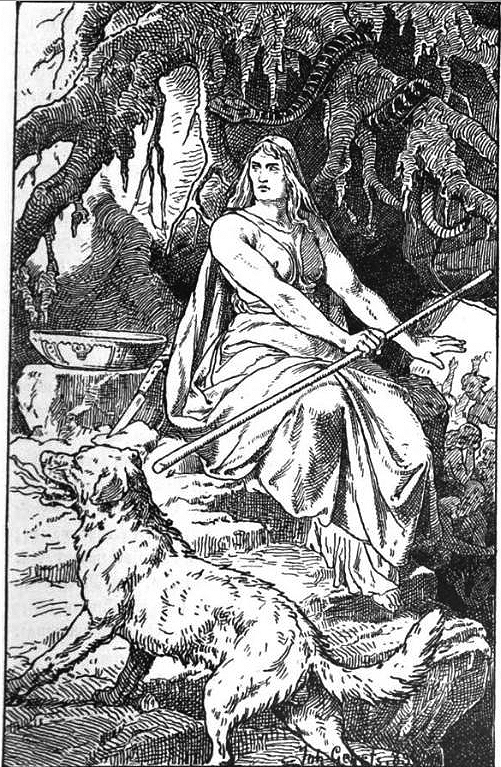
Hel is a mythological figure from Old Norse tradition often portrayed as the ruler of an underworld realm for the dead. Medieval Icelandic texts describe her as a child of the trickster god Loki and the giantess Angrboða. Her domain receives the souls of those who died by sickness or old age rather than in battle, and she is both a personification of death and an administrator of the place where those dead dwell.
Image gallery
7 Images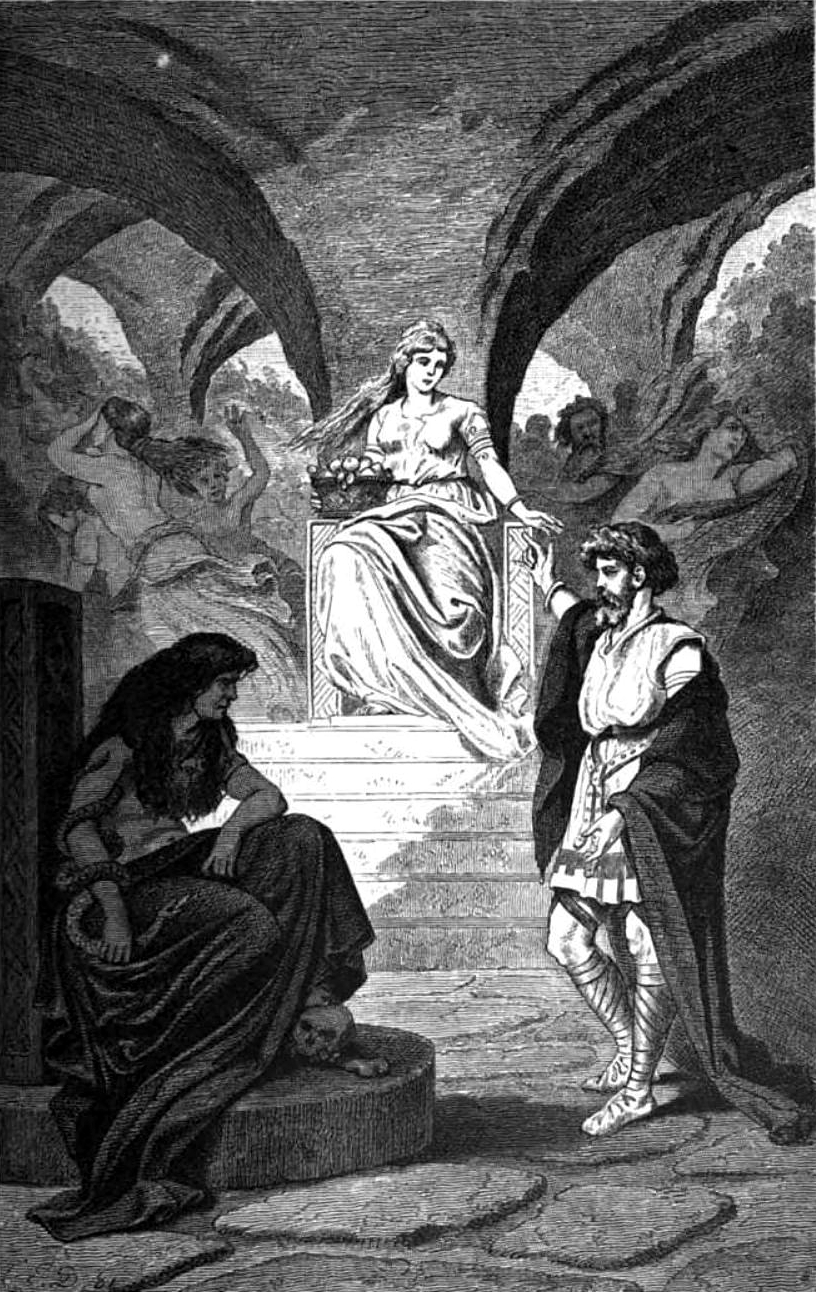



Name and origins
The name Hel (Old Norse Hel, related to the English word "hell") originally denotes both the being and the place she governs. Etymologically it is connected to words meaning "hidden" or "concealed," reflecting the idea of the unseen world of the dead. Accounts of Hel appear in the medieval corpus of Norse literature, principally in works that collect earlier oral tradition.
Family and connections
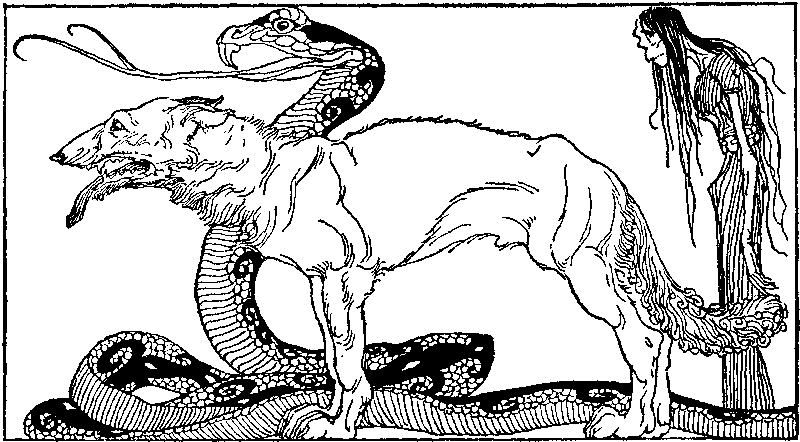
According to the sources, Hel is one of three monstrous offspring of Loki and Angrboða; her siblings include the world-encircling serpent Jörmungandr and the wolf Fenrir. This family grouping links her to other disruptive or liminal forces in myth. Her role is distinct from warrior-related afterlives: those slain in battle may be received by Odin in Valhalla or by Freyja in her hall, while Hel's realm takes the rest.
Realm and role
Hel's domain is usually called Hel or Helheim and is sometimes associated with cold, misty regions of the cosmological map such as Niflheim. It is described as an underworld where the dead live on in a diminished or shadowy state rather than a place of universal torment. The inhabitants of Hel are generally the non-combat dead; the texts portray it as an ordered location with a ruler rather than an absolute abyss.
Appearance and symbolism
Medieval prose sources depict Hel as physically divided, with one side more human and alive and the other side dark, cold, or corpse-like. Details vary between accounts: some emphasize a corpsely lower half, others a complexion split into livid and fair halves. This duality has been interpreted as symbolic of the ambivalent nature of death and the boundary between life and the afterlife.
Sources, interpretation and influence
Information about Hel comes mainly from a small set of Old Norse works compiled in the high Middle Ages. Modern scholars rely on those texts while noting the limits of the evidence and the editorial framing introduced by the compilers. Interpretations differ on whether Hel was widely worshipped or mainly a literary personification. Her figure has persisted in later art, literature, and popular culture as an archetype of the underworld; for primary text discussions see Loki traditions, Angrboða references, and general giantess motifs.
Characteristics and notable facts
- Parentage: usually named as daughter of Loki and Angrboða (textual tradition).
- Siblings: linked to Jörmungandr and Fenrir in the sagas (serpent, wolf).
- Realm names: Hel, Helheim; sometimes associated with Niflheim (place name).
- Funerary role: receives non-battle dead, contrasted with Valhalla and Fólkvangr (afterlife divisions, Valkyries, Freyja).
- Not a direct analogue of later Christian notions of eternal punishment; sources portray nuanced fates (comparative note).
While much about Hel remains shaped by the limited medieval record and later interpretation, she is an enduring figure that illustrates how the Norse imagination organized death, place, and personhood in the afterlife. For further reading consult editions and translations of the Old Norse sources and modern studies that examine their cultural context.
Related articles
Author
AlegsaOnline.com Hel — Norse goddess and ruler of the dead Leandro Alegsa
URL: https://en.alegsaonline.com/art/43311