
Jörmungandr — the Midgard Serpent of Norse myth
Sea-serpent of Norse mythology, child of Loki and the giantess Angrboða, famed for encircling Midgard and for its destined combat with Thor at Ragnarök.
Jörmungandr, often called the Midgard Serpent, is one of the best-known monsters in Norse mythology. The name appears in Old Norse as Jǫrmungandr and the alternate epithet as Miðgarðsormr, both suggesting a vast or world-encircling creature. In surviving medieval sources the serpent is presented as a colossal sea-snake whose size and role connect it closely to the fate of the world.
Image gallery
9 Images





Parentage and sources
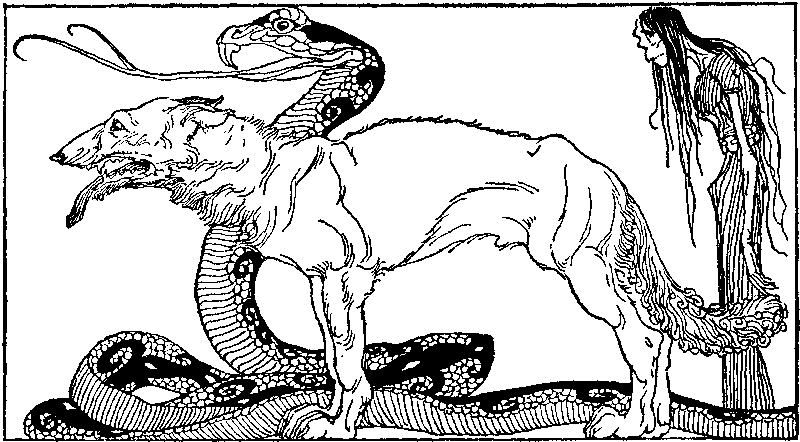
Primary attestations come from medieval Icelandic compilations of Norse myth. The Prose Edda relates that the god Loki and the giantess Angrboða produced three notable offspring: the wolf that would become Fenrir, the ruler of the dead Hel, and Jörmungandr. According to that account, the chief god cast the serpent into the ocean surrounding Midgard, where it grew until it could encircle the world and grasp its own tail.
Characteristics and symbolism
Descriptions emphasize Jörmungandr's extraordinary magnitude and its domicile in the sea that rings the human realm. Because it encircles Midgard and is often shown biting or holding its tail, the serpent evokes the ancient ouroboros motif (a self-devouring or tail-eating serpent) and stands as an image of cosmic boundary and tension between order and chaos. Its antagonistic relation to the thunder-god Thor is central to its role in myth.
Role in Ragnarök
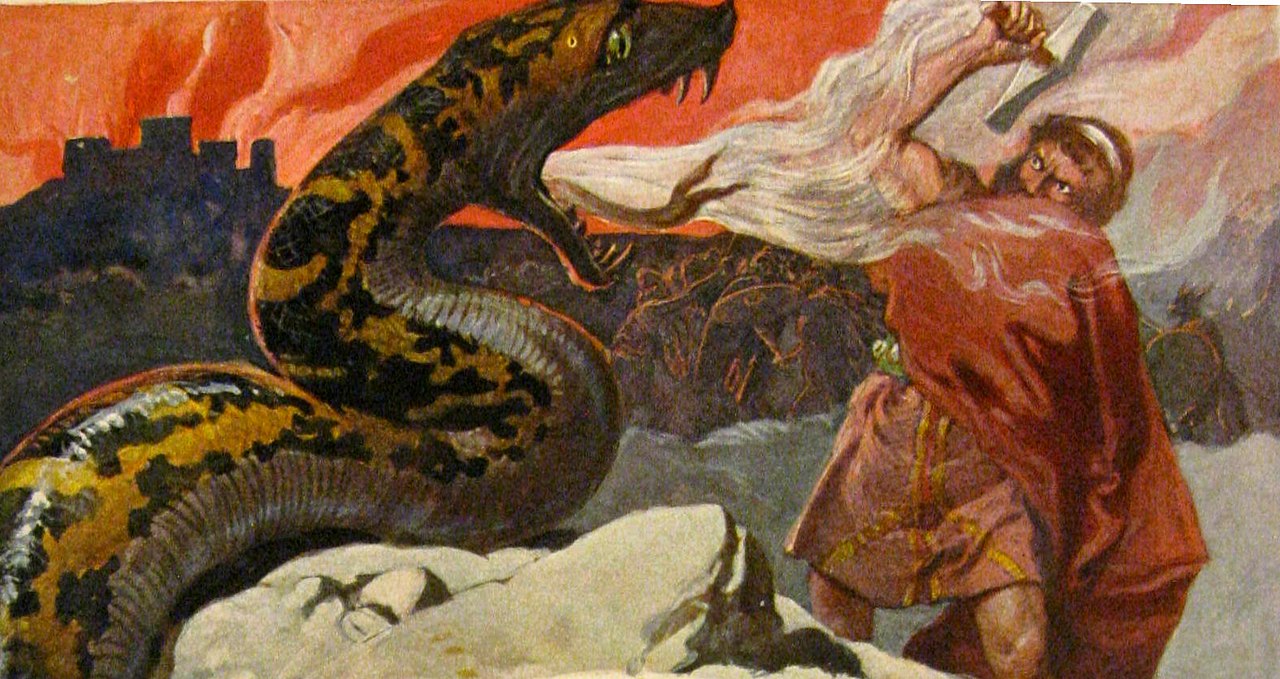
Mythic tradition holds that Jörmungandr is fated to break free of its grip at the time of the gods' doom, Ragnarök. When it leaves the sea the world is shaken by its presence, and it meets Thor in a final confrontation. Most tellings say Thor succeeds in killing the serpent, but is himself fatally poisoned and only takes a few steps before dying — a dramatic image of mutual destruction that underscores the cataclysmic nature of Ragnarök.
Comparative notes and cultural influence
Jörmungandr shares motifs with serpents and sea-monsters from world mythologies: world-encircling snakes, boundary-guarding beasts, and apocalyptic opponents of storm or sky gods. In later centuries the figure has reappeared in art, literature, music and popular culture, serving as inspiration for novels, comics, games, and visual art that draw on Norse motifs.
Key points and examples
- Origin: Child of Loki and Angrboða, according to medieval sources.
- Role: Encircles Midgard; antagonist of Thor.
- Fate: Releases its tail and battles during Ragnarök, where both combatants meet their end in many versions.
- Related figures: Sibling to the wolf Fenrir and the being Hel.
Because Jörmungandr appears in multiple types of medieval Norse literature and has been widely adopted in modern creative works, it remains a central symbol of cosmic danger and a vivid image of the Norse mythic imagination. Scholars continue to study how the serpent's portrayal relates to broader themes of containment, fate, and the cyclical destruction and renewal of the world.
Questions and answers
Q: Who is Jörmungandr?
A: Jörmungandr is a sea serpent, also known as the Midgard Serpent.
Q: What is Jörmungandr's origin?
A: Jörmungandr is the child of Loki and the giantess Angrboða.
Q: How did Jörmungandr get into the great ocean that encircles Midgard?
A: According to the Prose Edda, Odin took Jörmungandr and tossed him into the great ocean that encircles Midgard.
Q: Why did Jörmungandr receive the name of the Midgard Serpent?
A: Jörmungandr received the name of the Midgard Serpent because he became so large that he was able to surround the Earth and grasp his own tail.
Q: What will Jörmungandr do upon the onset of Ragnarök?
A: Upon the onset of Ragnarök, Jörmungandr will release his tail and be met in battle by his arch-enemy, Thor.
Q: Who is Thor?
A: Thor is the god of thunder, known for his strength and bravery in battle.
Q: Who are Jörmungandr's siblings?
A: Jörmungandr's siblings are the wolf Fenrir and Hel.
Related articles
Author
AlegsaOnline.com Jörmungandr — the Midgard Serpent of Norse myth Leandro Alegsa
URL: https://en.alegsaonline.com/art/51102
Sources
- nordicnames.de : Rudolf Simek, Dictionary of Northern Mythology (1993)