
Freyja — Norse goddess of love, fertility, war and magic
Freyja is a major Norse goddess associated with love, beauty, fertility, seiðr (sorcery), war, and the dead. She appears widely in medieval sources and in modern culture and scholarship.
Overview
Freyja (Old Norse “the Lady”) is one of the best-known deities of medieval Norse literature. She belongs to the Vanir, a group of fertility gods, and appears repeatedly in the Poetic and Prose Eddas and in skaldic verse. Her domains include love and sexuality, prosperity and fertility, the practice of seiðr (a type of sorcery), and aspects of battle and the distribution of the slain. While often remembered for her beauty and erotic associations, Freyja is portrayed as a complex figure whose roles overlap with religious, social, and martial life.
Image gallery
10 Images


Attributes and symbols
Traditional descriptions emphasize several recurring symbols linked to Freyja. These objects and companions highlight her diverse functions:
- Brísingamen — a famed necklace that appears in several stories and has generated much scholarly debate about its meaning and origin.
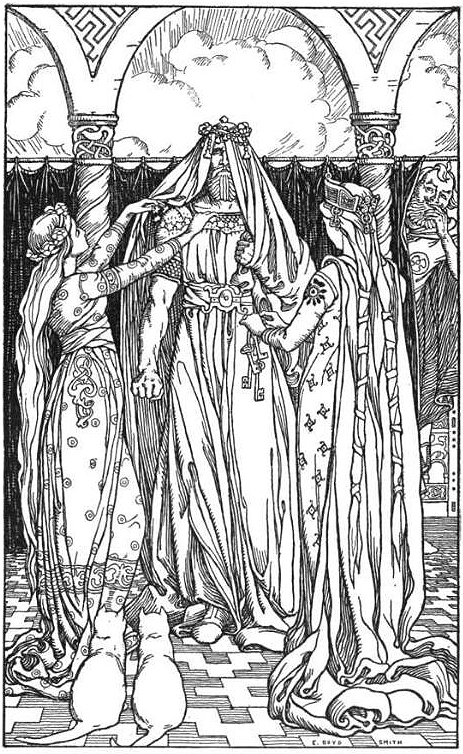
- Cats and chariot — she is said to ride a chariot drawn by two cats, an image often used to signal her connection to domestic and liminal spheres.
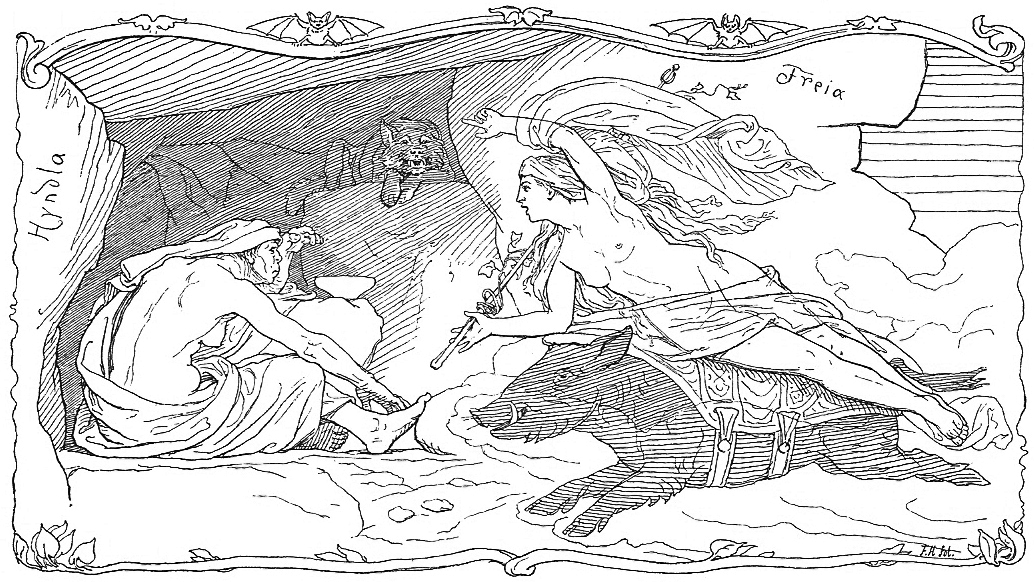
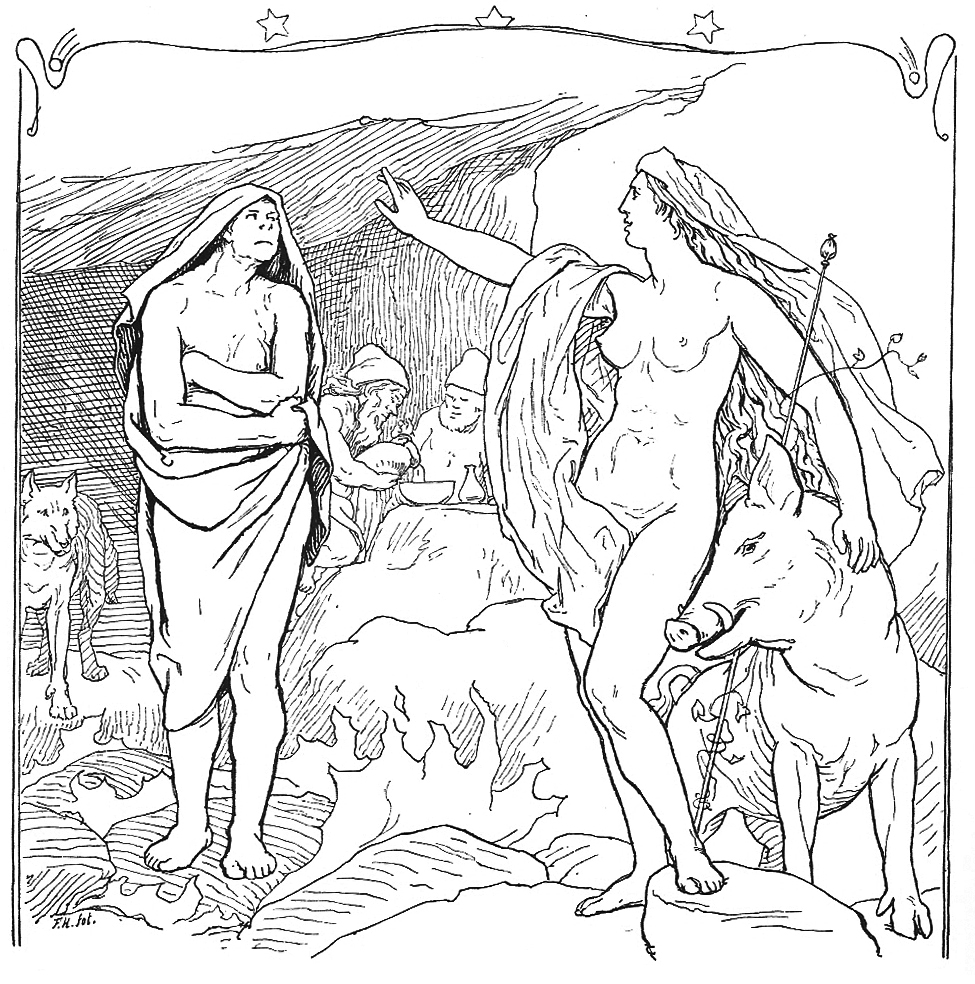
- Hildisvíni — a boar that accompanies or protects her in some accounts; the name evokes battle (see Hildisvíni).
- Falcon-feather cloak — a cloak of feathers that allows transformation or flight, linking her to shamanic motif and seiðr.
Family and mythic role
In genealogies preserved in the sagas and Eddic poems, Freyja is the daughter of Njörðr and the twin sister of the fertility god Freyr. She is counted among the Vanir rather than the Aesir. Freyja’s husband, the often-absent Óðr, is said to wander, and she searches for him, weeping tears of red gold. She also bears daughters whose names—such as Hnoss—are associated with beauty and preciousness.
War, the dead, and Fólkvangr
Freyja has an unusual connection to warfare and death: some medieval texts describe her as receiving half of those slain in battle, who go to her heavenly field of Fólkvangr, while the other half are claimed by Odin in Valhalla. This division suggests overlapping funerary or heroic cultic practices and highlights her role as a chooser of the slain and a protector of warriors.
Sources, development, and worship
Medieval Icelandic compilations—most notably the works attributed to Snorri Sturluson—provide the fullest surviving narratives, but references to Freyja also appear in poetry, place-names, and occasional archaeological motifs. Scholars have suggested that she preserves older Germanic goddess traits and that certain features (seiðr practice, love and fertility functions, and war-choosing aspects) may reflect regional cultic variations. Evidence for organized temples or rites is limited and often inferred from literary and onomastic traces rather than direct archaeological records.
Reception and distinctions
In later tradition and modern culture, Freyja appears in art, literature, and contemporary paganism. Her name survives in modern spellings such as Freya and Freyja; the form varies by language and editorial convention. Freyja is sometimes compared with the Aesir goddess Frigg, and scholars debate areas of overlap and independence: Frigg is more closely tied to Odin and fate, whereas Freyja’s identity emphasizes fertility, seiðr, and her Vanir background. Interpretations of her necklace, companions, and functions remain active topics in Norse studies.
For further reading on textual appearances and comparative studies, see primary medieval compilations and modern introductions to Norse mythology (Eddic material) and works focused on the Vanir (Vanir studies). Other references include genealogical notes on Njörðr, the role of Freyr among the Vanir, and accounts of her companions such as Hildisvíni, spouse Óðr, daughters like Hnoss, and places associated with the dead (Fólkvangr, Valhalla).
Questions and answers
Q: Who is Freyja?
A: Freyja is the goddess of love, beauty, sex, fertility, seiðr, war, and death in Norse mythology. She is a member of the Vanir and the daughter of Njörðr and twin sister of Freyr.
Q: What does Freyja own?
A: Freyja owns the necklace Brísingamen and a cloak of falcon feathers.
Q: Who is Freyja married to?
A: Freyja is married to the god Óðr by whom she is the mother of twin goddesses Hnöss and Gersemi.
Q: Where does Freyja rule over?
A: Freyja rules over Fólkvangr where she receives half of those who die in battle while the other half go to Valhalla.
Q: Who are her handmaidens?
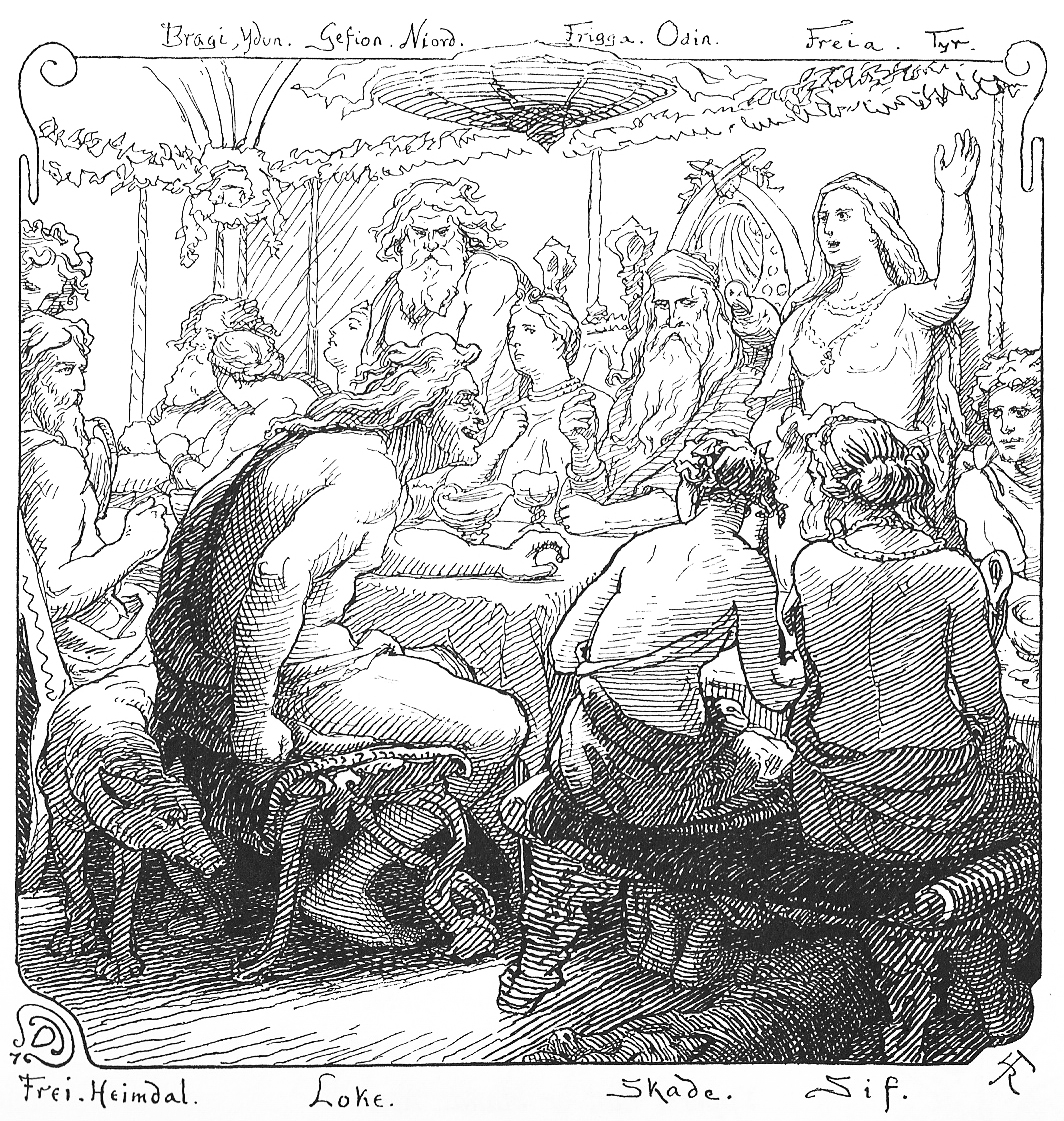
A: Her handmaidens are Gefjon, Skaði, Þorgerðr Hölgabrúðr and Irpa (Old Norse for "Þorgerðr, Hǫlgi’s bride"), and Menglöð.
Q: How does she travel?
A: She travels in a chariot pulled by two cats accompanied by a giant boar named Hildisvíni.
Q: What is her name often translated as nowadays? A: Her name is often translated into English as Freya when used nowadays but her original Norwegian name was spelt as 'Freyja'.
Related articles
Author
AlegsaOnline.com Freyja — Norse goddess of love, fertility, war and magic Leandro Alegsa
URL: https://en.alegsaonline.com/art/36684
Sources
- commons.wikimedia.org : Freyja