
Hecate: Greek goddess of magic, crossroads, and liminal spaces
Hecate is an ancient Greek goddess associated with magic, witchcraft, crossroads, the night, ghosts and the underworld; venerated in household and chthonic cults and depicted in triple form with torches and keys.
Overview
Hecate is a multifaceted deity from ancient Greek religion, widely identified with magic, witchcraft, crossroads and the boundary between worlds. She is often portrayed as a nocturnal, liminal figure who moves freely among earth, sea and sky and is tied to both domestic protection and the darker arts of prophecy and necromancy. Over time her character absorbed local and Hellenistic influences, producing a complex portrait that combines household guardian, night wanderer and underworld companion.
Image gallery
10 Images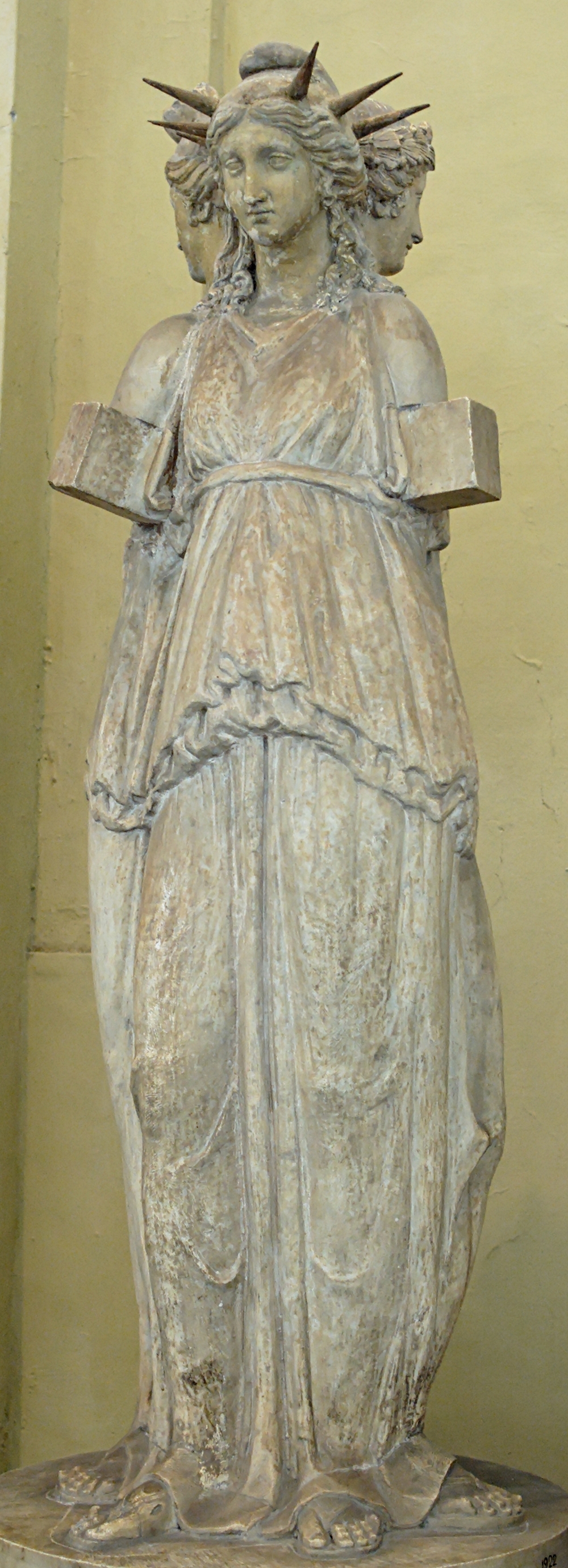



Origins and family
According to traditional genealogy, Hecate was the daughter of Perses and Asteria, placing her among the third generation of Titans. Her mother was a sister of Leto, making Hecate part of a broad network of divine kin. Although born of Titan stock, she sided with Zeus and the Olympians during the Titanomachy. Ancient authors relate that as a reward for her loyalty Zeus granted her authority to act across heaven, earth and the Underworld.
Attributes and iconography
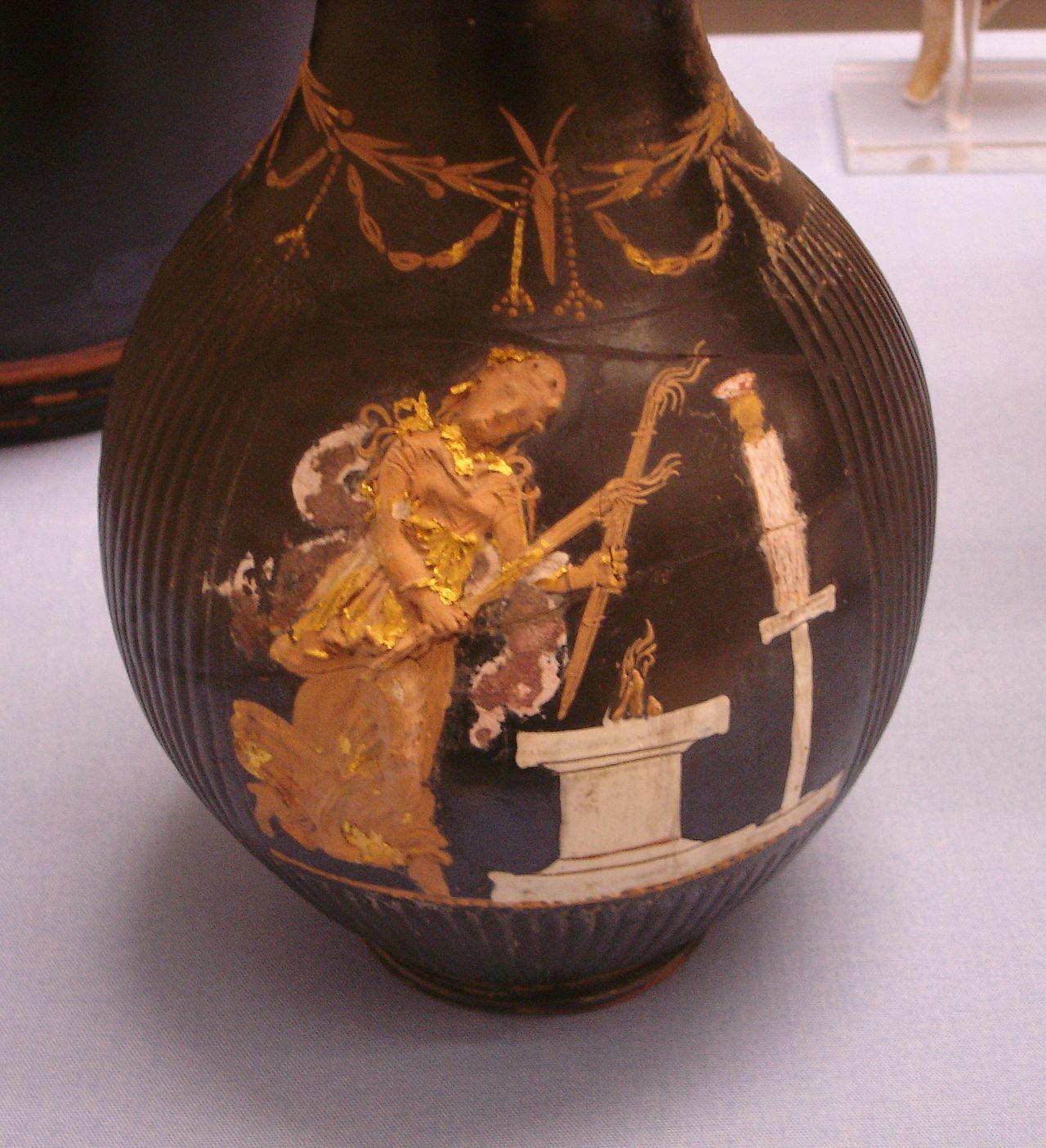
Hecate appears in art and literature with a set of recurring symbols and animal associations. She is commonly shown carrying a pair of flaming torches to illuminate dark paths and to lead or guard travelers at night. Other emblematic items include keys and daggers, which suggest guardianship and access to hidden places. Her animals—especially the dog and the serpent—emphasize her connection to the threshold between life and death; classical sources also mention the polecat among creatures associated with her. In later sources she sometimes appears in triple form, either as a three-bodied figure or three-faced head, a motif understood to represent her sovereignty over past, present and future or her jurisdiction over three realms.
Functions and cult practice
Hecate served both public and private religious roles. In households she was invoked as a protective household deity who could ward off harmful spirits; simple offerings were left at doorways and crossroads — liminal spots where paths and worlds intersect. At the same time, she was associated with witches, spells and rites directed toward the dead, receiving offerings at night in places that bridged the living and the dead. She is also connected with divinatory arts and secrets revealed under cover of darkness.
Mythic roles and associations
Hecate appears in several well-known myths. She aided Demeter during the search for Persephone after Persephone’s abduction by Hades, using torches to light the way and remaining a companion to Persephone in the underworld. She has overlapping functions with lunar and hunt goddesses in later literature, sometimes identified with Artemis and Selene as an aspect of moonlight and night. Mythic stories also attach strange attendants to her court, such as the empousai, phantom-like beings who figure in tales of nocturnal encounter and danger.
Legacy and later perceptions
Hecate’s image transformed in the Hellenistic and Roman eras and persisted into folkloric and occult traditions. Her dual role as protector and wielder of secret power made her a potent symbol for later writers and esoteric practitioners. In archaeological and numismatic evidence she appears on reliefs, votive items and coins, indicating both popular devotion and literary reverence. Modern interest in Hecate often emphasizes her independence and authority over thresholds—spiritual, social and metaphysical—making her an enduring emblem of liminality and transformed knowledge.
- Common symbols: torches, keys, daggers, serpents.
- Sacred animals: dog, serpent, polecat.
- Associated concepts: magic, witchcraft, crossroads, necromancy.
For introductory reading on Hecate’s role in ancient religion and myth, see general entries on magic, witchcraft and necromancy in classical contexts, or consult works that survey ancient Greek religion more broadly. Her story intersects with many major figures of Greek myth, including relatives like Perses and Asteria Despite changes across time and place, Hecate remains one of the most vivid exemplars of a deity who stands at the boundaries—between day and night, life and death, the familiar and the uncanny—able to protect, reveal, and preside over transitions. For further exploration of primary myths, iconography and cultural reception see specialized studies and collections of classical sources linked to this topic via authoritative databases and literature primers: Leto family myths, Zeus and the Olympians, and focused treatments of underworld narratives such as the abduction of Persephone. Related cultural notes and comparative readings include material on lunar goddesses, household cults and boundary rituals in antiquity; these may be found in surveys of underworld beliefs and comparative treatments connecting Demeter, Hades and other figures with nocturnal and chthonic practice. Additional resources: myth collections and archaeological reports that address artistic portrayals of Hecate, including reliefs and coins that illustrate her triple aspect and iconography, or focused essays on liminal deities and their attendants such as the Artemis-Hecate overlap and mentions of the Selene-Hecate lunar associations. (See also brief notes on lesser-known attendants and creatures tied to Hecate’s mythic entourage: the polecat and other animals that accompany boundary goddesses.)
Related articles
Author
AlegsaOnline.com Hecate: Greek goddess of magic, crossroads, and liminal spaces Leandro Alegsa
URL: https://en.alegsaonline.com/art/43175
Sources
- hecatescauldron.org : The Goddess Hecate. Hecate's Cauldron
- albany.edu : Hecate. Albany
- people.rit.edu : "Hecate."
- princeton.edu : "Hecate." Hecate.
- theoi.com : Perses.