
Artemis: Greek goddess of the hunt, moon, childbirth and chastity
Artemis, daughter of Zeus and Leto and twin sister of Apollo, is the ancient Greek goddess of hunting, the Moon, virginity and childbirth, venerated in myths, cults and monumental sanctuaries across the Greek world.
Overview
Artemis is a major deity in ancient Greek religion associated with the Moon, hunting, archery, virginity and protection in childbirth. She is the daughter of Zeus and Leto and the elder twin sister of Apollo. Counted among the Twelve Olympians, Artemis is often identified in Roman religion with Diana.
Image gallery
10 Images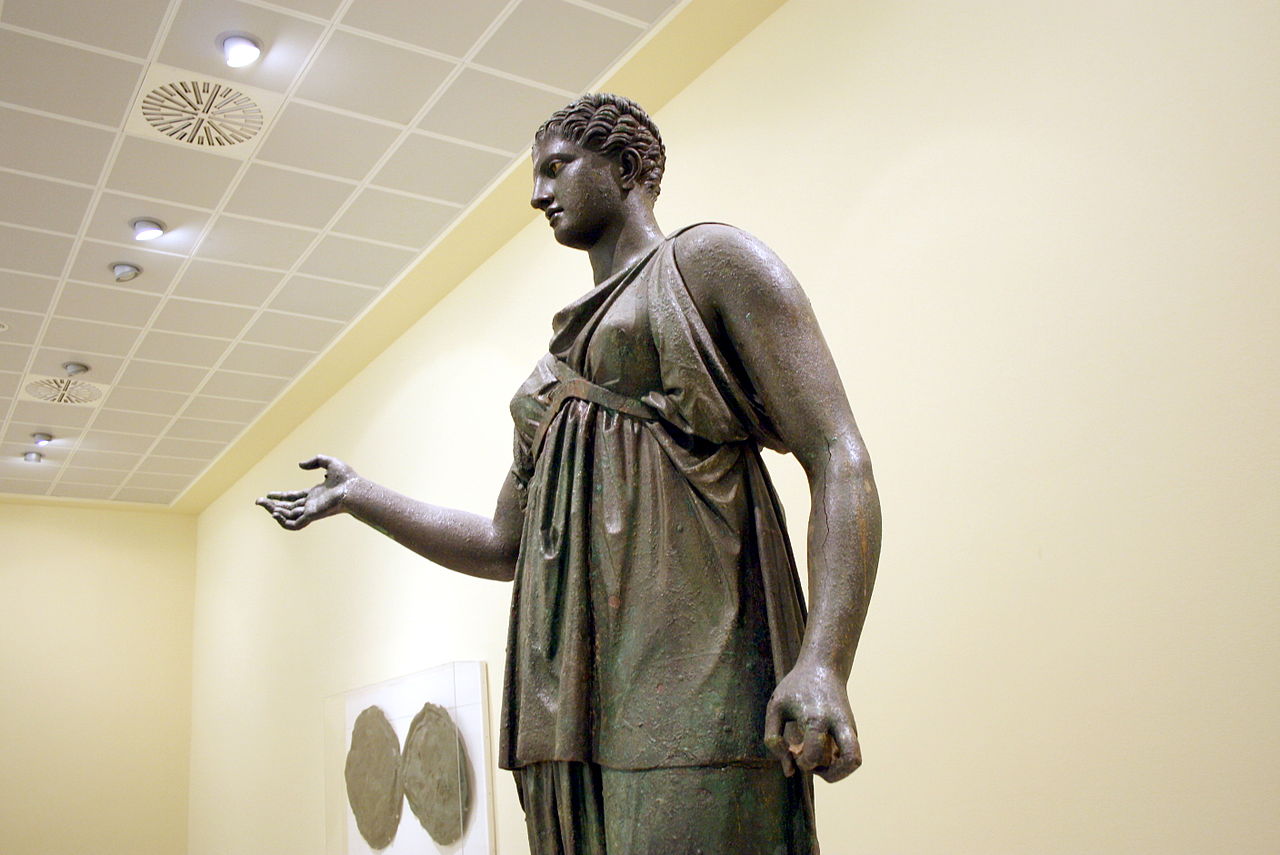


Names and origins
The name Artemis appears in early Greek sources and may reflect a mixture of native Greek and Anatolian influences. Local cults emphasized different aspects of the goddess—hunter and preservative mother, or a more chthonic and lunar figure—so her character varies across regions and periods.
Iconography and attributes
Artemis is typically portrayed as a youthful huntress wearing a short tunic and carrying a bow and quiver. Her usual attributes include the bow, arrows, a quiver and hunting knives; she is commonly attended by dogs and a herd of deer. In later representations she may also bear a crescent moon, reflecting her lunar associations.
Myths and literary portrayals
Mythic narratives present Artemis as both protective and avenging. She appears in a variety of stories—from her miraculous birth on Delos to episodes where she punishes transgressors of sacred laws or defends her devotees. While celebrated as a guardian of young women and childbirth, she could also exercise swift, severe retribution against those who violated her sanctity.
Cult, sanctuaries and rites
Artemis inspired many local cults and sanctuaries throughout the Greek world, including important centers such as Delos and Brauron, and the monumental temple traditionally called the Temple of Artemis at Ephesus. Ritual practices varied: some involved processions and offerings, others—particularly rites of passage for girls—reflected her role in transitions to adulthood. Festivals often combined pastoral, hunting and domestic elements.
Associations and legacy
Over time Artemis was sometimes syncretized with other goddesses: elements of the moon goddess and of Hecate appear in some portrayals. Her Roman counterpart, Diana, preserved many attributes but also developed local differences. In modern culture Artemis is an enduring archetype of the independent huntress and protector of nature and women.
Symbols and notable facts
- Domains: wilderness, hunting, the Moon, childbirth, chastity.
- Attributes: bow, arrows, quiver, hunting dogs and deer.
- Family: daughter of Zeus and Leto, twin of Apollo.
- Cult places: Delos, Brauron and the Artemision at Ephesus are among the best-known centers of worship; local rites could include youth initiation and animal offerings.
- Comparative: Roman Diana shares many traits; scholarly discussions also note overlaps with lunar and chthonic figures such as Selene or Hecate.
For further reading on archaeological finds, ancient hymns and regional cult practices, consult specialist works and curated museum collections and databases (hunting, archery, ritual contexts) that document how Artemis was venerated across the Mediterranean world.
Questions and answers
Q: Who is Artemis?
A: Artemis is the Greek goddess of the Moon, hunting, archery, virginity and midwifery. She is one of the members of the Twelve Olympians who ruled the world on top of Mount Olympus. Her Roman equivalent is Diana.
Q: What does she look like?
A: Artemis is generally depicted as a beautiful huntress wearing a sleeveless tunic and carrying a bow and arrow. She is accompanied by a group of nymphs huntresses.
Q: What are her symbols?
A: Bow, arrow, quiver and knives serves as her symbols.
Q: What are her sacred animals?
A: Deer and stags are her sacred animals.
Q: Who was her father?
A: Her father was Zeus.
Q: Who was her mother?
A: Her mother was Leto.
Q: Who was her twin brother?
A:Her twin brother was Apollo.
Related articles
Author
AlegsaOnline.com Artemis: Greek goddess of the hunt, moon, childbirth and chastity Leandro Alegsa
URL: https://en.alegsaonline.com/art/6241