
Hassan II Mosque, Casablanca
20th-century mosque in Casablanca noted for its oceanside site, large capacity, extensive Moroccan craftsmanship and the world's tallest mosque minaret.
Overview: The Hassan II Mosque, named for King Hassan II, is one of Morocco's best known modern monuments. Its Arabic name appears as مسجد الحسن الثاني. The mosque sits in the city of Casablanca in Morocco, on a promontory projecting over the Atlantic coast. Its scale and siting make it a prominent landmark for both residents and visitors.
Image gallery
10 Images




Scale and significance
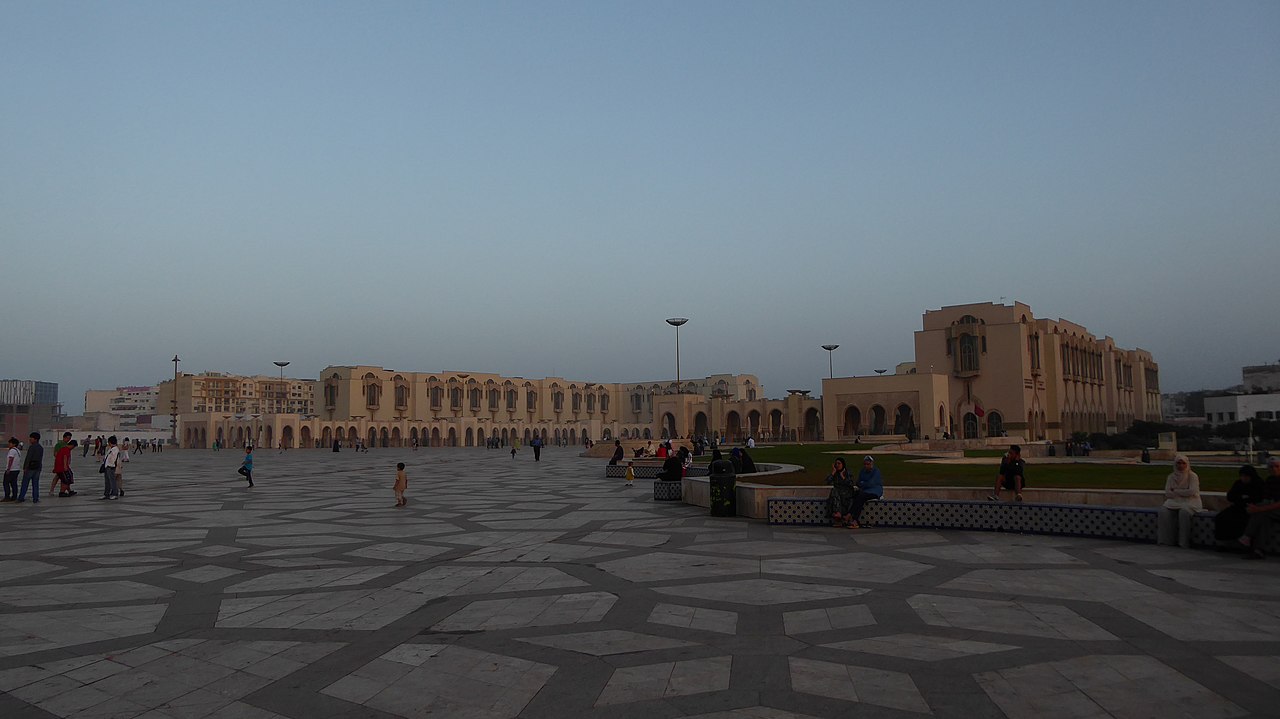
The complex is among the largest mosques in the world and is commonly included on lists of the largest mosques. It is often ranked after Islam's two holiest sites, the Masjid al-Haram in Mecca and the Al‑Masjid al‑Nabawi in Medina. The mosque's covered prayer hall and adjacent esplanade together provide space for large congregations; the interior floor area has room for tens of thousands, with a glazed section that faces the ocean and seating for a substantial number of worshippers. The site around the building can accommodate additional crowds during major religious occasions.
Design, materials and craftsmanship
The mosque was designed by the French architect Michel Pinseau and executed with a large team of Moroccan craftsmen and an international technical staff. The scheme brings together traditional Moroccan elements — such as zellij tilework, carved plaster (stucco), and cedar wood carving — with modern construction techniques. The building incorporates contemporary amenities and engineering solutions, including climate-control systems, a partially retractable roof over the prayer hall, and a glass floor that provides views of the sea beyond the sanctuary.
Construction, minaret and shoreline setting
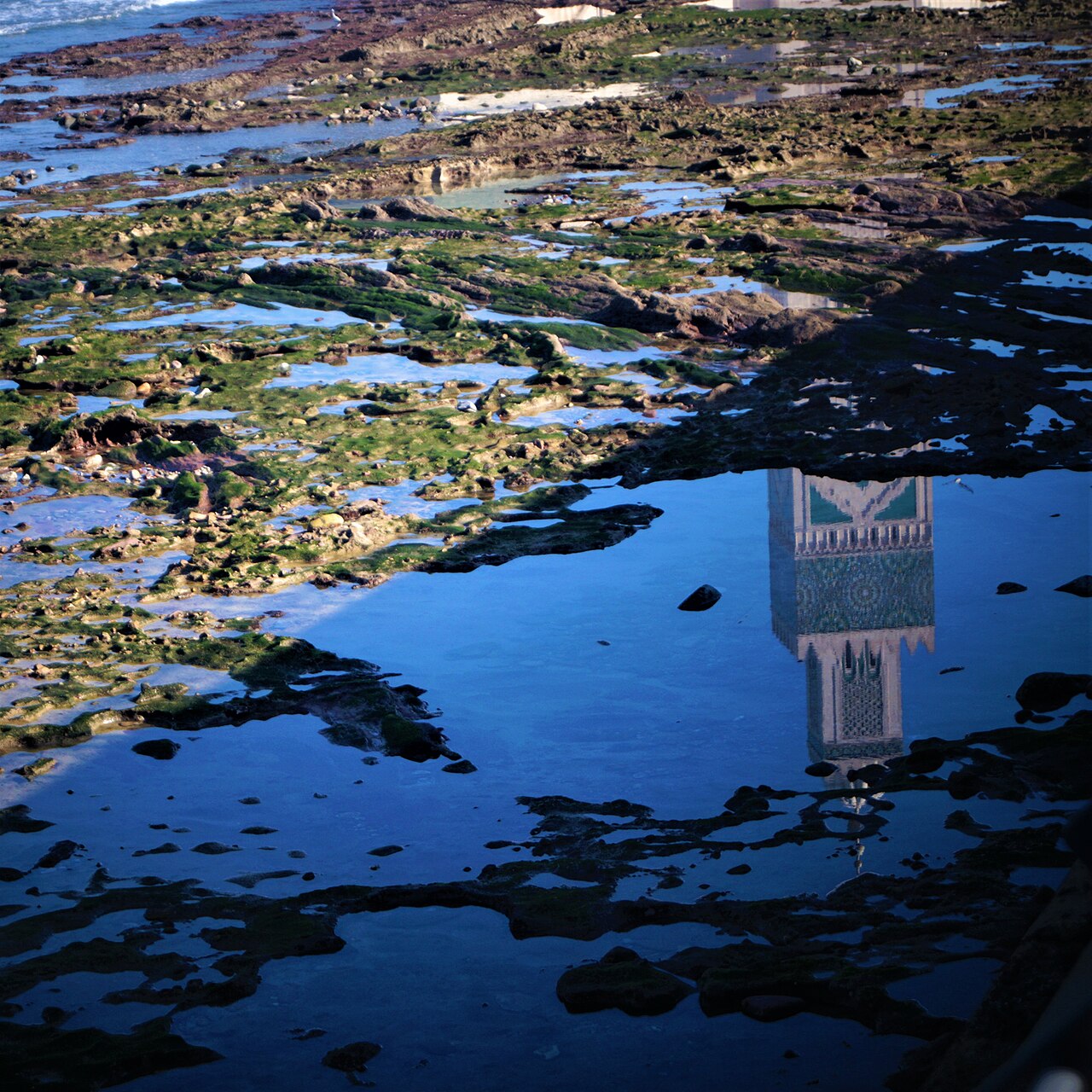
Construction was carried out by a major contractor and mobilised a large workforce of artisans and labourers. The project, which became a high-profile national undertaking, was completed and opened in the early 1990s. A conspicuous element of the complex is its tall minaret; at approximately 210 metres the tower is recognised as the tallest mosque minaret in the world and is visible from many points along the coast. The mosque's relationship with the Atlantic is deliberate: the building stands on a cliff-like site and includes architectural devices that frame views of the water.
Use, visiting and cultural role
The Hassan II Mosque functions as an active place of worship while also serving as a major cultural attraction. Its size and decorative program make it an important showcase for Moroccan arts and artisanal techniques. Guided visits allow non-Muslim visitors to enter at scheduled times and learn about the building's architecture, decorative programs and religious function. The complex is frequently cited in studies of 20th-century monumental architecture in North Africa and in surveys of contemporary mosque design.
Notable facts
- The building is often described as the largest mosque in Morocco and among the largest worldwide.
- The project combined local craftsmanship with international engineering and a French-led architectural team under Michel Pinseau.
- The minaret, a defining visual feature, is commonly referenced as the world's tallest mosque minaret (minaret reference).
- Its coastal position gives the mosque a strong visual and symbolic connection to the sea and to Casablanca's urban landscape.
For further reading consult architectural surveys and official visitor information about the mosque, its conservation and its role in Moroccan cultural life. Related topics include overviews of Moroccan religious architecture, modern monumental projects in North Africa and lists of the world's great mosque complexes.
Reference links: Arabic name, Casablanca, largest mosques, Morocco, Masjid al‑Haram, Mecca, Al‑Masjid al‑Nabawi, French, Michel Pinseau, Atlantic, minaret.
Related articles
Author
AlegsaOnline.com Hassan II Mosque, Casablanca Leandro Alegsa
URL: https://en.alegsaonline.com/art/42758
Sources
- bouygues.com : Bouygues website: Hassan II Mosque
- commons.wikimedia.org : Hassan II Mosque