
Henry VII Lady Chapel, Westminster Abbey
Late Gothic chapel at the east end of Westminster Abbey built for Henry VII; noted for its fan vaulting, Tudor ornament, royal tombs and role as a royal mausoleum and devotional space.
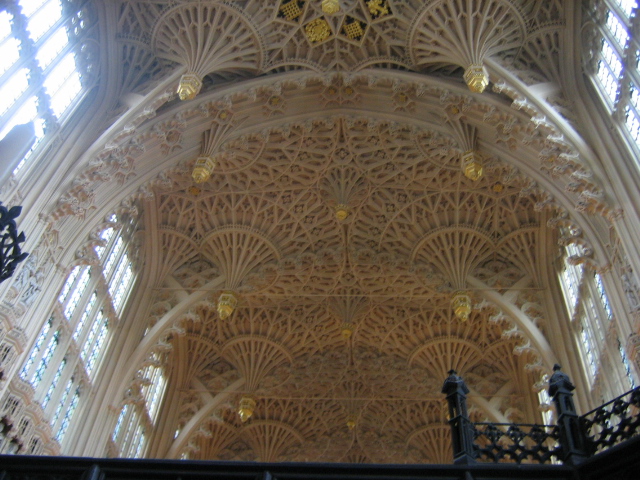
The Henry VII Lady Chapel is a late Gothic chapel forming the eastern termination of Westminster Abbey in London. Commissioned by King Henry VII as a chantry and a devotional space dedicated to the Virgin Mary, it is widely regarded as one of the finest examples of English Perpendicular Gothic executed at the transition to the Tudor era. Its rich stonework, sculptural tombs and distinctive fan vaulting make it both an architectural landmark and a royal burial place.
Image gallery
6 Images



Design and principal features
The chapel is characterised by vertical lines, ornate tracery, and an elaborate fan vault that spans the roof—an advanced form of vaulting developed in late medieval England. Decorative elements include a high, ornate east window filled with stained glass (much of it restored over time), niches and canopies for effigies, and carved Tudor symbols such as the rose and portcullis. Internally, the space was conceived as a chantry choir, with fine stone and woodwork focused on liturgical use and funerary display.
History and construction
Work began in the early years of the 16th century under the patronage of Henry VII. Initial supervision is commonly attributed to Sir Reginald Bray, with later master masons such as William Vertue completing the vaulting and finishing details in the following decades. After Henry VII's death in 1509 he was interred there in an elaborate tomb whose recumbent effigies were executed by the Italian sculptor Pietro Torrigiano. The chapel became a visible statement of Tudor piety and royal authority.
Uses, monuments and significance
Beyond its role as a place of private devotion and commemoration, the Henry VII Lady Chapel functions as a royal mausoleum containing major funerary monuments associated with the late medieval and early Tudor dynasty. It has been the focus of occasional royal services and memorials, and for visitors it encapsulates the interplay of art, religion and monarchy in early 16th-century England. Conservation work over centuries has aimed to preserve its carved detail, painted surfaces and sculptural groups for public appreciation.
Notable facts and visitor notes
- The chapel is dedicated to the Virgin Mary and is positioned at the far eastern end of Westminster Abbey—traditionally the site for a "lady chapel" in large medieval churches; see general discussion at Lady chapel.
- The building is part of the larger ecclesiastical complex of Westminster Abbey, itself a site of coronations, burials and national ceremonies.
- Henry VII's tomb, with work by Pietro Torrigiano, is a principal monument inside the chapel; the king was buried there after his death in 1509, and the chapel remains closely associated with his legacy.
- Construction began under Sir Reginald Bray and was carried forward by master masons including William Vertue; the project exemplifies late Gothic craftsmanship and Tudor patronage (building history).
- The eastern location of the chapel can be identified on maps and coordinates records (site coordinates), and the space is accessible to visitors as part of the Abbey complex.
For more detailed architectural analysis, conservation updates and visiting information consult specialist references and the Abbey's own materials, which discuss the chapel's fabric, sculptural program and later restorations in depth (Lady chapel overview, Westminster Abbey resources).
Related articles
Author
AlegsaOnline.com Henry VII Lady Chapel, Westminster Abbey Leandro Alegsa
URL: https://en.alegsaonline.com/art/43622