
Hereford Cathedral: history, architecture and the Mappa Mundi
Medieval cathedral in Hereford, England; begun in 1079, seat of the Bishop of Hereford, home to the 13th‑century Mappa Mundi, a chained library and notable Norman and Gothic architecture.
Overview
Hereford Cathedral stands in the city centre of Hereford and serves as the seat of the Bishop of Hereford. The present stone building was begun in 1079 on the site of earlier churches. Over the centuries it has been both a centre of Christian worship and a repository for books, maps and other medieval treasures.
Image gallery
10 Images





Architecture and interior
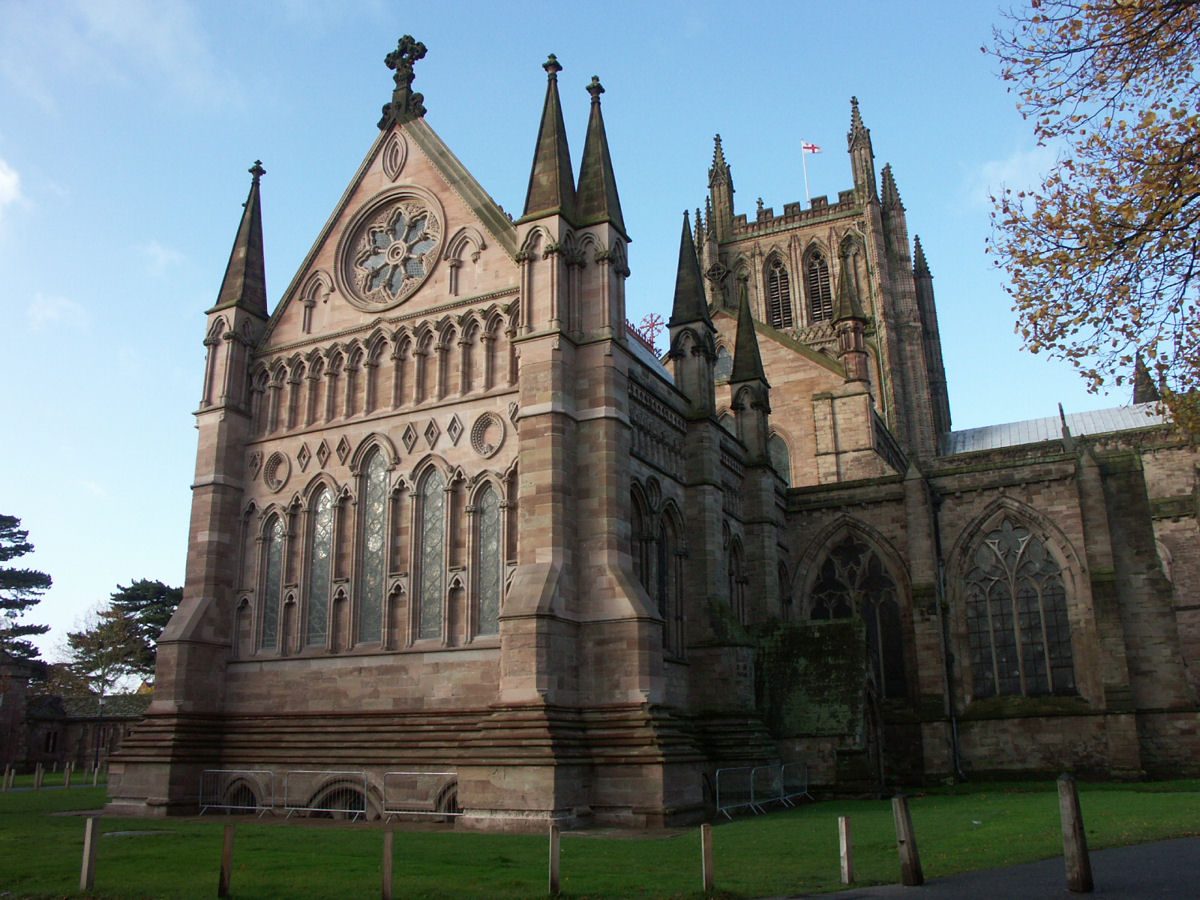
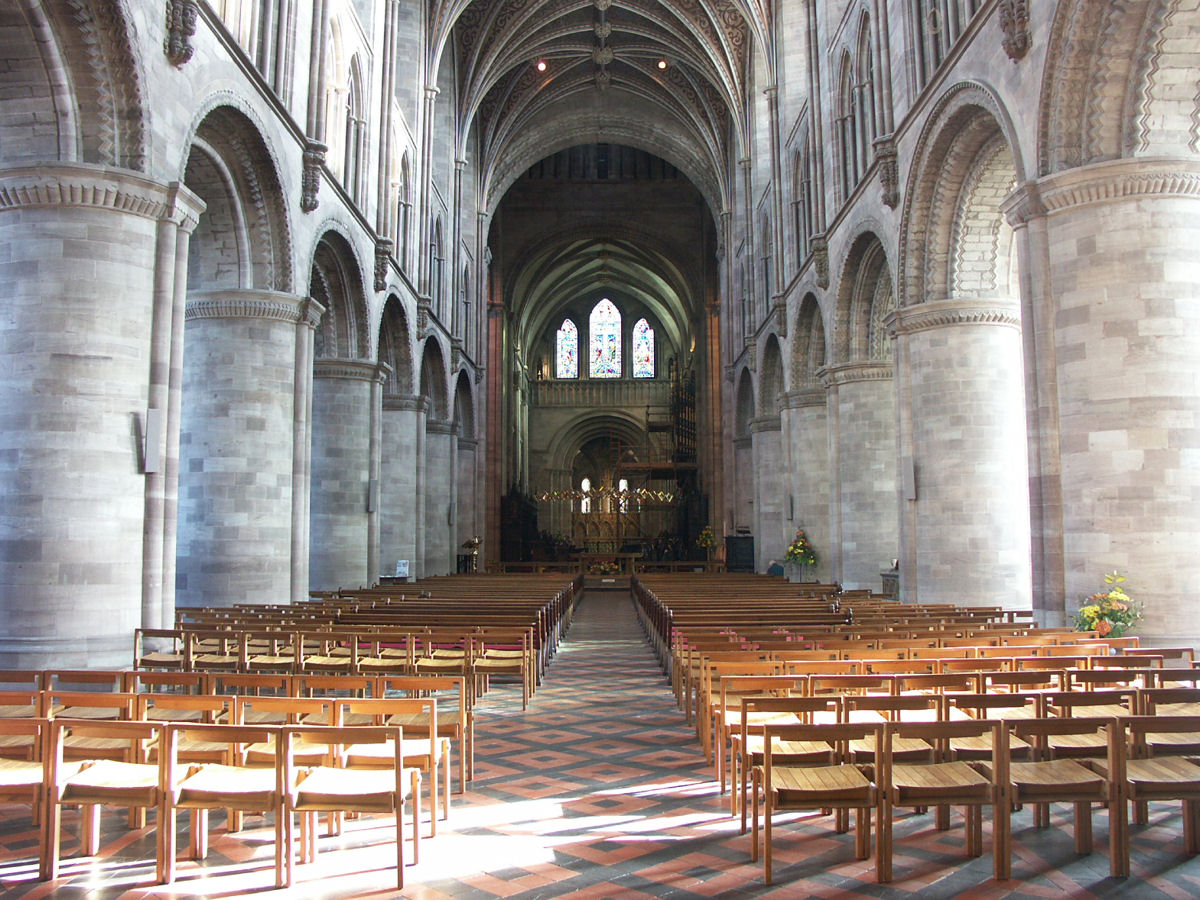
The cathedral displays a mix of architectural styles that reflect long periods of construction and alteration. Norman masonry remains visible in parts of the lower structure, while later Gothic work appears in window tracery, vaulting and decorative stonework. The plan comprises a nave, choir and transepts with a dominant tower at the crossing; inside, carved stone details, choir stalls and historic fittings create a layered interior typical of English medieval cathedrals.
Treasures and collections
Its most famous object is the Mappa Mundi, a large medieval world map dating from the 13th century that combines geography, biblical narrative and mythical illustration on a single sheet. The cathedral also preserves a chained library and important medieval manuscripts and liturgical books, items that attract historians, conservators and visitors interested in medieval scholarship.
History and conservation
Construction beginning in the late 11th century replaced earlier ecclesiastical buildings on the site. Like many English cathedrals, Hereford experienced phases of rebuilding, embellishment and Victorian-era restoration intended to repair and adapt the fabric. Today the building is protected as a Grade I listed structure and is the subject of ongoing conservation to safeguard its stonework, stained glass and archival holdings.
Uses and public role
The cathedral continues to function as an active place of worship with regular services and a long choral tradition supported by a historic organ. It also plays a civic and cultural role: exhibitions, guided visits and educational activities help present the Mappa Mundi and the chained library to a wide audience while balancing access with the specialist needs of conservation.
Notable facts
- Site occupied by successive cathedrals since the early medieval period.
- Houses one of the best known medieval maps in Britain and a rare chained library.
- Combines Norman and Gothic architectural phases that illustrate centuries of English church building.
Visitors seeking detailed information, opening times or scholarly access are encouraged to consult cathedral notices or follow local visitor resources linked from official pages and guides.
Questions and answers
Q: What is Hereford Cathedral?
A: Hereford Cathedral is a church located in the town of Hereford.
Q: When was Hereford Cathedral built?
A: The present building of Hereford Cathedral was started in 1079.
Q: How many cathedrals were there before the present Hereford Cathedral?
A: Before the present Hereford Cathedral, there were two other cathedrals.
Q: Who is the bishop of Hereford Cathedral?
A: The bishop of Hereford Cathedral is the seat of the Bishop of Hereford.
Q: What is the most famous treasure in Hereford Cathedral?
A: The most famous treasure in Hereford Cathedral is the Mappa Mundi, a medieval map of the world dating from the 13th century.
Q: What is the status of Hereford Cathedral?
A: Hereford Cathedral is a Grade I listed building.
Q: What is the historical significance of Hereford Cathedral?
A: Hereford Cathedral has a great historical significance as it is a medieval cathedral built in the 1070s and is home to a world-renowned treasure, the Mappa Mundi.
Related articles
Author
AlegsaOnline.com Hereford Cathedral: history, architecture and the Mappa Mundi Leandro Alegsa
URL: https://en.alegsaonline.com/art/43748