
Harrier (bird): low-flying hawks of open country
Harriers are slender, ground-hunting raptors (genus Circus) that forage by flying low over fields and marshes. Juveniles and some females are often called ring-tails.
Overview
Harriers are a group of medium-sized raptors in the genus Circus and related taxa, known for hunting across open landscapes. As members of the broader birds of prey community, they occupy a distinct ecological niche by sweeping low over grassland, heath, and wetlands to locate small vertebrates and birds.
Image gallery
10 Images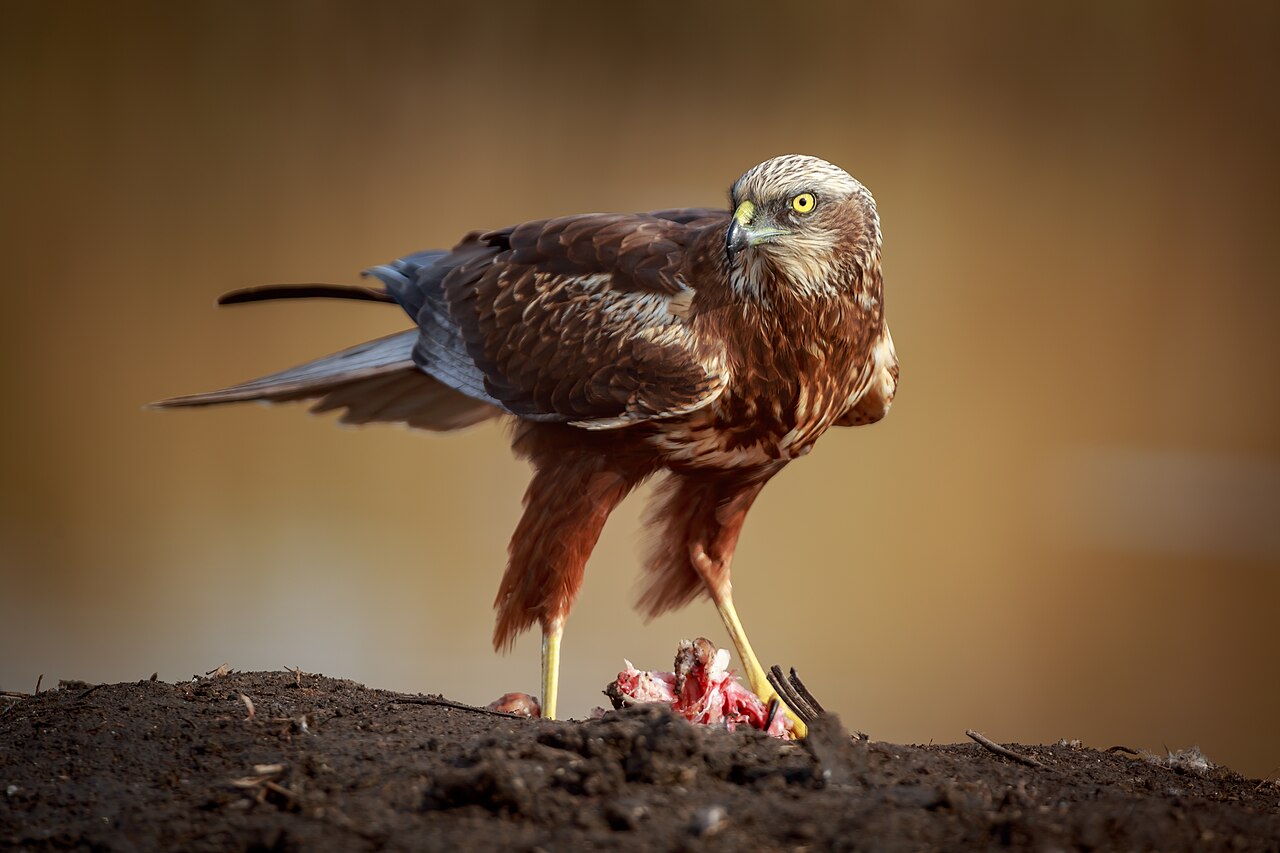


Identification and features
Harriers are generally long-winged and long-tailed with a slim body adapted for buoyant, low-level flight. Many species show sexual dimorphism in plumage and size. Several harriers possess a soft facial disc that aids in locating prey by sound, a trait that converges with some nocturnal raptors despite harriers being active by day.
Behavior and diet
These birds typically hunt by quartering—flying slowly and deliberately close to the ground. Their diet commonly includes small mammals, ground-nesting birds, reptiles, amphibians, and large insects. Typical hunting strategies include:
- low, steady flight over open terrain
- sudden stoops or pounces into cover
- using sight and, in some species, hearing to detect hidden prey
Reproduction and young
Harriers usually nest on the ground or in low vegetation. Nest sites are often in marshes, grasslands, or reedbeds. Young birds and some adult females are frequently called ring-tails because juvenile plumage and certain female morphs show banded tails and muted tones compared with adult males.
Distribution, conservation, and human interactions
Harriers occur across much of the world in suitable open habitats. Some species adapt well to agricultural mosaics, while others decline when wetlands and grasslands are drained or fragmented. Conservation efforts often focus on habitat protection and management. Observers identify harriers by their characteristic flight and form, and they are a common subject of birdwatching and ecological study.
For general classification and additional reading, see resources on avian groups such as the species group described by ornithologists and treatments of hawks in field guides and conservation literature. Further species-level information is available through specialized databases and regional bird accounts (birds of prey summaries).
Related articles
Author
AlegsaOnline.com Harrier (bird): low-flying hawks of open country Leandro Alegsa
URL: https://en.alegsaonline.com/art/42544