
Hectocotylus — the specialized reproductive arm of cephalopods
A hectocotylus is a modified arm in male cephalopods used to transfer spermatophores (packages of sperm) to a female. It varies in form and function across octopuses, squids, cuttlefish and related groups.
Overview
The hectocotylus is a highly modified limb found on males of many cephalopods. Its primary role is reproductive: it handles and delivers spermatophores, packets of sperm, to a female’s mantle cavity or buccal region. Rather than serving for locomotion or prey capture, the hectocotylus is adapted for precise transfer during mating.
Image gallery
10 Images


Structure and variation
Morphology differs widely among groups. Modifications include a reduced or specialized tip called a ligula, grooves or suckers arranged to hold spermatophores, and altered muscular or glandular tissue. In some octopus species the hectocotylus appears on a specific arm (commonly the third right arm), while in many squids and cuttlefish it is a distinct arm on the ventral surface. The exact shape and size are often species-specific.
Behavior and reproductive use
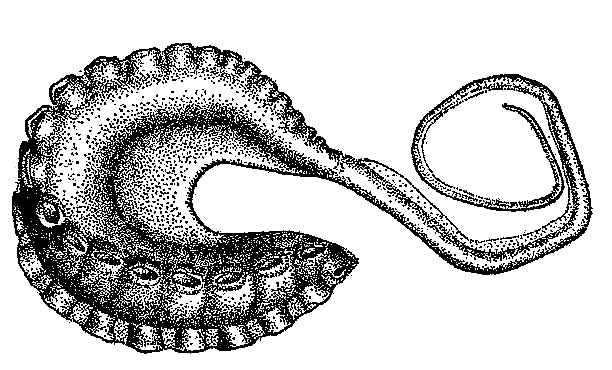
During mating the male maneuvers the hectocotylus to pick up a spermatophore from his mantle and insert it into the female’s mantle cavity or near the oviducts. In several taxa the arm remains functional and retractable; in others, notably certain argonauts and closely related species, the hectocotylus detaches and remains in the female, continuing to function independently as a means of sperm transfer.
Examples and taxonomic importance
- Octopuses: often a single hectocotylized arm with a distinct tip used to place spermatophores.
- Squids and cuttlefish: specialized arm or hectocotylized region employed during copulation displays and transfer.
- Argonauts: males deposit a detachable hectocotylus into the female.
Evolutionary and historical notes
The hectocotylus illustrates how sexual selection and reproductive needs drive anatomical innovation. Historically it puzzled early naturalists; detached hectocotyli found in females were once mistaken for parasitic worms or separate organisms. Today the structure is useful in species identification and in studies of mating systems, sexual dimorphism and reproductive strategies among cephalopods.
Notable distinctions: not all cephalopods possess a markedly modified arm—its presence and form are variable and tied to mating behaviors. Because the hectocotylus directly mediates sperm transfer, its shape often reflects evolutionary pressures such as sperm competition and mate choice.
Related articles
Author
AlegsaOnline.com Hectocotylus — the specialized reproductive arm of cephalopods Leandro Alegsa
URL: https://en.alegsaonline.com/art/43185