
Hazel dormouse (Muscardinus avellanarius)
Small nocturnal arboreal rodent of Europe and Asia Minor, noted for long hibernation, dependence on hedgerows and woodland understorey, and conservation concern where habitats are fragmented.
Overview
The hazel dormouse (Muscardinus avellanarius), commonly called the dormouse in British usage, is a small, nocturnal rodent found across much of northern and central Europe and into parts of Asia Minor. It is the only living species in the genus Muscardinus. For a concise species profile see species information; general context on rodents is available at rodent overview.
Image gallery
7 Images



Taxonomy and identification
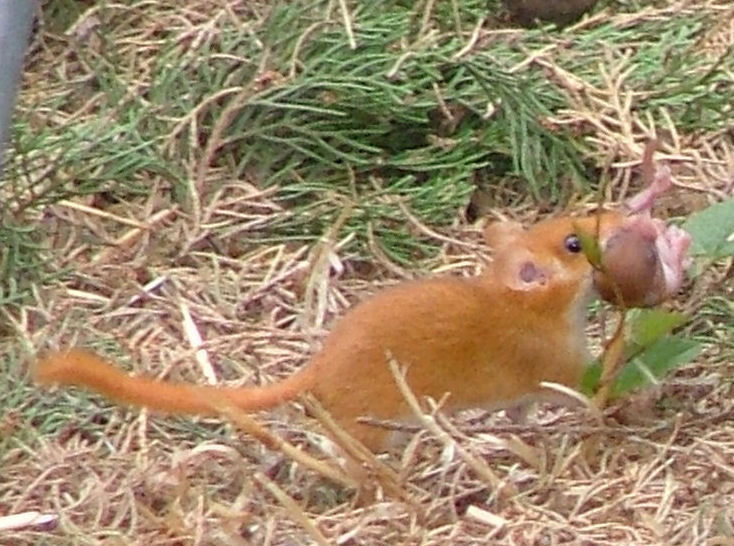
The hazel dormouse belongs to the family Gliridae, the dormice. Adults are compact with large eyes and rounded ears, and a bushy tail that aids balance in trees. Typical head-and-body length is 6–9 cm with a tail of about 5.7–7.5 cm. Weight is commonly 17–20 g but individuals fatten before winter to around 30–40 g. Fur is usually golden-brown above and paler below; juveniles resemble small adults.
Behaviour and diet
Primarily arboreal, hazel dormice move through shrubs, hedgerows and woodland canopies. They are largely nocturnal and construct spherical nests of woven vegetation in trees or dense shrubs. Their diet is varied and seasonal: flowers, nectar and pollen in spring and early summer, soft fruits and berries in mid-season, and nuts such as hazelnuts later in the year, supplemented by insects and other small invertebrates when available.
Hibernation and seasonal cycle
In temperate parts of their range hazel dormice enter a prolonged hibernation. Dormancy commonly begins in autumn (often around October) and lasts until spring (April or May), during which individuals rely on accumulated fat reserves. For more on seasonal biology and hibernation patterns consult specialist sources at hibernation references.
Reproduction and lifecycle
Breeding occurs in the warmer months. Females commonly produce one or two litters each year, with several young per litter. Juveniles develop quickly and disperse into surrounding vegetation as they grow. Lifespan in the wild is relatively short for small mammals, with survival influenced by habitat quality, predation and food availability.
Distribution and habitat
The hazel dormouse is native to much of northern and central Europe and extends into parts of Asia Minor. It prefers structurally diverse, deciduous woodland, species-rich hedgerows and scrub with a continuous shrub layer that provides food and nesting sites throughout the active season. Detailed occurrence records and distribution maps can be consulted via range mapping resources at range maps and regional databases such as British Isles records.
Predators and threats
Natural predators include owls, mustelids and foxes. The main conservation concerns arise from habitat loss and fragmentation, agricultural intensification, removal of hedgerows, and woodland management that reduces understorey structure and seasonal food supplies. Where habitats become isolated, local populations may decline or disappear.
Conservation and management
Because of its reliance on connected, species-rich woody habitats, the hazel dormouse is often treated as an indicator of healthy hedgerow and woodland ecosystems. Conservation measures aim to protect and restore suitable habitat, improve connectivity between woodlands, retain or create hedgerow networks and maintain a diversity of flowering and fruiting plants that provide continuous food. Practical actions include sympathetic coppicing, managing rides and margins to extend flowering periods, planting and maintaining hedgerows, and retaining dead wood and shrub layers.
Monitoring and practical guidance
Monitoring techniques commonly used by conservationists and volunteer groups include nest-box surveys, targeted habitat assessments and footprint-tunnel or camera surveys where appropriate. Installing nest boxes can both aid monitoring and provide supplementary nesting opportunities in areas where natural cavities are scarce. Many countries provide guidance and legal protection for the species; for practical monitoring protocols see general references at species profile and genus details.
Relationship with other dormice
The hazel dormouse is the only dormouse species native to the British Isles. By contrast, the edible dormouse (Glis glis) has been introduced in some areas and established non-native populations; comparison resources are available at edible dormouse notes. Understanding differences in habitat use and behaviour can inform local management where both species occur.
Further resources
- Species accounts and conservation guidance: species information.
- Family and broader rodent context: family background.
- Genus-level notes and identification: genus details.
- Seasonal biology and hibernation studies: seasonal biology.
- Distribution data and maps: range maps.
- Regional occurrence records and monitoring networks: regional records.
- Comparative information on other dormouse species: comparisons with the edible dormouse.
Notable: in British popular usage the hazel dormouse is often referred to simply as "the dormouse". Its ecological role and sensitivity to habitat change make it a focal species for hedgerow and woodland conservation efforts across its range.
Questions and answers
Q: What is the hazel dormouse?
A: The hazel dormouse is a small rodent that is the only living species in its genus.
Q: How long is the hazel dormouse?
A: The hazel dormouse is 6 to 9 centimetres long with a tail of 5.7 to 7.5 centimetres.
Q: How much does the hazel dormouse weigh?
A: The hazel dormouse weighs 17 to 20 grams, increasing to 30 to 40 grams just before hibernation.
Q: When does the hazel dormouse hibernate?
A: The hazel dormouse hibernates from October to April/May.
Q: Where is the hazel dormouse native to?
A: The hazel dormouse is native to northern Europe and Asia Minor.
Q: What is the British term for the hazel dormouse?
A: In British sources, the hazel dormouse is normally called the dormouse rather than the hazel or common dormouse.
Q: Are there any other species of dormouse in the British Isles?
A: The hazel dormouse is the only dormouse native to the British Isles, although the edible dormouse (Glis glis) was accidentally introduced and now has an established population.
Related articles
Author
AlegsaOnline.com Hazel dormouse (Muscardinus avellanarius) Leandro Alegsa
URL: https://en.alegsaonline.com/art/42993
Sources
- iucnredlist.org : "Muscardinus avellanarius"
- searchnbn.net : "Grid map of records on the Gateway for Hazel dormouse (Muscardinus avellanarius)"
- ptes.org : "Hazel dormouse"
- naturalengland.communisis.com : The Dormouse Conservation handbook
- ptes.org : Hedgerows for Dormice