
Hedylidae — the American moth-butterflies
A small, entirely Neotropical family of lepidopterans called American moth-butterflies. Moth-like in appearance, they are a sister group to true butterflies and include the genus Macrosoma.
Overview
Hedylidae is a small family in the order Lepidoptera commonly referred to as the "American moth-butterflies." Members of this group combine traits typical of moths with features associated with butterflies, which has made their classification of particular interest to entomologists. The family is treated as a distinct family within the Lepidoptera, though its exact position has been debated.
Image gallery
4 Images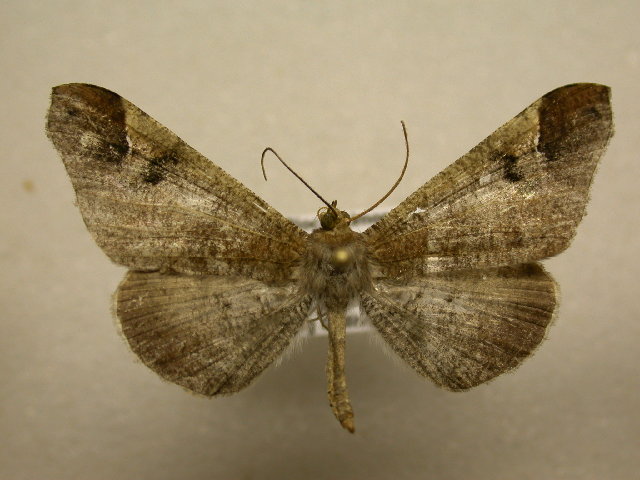


Appearance and biology
Hedylids are generally small to medium-sized and often show moth-like proportions and wing shapes. Their coloration tends toward subdued, cryptic patterns, but some species display contrasting markings on the hindwings. Life-history details are incompletely known for many species: larvae feed on plant material and adults may be active at times or in conditions that blur the orthodox moth/butterfly behavioral divide. Wherever information exists, it shows ecological diversity rather than a single, uniform life strategy.
Taxonomy and evolutionary relationships
Historically the group has prompted differing classifications because of its mixture of characteristics. Molecular studies indicate that Hedylidae are the living sister group to the true butterflies of the superfamily Papilionoidea, a relationship discussed in several phylogenetic analyses (see studies). In a major revision by Scoble in 1986 all known species were placed in the single genus Macrosoma, with approximately 35 described species at that time; further genetic sequencing and taxonomic work continue to refine species limits.
Distribution and habitat
All known Hedylidae occur in the Neotropical region. Their range includes parts of Central America, much of South America, and islands of the Caribbean. They inhabit a variety of environments from lowland forests to montane woodlands, reflecting the broad ecological diversity of the Neotropics.
Ecological role and research importance
Although not as well studied as many butterfly groups, hedylids are ecologically significant as herbivores in their larval stages and as participants in food webs. Their intermediate traits make them important for studies of lepidopteran evolution, particularly the transition from moth-like ancestors to the diverse clade of modern butterflies. Ongoing DNA sequencing projects aim to clarify their internal relationships and refine their placement within the Lepidoptera.
Notable facts
- Commonly called "American moth-butterflies" because they combine characteristics of both moths and butterflies.
- Scoble (1986) consolidated the known species into the genus Macrosoma, grouping about 35 species.
- The family is entirely Neotropical in distribution, occurring across Central and South America and the Caribbean.
- Molecular work continues to refine their relationship as a sister lineage to Papilionoidea (phylogenetic studies).
For general taxonomic overviews and species lists see the family entry and specialist treatments linked from databases and review articles (family overview, Lepidoptera resources). Continued fieldwork and genetic study are expected to improve knowledge of Hedylidae diversity and natural history.
Questions and answers
Q: What is Hedylidae?
A: Hedylidae is a family of insects in the lepidopteran order, commonly known as the "American moth-butterflies".
Q: Are moth-butterflies more moth-like or butterfly-like?
A: Moth-butterflies are rather moth-like.
Q: What is the relationship between butterflies and moths?
A: Butterflies evolved from moths.
Q: What is the sister group to the butterfly superfamily Papilionoidea?
A: The living sister group to the butterfly superfamily Papilionoidea is Hedylidae.
Q: Who combined all 35 species of Hedylidae into a single genus?
A: In 1986, Scoble combined all 35 species of Hedylidae into a single genus Macrosoma.
Q: Where are all the species of Hedylidae found?
A: All the species of Hedylidae are entirely neotropical species from central and southern America and the Caribbean.
Q: What kind of research is going on about Hedylidae?
A: DNA sequence analysis of Hedylidae is currently ongoing.
Related articles
Author
AlegsaOnline.com Hedylidae — the American moth-butterflies Leandro Alegsa
URL: https://en.alegsaonline.com/art/43215