
Haka: Māori ceremonial dance and chant
The haka is a traditional Māori ceremonial dance and chant from New Zealand, performed for welcome, challenge, celebration and remembrance, with distinct styles, movements and cultural protocols.
Overview
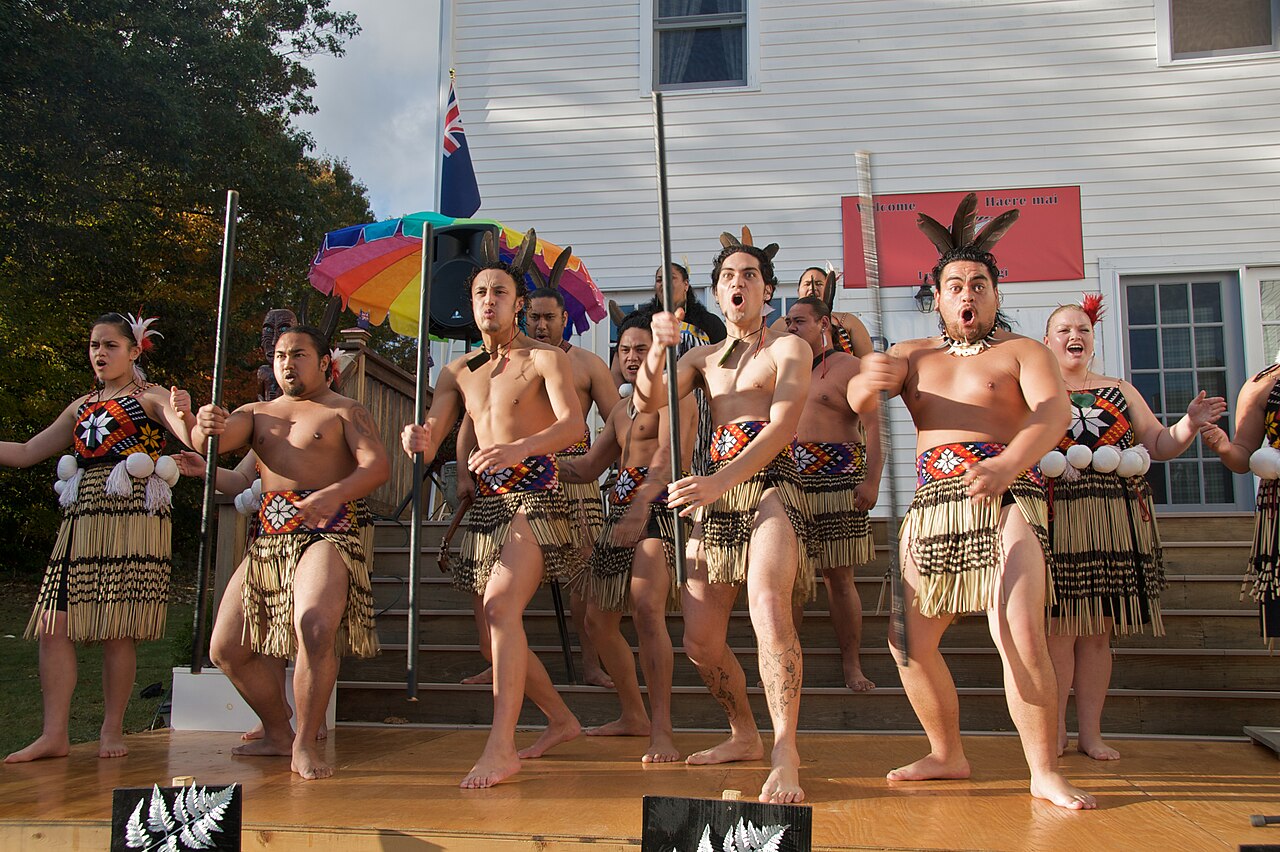
The haka is a traditional Māori performance form, described in both English and Māori as a ritual dance and chant. It combines vigorous body movements, stamping and vocalisation into a coordinated group action. Historically associated with war and tribal challenges, haka are now used in many contexts — from welcoming guests to marking milestones and honouring the dead.
Image gallery
6 Images



Core elements and performance
A typical haka integrates several expressive components. Performers bring together voice, posture and gesture to create a unified message. Common elements include:
- Voice: rhythmic shouting or chanting, often in call-and-response patterns.
- Feet: stamping or jumping to add percussive emphasis.
- Hands and arms: slapping the body, waving or forming distinctive shapes.
- Face: intense expressions such as eye widening, rolling and tongue protrusion to convey ferocity or emotion.
- Formation: groups move and breathe together to project unity and purpose.
Different haka emphasise one or more of these features and may include traditional instruments or chants that link the performance to particular ancestry and stories (storytelling).
History and cultural context
Haka originate from Māori tribal life and have long served multiple social functions. Some haka were performed by warriors before battle to demonstrate strength and resolve; others were composed for celebrations, funerals, or to welcome distinguished visitors. Certain styles, such as the peruperu, were associated with armed preparation, while others were used in ceremonial or sacred settings. Haka often recall historical events, tribal genealogies and the deeds of chiefs; for example, the widely known Ka Mate hakaword is traditionally attributed to the Ngāti Toa leader Te Rauparaha.
Modern uses and public visibility
In contemporary Aotearoa New Zealand, haka feature in community and national life. Schools, marae (meeting grounds) and performing groups present haka at graduations, funerals and cultural festivals. Public sporting performances made the haka internationally recognizable: New Zealand sports teams commonly perform it before competition to welcome or to challenge opponents. The national rugby union side, the All Blacks, perform haka before matches, sometimes using traditional forms such as Ka Mate and later-composed pieces like Kapa o Pango. While some haka aim to intimidate opponents in a sporting context, many performances are intended to convey mana (authority) and unity rather than literal aggression.
Protocols, participation and distinctions
Cultural protocols govern when and how haka are performed. Traditions vary between iwi (tribes) and hapū (subtribes): some haka are specific to a lineage and should only be performed by authorised people, while other haka are composed for wider use. Gender roles are diverse; certain haka are traditionally performed by men, especially those tied to warrior roles, while women often take leading roles in karanga (calls) and supporting chants. In many contemporary settings mixed groups perform together, and women's participation is accepted and visible in public haka depending on the form and local tikanga (customs). For discussion of participation and etiquette see sources on Māori cultural practice (women's participation).
Notable forms and considerations
Several haka have become well known beyond their local origins. Ka Mate is one of the most frequently performed and is closely associated with New Zealand identity. Kapa o Pango was composed for the national rugby team and introduced in the 2000s as an alternative haka. There are many other regional and tribal haka, each with distinct lyrics, movements and purposes. When encountering haka in public or performance, respectful engagement includes acknowledging their cultural significance, learning appropriate protocols, and avoiding appropriation or disrespect. For background about Māori people and the context of haka see general resources on New Zealand culture and heritage.
For further reading on expressive practices and ceremonial dances in Polynesia and Māori tradition, explore materials that describe ritual forms (dance), cultural meanings, and contemporary adaptations across community life. Practical introductions may cover learning basic movements, the role of chant and rhythm, and how local iwi oversee performance rights and responsibilities.
Haka remain a living cultural practice: dynamic, varied and deeply rooted in Māori language and worldviews, serving both to preserve memory and to shape communal identity in modern contexts (Māori heritage, ritual).
Additional links and resources: Māori language resources, English-language introductions, stories behind specific haka.
Note: practices and protocols vary by community; local guidance from iwi and cultural authorities is the best source for respectful participation and accurate history.
References to performance roles and historical associations should be understood as general context rather than exhaustive or universally applicable rules; tribal diversity means many exceptions and local customs exist.
For cultural events, consult local marae and cultural organisations for authorised performance guidance and invitations.
Related topics: traditional Māori arts, community ceremony, and contemporary cultural expression in New Zealand.
Questions and answers
Q: What is a haka?
A: A haka is a ritual dance of the Maori, the native people of New Zealand.
Q: What are the purposes of performing a haka?
A: A haka is performed to excite friends and to scare enemies. In peace time, a haka is also performed as a challenge.
Q: What are the elements involved in a haka performance?
A: A haka can include voice (chanting), feet (stamping and leaping), hand (slapping, waving, and clapping), eyes (rolling), and tongue (poking out).
Q: What kind of story does each haka tell?
A: Each haka tells a different story.
Q: Which is the most famous haka and why is it famous?
A: The most famous haka is Ka Mate. It is famous because it is performed by many New Zealand sports teams before games.
Q: What is another famous haka, and which team performs it?
A: 'Kapo O Pango' is another famous haka, which is performed by New Zealand's rugby union team, the All Blacks.
Q: Are women allowed to perform haka? If not, what do they do instead?
A: Women are not usually allowed to perform haka. Instead, they sing and chant in support.
Related articles
Author
AlegsaOnline.com Haka: Māori ceremonial dance and chant Leandro Alegsa
URL: https://en.alegsaonline.com/art/41822
Sources
- oxfordlearnersdictionaries.com : "haka noun"