
Green algae
Photosynthetic eukaryotes in several algal lineages, green algae are diverse aquatic and terrestrial organisms that share chlorophylls a and b and gave rise to land plants.
Green algae are a broad collection of photosynthetic eukaryotes traditionally grouped with other simple plant-like organisms. They contain the green pigments chlorophyll a and b and store carbohydrates as starch inside their chloroplasts. Historically treated together as a single group, green algae occur in many unrelated lineages; some modern classifications split them between the true Chlorophyta and the streptophyte algae, the latter being the closest relatives of land plants. In older literature they are often described as microscopic protists, but they also include visible multicellular forms.
Image gallery
5 Images

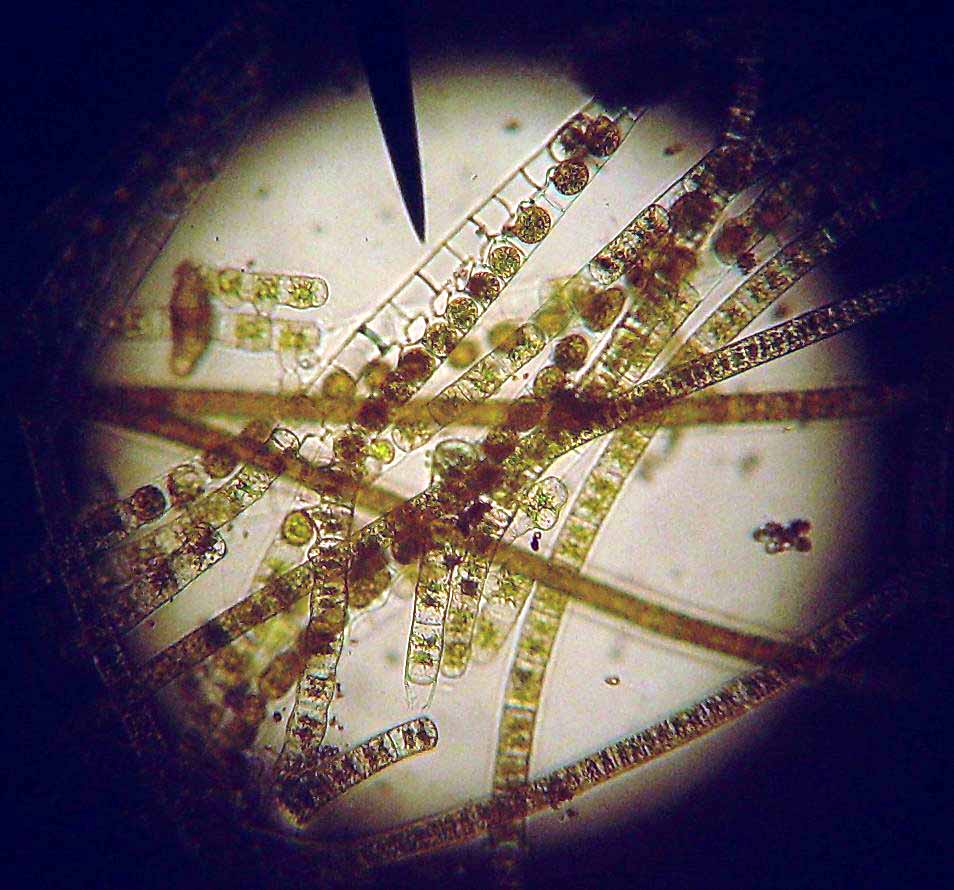


Key characteristics
Members of the green algae share several diagnostic traits: chlorophylls a and b, similar photosynthetic pigments and accessory pigments, and cell walls usually containing cellulose. Their photosynthetic machinery and starch storage resemble that of land plants, which is why plants are considered to have evolved from green algal ancestors. Morphologically they range from single cells to complex multicellular bodies. Some are motile flagellates, commonly bearing two flagella per cell, a condition often noted as having two flagella in many species, while others form non-motile colonies, flat sheets, or branching filaments. In a few groups, such as the Charales, there is tissue differentiation that echoes features seen in primitive land plants.
Taxonomy and evolutionary history
Green algae are not a single monophyletic unit in the strictest sense when land plants are excluded; they occupy at least two major clades. The Chlorophyta are predominantly marine and freshwater algae, whereas the streptophyte algae include forms more closely allied to terrestrial plants. The transition from certain freshwater streptophyte algae to embryophytes (land plants) is one of the major events in Earth’s biological history. Broad estimates place the number of described green algal species in the thousands, reflecting a high diversity of life histories and morphologies. For a general context, green algae are usually treated under the catch-all term algae in ecological and introductory texts.
Distribution and ecological roles
Green algae are cosmopolitan in distribution. They inhabit marine environments, including tide pools and open sea, and are abundant in salt water as well as freshwater and brackish water habitats. Many species also live in moist soils, on tree bark, or as symbionts inside lichens. As primary producers they form the base of many aquatic food webs, produce oxygen by photosynthesis, and can form seasonal blooms under nutrient-rich conditions. Some green algae are important in biofilm communities and in nutrient cycling in both fresh and marine ecosystems.
Reproduction and life cycles
Green algae exhibit diverse reproductive strategies. Vegetative reproduction, asexual spore formation and fragmentation occur in many groups. Sexual reproduction ranges from simple gamete fusion to complex life cycles with alternation of generations in which haploid and diploid phases alternate. The details of reproduction vary widely between unicellular flagellates, colonial species, and large multicellular forms, and these differences are key to understanding their ecology and evolutionary relationships.
Human uses and notable facts
- Green algae are studied for algal biofuel research and as sources of food and nutritional supplements in some cultures.
- They are used as model organisms in cell biology, photosynthesis research, and studies of multicellularity and evolution.
- Some species indicate water quality and are monitored in environmental assessments; others can cause nuisance blooms when nutrients are abundant.
Because the term "green algae" covers a range of lineages, it is important to distinguish them from cyanobacteria (blue-green algae) and from red algae, which have different pigments and evolutionary origins. For readers seeking further background on classifications, life histories, or specific genera, many introductory references and databases provide accessible overviews and species lists—see general resources on higher plants, algal diversity at algae portals, and habitat guides for salt water and freshwater environments. For more on motile forms consult materials on flagellates and flagellar structure (two-flagella condition).
Related articles
Author
AlegsaOnline.com Green algae Leandro Alegsa
URL: https://en.alegsaonline.com/art/40655
Sources
- amjbot.org : "The plant tree of life: an overview and some points of view"
- doi.org : 10.3732/ajb.91.10.1437
- pubmed.ncbi.nlm.nih.gov : 21652302