
Flagellate
A flagellate is a cell bearing one or more whip-like flagella. This article explains their structure, diversity across life, functions, evolutionary role, and differences from bacterial flagella.
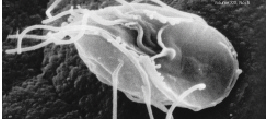
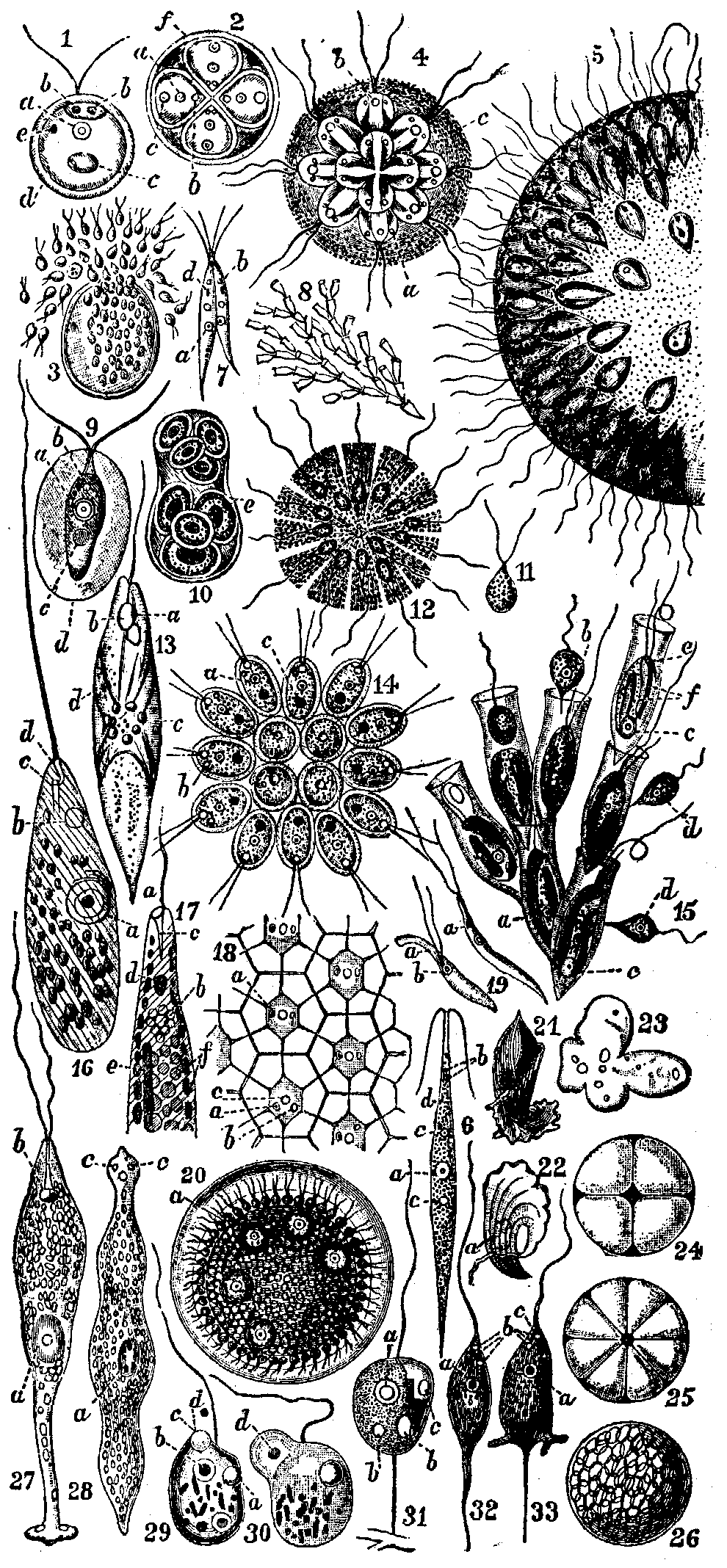
A flagellate is a cell that bears one or more elongated, whip-like appendages called flagella. Flagellate cells occur in many branches of life and perform motility, feeding, or sensory roles. In multicellular animals, specialized flagellate cells include the swimming spermatozoa. Single-celled organisms such as many protists rely on flagella for locomotion and to create feeding currents, while groups of related organisms show varied retention or loss of flagellate stages.
Image gallery
5 Images


Structure and mechanics
In eukaryotes, each flagellum has a conserved internal scaffold: a cylindrical axoneme made of microtubules arranged in a "9+2" pattern, with dynein motor proteins causing bending by sliding adjacent microtubules. This internally driven bending produces wave-like or propulsive motions. The term flagellate refers to the presence of these organelles, often discussed together with the generic term flagella. The basal body anchors the flagellum to the cell and is related to centrioles.
Distribution and examples
Flagellate cells appear across eukaryotic diversity. Many animals (animals) produce flagellate gametes, but some large groups such as flowering plants (angiosperms) and most true fungi (fungi) lack flagellate stages. Close relatives of those groups often retain flagella: for example, green algae and chytrid fungi (chytrids) produce flagellate cells. Because flagella are widespread among eukaryotes, they are central to studies of cell evolution.
Functions and ecological roles
- Locomotion: swimming toward nutrients or away from danger.
- Feeding: generating currents to capture prey or particles.
- Sensory roles: detecting chemical or mechanical cues in the environment.
- Reproduction: enabling transfer or fusion of gametes, as in male sperm.
Distinctions and notable facts
Flagella of eukaryotes differ fundamentally from bacterial flagella: bacterial flagella are helical protein filaments that rotate like propellers, built from flagellin and powered by transmembrane motors. In contrast, eukaryotic flagella bend through ATP-driven motor activity along microtubules. Some organisms have multiple flagella with specialized arrangements (for example, a pair of unequal flagella in many protists), and others have cilia—shorter appendages with similar internal structure but often occurring in large numbers. Research on flagellates informs cell biology, evolution, and medicine, since flagellar defects can affect fertility and human health.
Related articles
Author
AlegsaOnline.com Flagellate Leandro Alegsa
URL: https://en.alegsaonline.com/art/34970