
Great Fire of New York (1776)
A major September 1776 conflagration in Manhattan during the American Revolutionary War that destroyed a substantial portion of New York City; its origin remains debated.
Overview
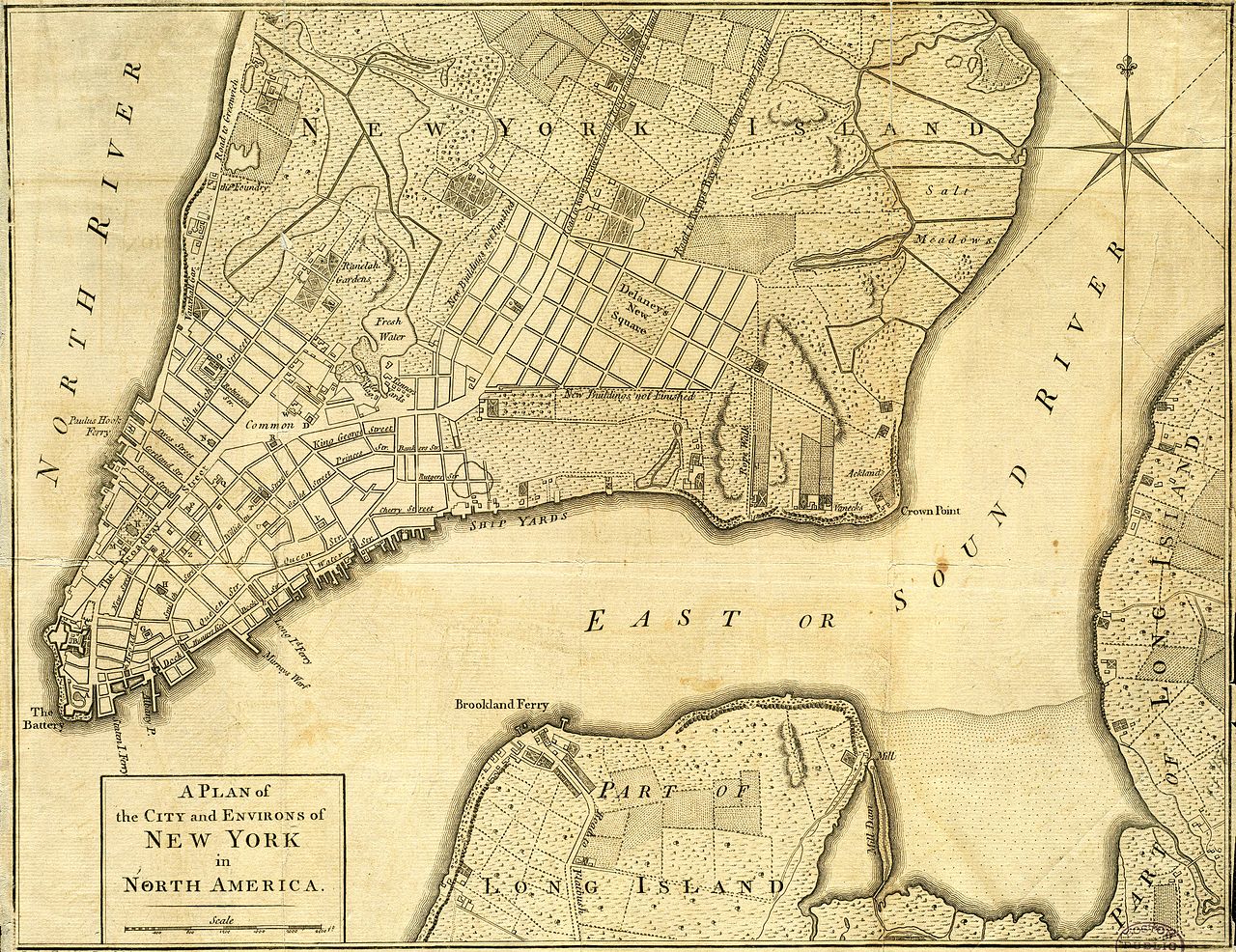
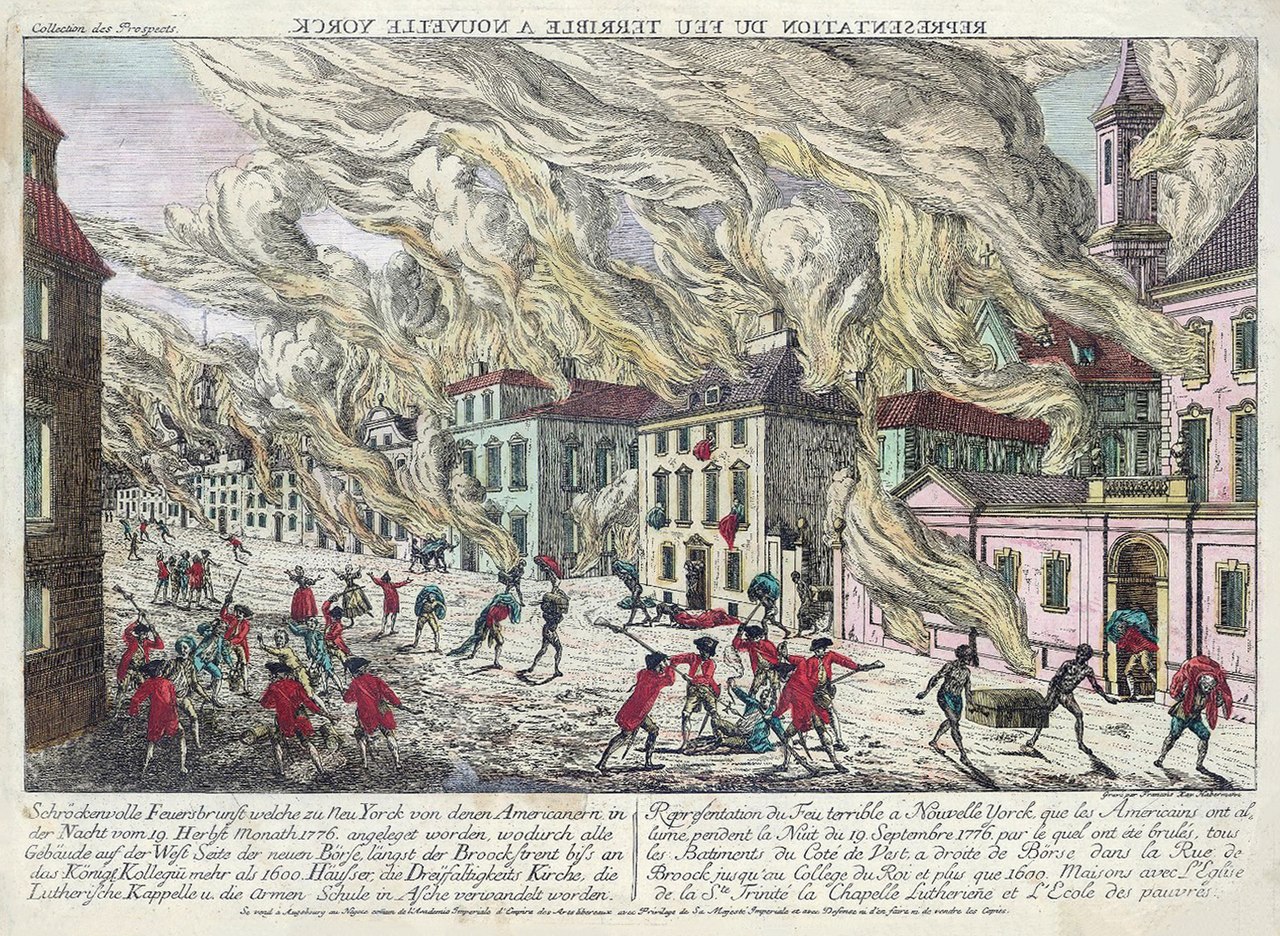
The Great Fire of New York was a large conflagration that swept through parts of New York City during the night of September 21, 1776. It occurred on the southern tip of the island of Manhattan, soon after British forces occupied the city during the American Revolutionary War. The blaze burned through many streets on the west side of the city's colonial boundaries and continued through the night, consuming both commercial and residential structures typical of 18th-century port towns.
Image gallery
5 Images


Origins and contested causes
Responsibility for the fire has been a subject of historical debate. Some contemporaries and later historians argued that retreating American forces or sympathizers — including men who had recently fought in the Battle of Long Island — deliberately set fires to frustrate British resupply and naval operations. Others contend the British Army or its followers may have started fires deliberately, for example in an attempt to destroy the administrative complex at Whitehall, or that the blaze was accidental amid the chaos of occupation. Evidence is inconclusive and sources from the period reflect both rumors and partisan accounts; the precise cause remains uncertain.
Scale of destruction and immediate effects
Estimates at the time and by later researchers place the damage at roughly ten to twenty-five percent of the city’s buildings, though exact figures vary. The fire left many households homeless and disrupted merchant operations in the important Atlantic port. Some undamaged neighborhoods were subjected to looting and ransacking in the aftermath, exacerbating civilian suffering. The influx of loyalist refugees and others fleeing fighting elsewhere compounded the housing and supply problems; contemporary accounts mention large numbers of refugees seeking shelter in the occupied city.
Wider military and civic consequences
Militarily, the blaze influenced how both sides viewed the security of occupied urban centers and the vulnerability of supply chains. For civilians, the destruction underscored weaknesses in colonial-era urban planning: dense wooden construction, narrow streets, and limited firefighting capability allowed flames to spread rapidly. The event also heightened tensions between British authorities and local inhabitants, with accusations that Continental agents or opportunists — sometimes described as Washington's men in popular accounts — had a hand in the destruction.
Aftermath, rebuilding and historical significance
In the months and years that followed, New Yorkers and merchants rebuilt much of the damaged area, altering some property lines and commercial arrangements as trade resumed. The fire remains an important episode in Revolutionary War urban history because it illustrates how warfare, civilian life, and urban vulnerability intersect during occupation. It prompted discussions about fire prevention, insurance, and the security of port cities in wartime that influenced later municipal policies.
Key points
- The fire began on the night of September 21, 1776, shortly after British occupation.
- Its origin is disputed: deliberate act or accident remains unresolved (conflagration, accusations).
- Between about 10% and 25% of the city was destroyed, and unburned areas suffered looting (ransacking).
- The event had lasting effects on civilian life, military logistics, and urban rebuilding policies in New York City and beyond.
For further reading and primary sources, consult period accounts and modern studies that analyze eyewitness testimony, military correspondence, and city records from 1776 to better understand the social and strategic consequences of the Great Fire.
Related topics include the military actions preceding the conflagration, such as the Battle of Long Island, the role of occupying forces (British Army), and the wartime movement of civilians and refugees (refugees) within the region.
Related articles
Author
AlegsaOnline.com Great Fire of New York (1776) Leandro Alegsa
URL: https://en.alegsaonline.com/art/40501