
Battle of Long Island (Battle of Brooklyn) — 1776
Major 1776 engagement near New York that gave the British control of the city; notable for a successful British flank, the Maryland stand, and Washington's night evacuation to Manhattan.
The Battle of Long Island, fought on August 27, 1776, was the first large-scale engagement after the United States declared independence and became one of the largest battles of the American Revolutionary period. Often called the Battle of Brooklyn or the Battle of Brooklyn Heights, it ended in a clear British victory that opened the way to occupation of New York and established British dominance of local waterways and approaches. Although the encounter was a strategic defeat for the Continental side, the subsequent orderly withdrawal preserved most of the army and ensured that the Revolution could continue.
Image gallery
10 Images


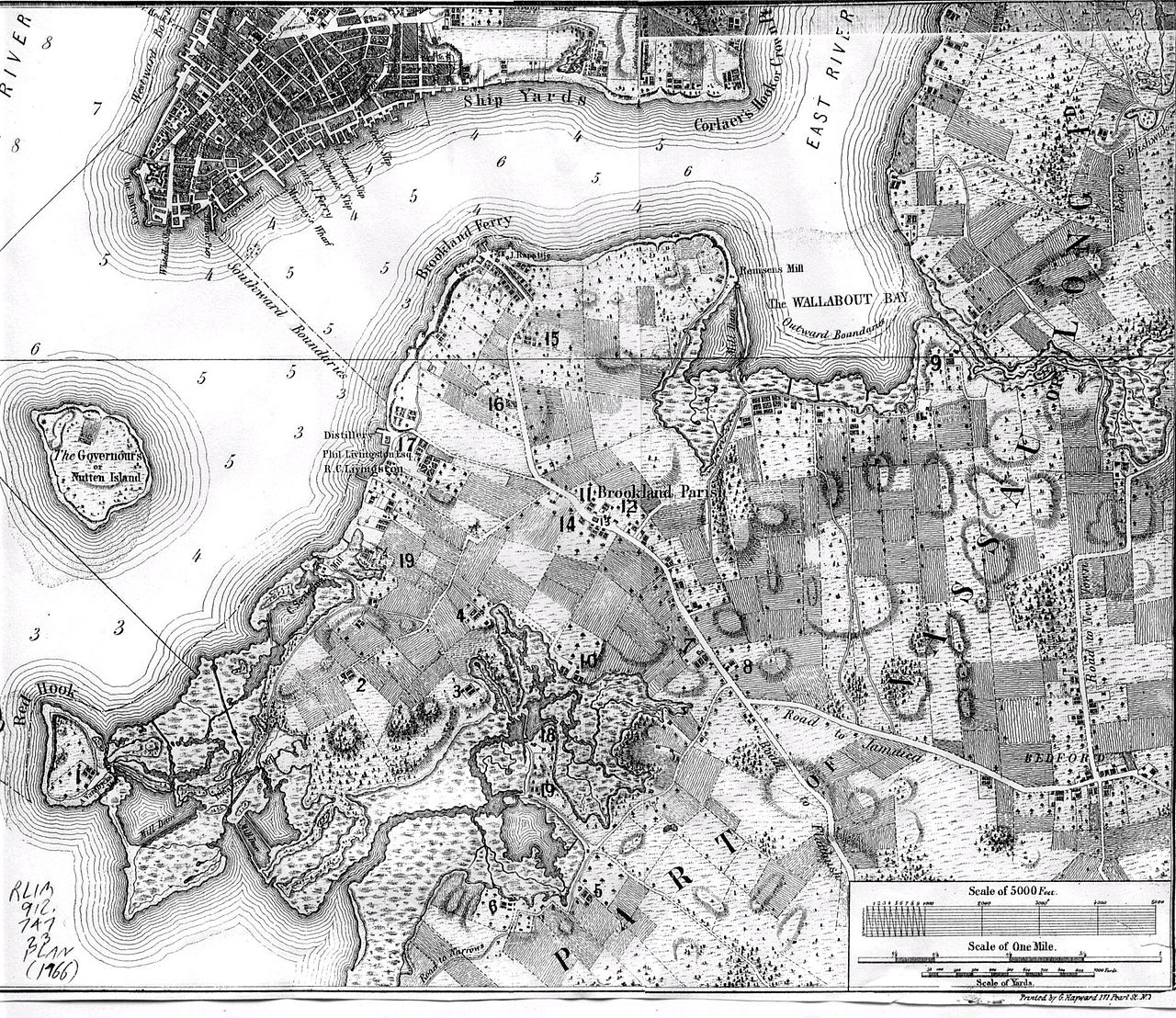


Context and opposing forces
After the evacuation of Boston in March 1776, General George Washington and the Continental Army concentrated on defending the port of New York, recognizing that control of the local harbor would be decisive. The British commander, General William Howe, assembled a substantial expeditionary force and used naval superiority to move troops and supplies. By August, British forces numbering roughly 32,000 were assembled, staged across the waterways from Manhattan on Staten Island and controlling the approaches at The Narrows. Washington anticipated a frontal attack on Manhattan and posted most of his troops there while leaving a significant force in western Long Island (then part of Kings County) to guard the eastern approaches.
The campaign and the fighting
British columns landed on August 22 in Gravesend Bay and feinted against American forward positions. In the main action on August 27 the British executed a large-scale flanking movement that turned the American left and rear. Unaware of the full scale of Howe's maneuver, many Continental units became disordered and were pushed back. A notable rearguard action by a small contingent of Maryland troops — often referred to in later accounts as the "Maryland 400" — slowed British pursuit and allowed a larger portion of the army to withdrawal in a more orderly fashion. Nevertheless, American forces were forced back to the fortified heights near Brooklyn Heights.
Rather than attempt an immediate and costly storm of those fortifications, the British settled in to besiege the American position. Over the night of August 29–30, Washington carried out a carefully planned evacuation across the East River, transporting thousands of soldiers, equipment, and artillery to Manhattan without significant loss. The stealth and discipline of that nocturnal withdrawal, conducted in small craft and under the threat of enemy observation, is widely regarded as one of the more skillful withdrawals in American military history.
Aftermath and significance
The British occupation of New York after the battle provided them with a major base of operations for the remainder of 1776 and into subsequent years. The loss contributed to a string of American reverses that culminated with the surrender of Fort Washington and forced Washington to retreat across New Jersey into Pennsylvania. Even so, the Continental Army survived as an organized fighting force; the preservation of its core enabled later strategic counterattacks and helped sustain the revolutionary cause. Strategically, the battle demonstrated the consequences of British naval mobility and highlighted the vulnerability of fixed defenses when not properly screened against maneuver.
Notable points and legacy
- The engagement is frequently described under three names: Battle of Long Island, Battle of Brooklyn, and Battle of Brooklyn Heights.
- In manpower and scope it was one of the largest battles fought in North America during the Revolutionary era, drawing thousands of combatants on both sides.
- Although a defeat, the orderly nighttime retreat is remembered as a critical success that preserved the Continental leadership and much of its fighting force.
- Remnants of the battlefield and commemorative markers survive in parts of modern Brooklyn; the contest is often studied for its operational lessons about flanking, interior lines, and the interplay of naval and land forces.
The Battle of Long Island occupies an important place in early American military history: it marked a low point in 1776 but also contained within it an episode of competent leadership and determined rearguard action that allowed the Revolution to continue. For background on the war and the campaign, see materials about the American Revolutionary War, the role of George Washington and the Continental Army, and studies of 18th-century coastal operations that emphasize harbor control and maneuver through channels like The Narrows and anchorages in harbor approaches.
Questions and answers
Q: What is the Battle of Long Island also known as?
A: The Battle of Long Island is also known as the Battle of Brooklyn or the Battle of Brooklyn Heights.
Q: When did the battle take place?
A: The battle took place on August 27, 1776.
Q: What was the outcome of the battle?
A: The battle was a major victory for the British and a defeat for the Americans under General George Washington.
Q: How many soldiers were involved in this battle?
A: In terms of soldiers, it was the largest battle of the entire conflict with 32,000 soldiers taking part.
Q: Where did General William Howe's force land?
A: General William Howe's force landed a few miles across from Staten Island in Lower New York Harbor.
Q: Where did Washington move most of his forces to before the British attacked?
A: Before the British attacked, Washington moved most of his forces to northern Kings County expecting to fight only part of their attacking army.
Q: How did Washington evacuate his troops during this battle?
A: During this battle, Washington evacuated his troops on night on August 29-30 without losing any materiel or lives.
Related articles
Author
AlegsaOnline.com Battle of Long Island (Battle of Brooklyn) — 1776 Leandro Alegsa
URL: https://en.alegsaonline.com/art/9504
Sources
- books.google.com : Admiral Lord Howe
- books.google.com : The Diary of the Revolution: A Centennial Volume Embracing the Current Events in Our Country's History from 1775 to 1781 as Described by American, British, and Tory Cotemporaries; Compiled from the Journals, Documents, Private Records Correspondence, Etc., of that Period Forming an Interesting, Impartial, and Valuable Collection of Revolutionary Literature