
Great Flood of 1993: Mississippi and Missouri River floods across the U.S. Midwest
Major Midwest flooding from April to September 1993 that inundated the Mississippi and Missouri River basins, affected nine states, caused widespread damage, and prompted changes in floodplain policy.
Overview
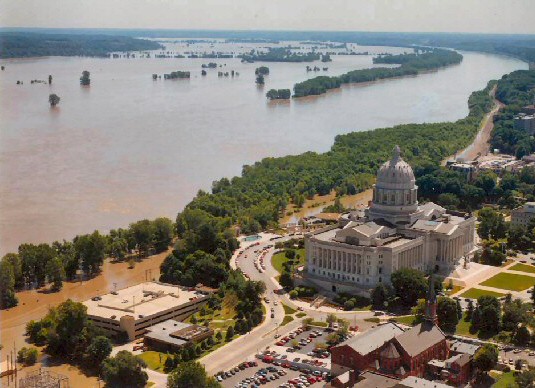
The Great Flood of 1993 was a prolonged and widespread flood that affected large portions of the central United States between late spring and early autumn of 1993. It primarily involved the Mississippi River and its tributary, the Missouri River, producing record or near‑record stages on many river gauges and inundating towns, farmland and transportation routes for weeks. The event is commonly referred to in contemporary accounts as the Great Flood of 1993. Major impacts were concentrated along the Mississippi River and the Missouri River, with especially severe flooding reported in eastern Iowa, much of Missouri and parts of Illinois.
Image gallery
7 Images




Causes and progression
The flood resulted from an extended period of unusually heavy and repeated rainfall over much of the Mississippi and Missouri River basins beginning in late April and continuing into the summer. A series of slow‑moving storm systems and persistent frontal boundaries repeatedly dumped large amounts of rain on already saturated soils. Antecedent wet conditions from the preceding seasons reduced the landscape's ability to absorb runoff, so precipitation translated efficiently into river discharge. The pattern of heavy storms continued in many areas into September, causing river levels to remain high and, in some places, to rise in multiple peaks rather than a single crest.
Extent and immediate impacts
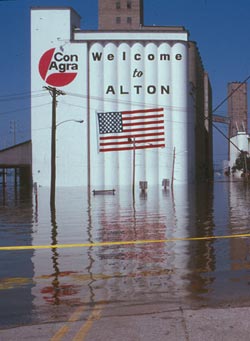
The flooding affected nine states across the Midwest and Plains. Some communities experienced weeks of standing water, while levee breaches and overtopping left entire neighborhoods and agricultural lands under water. Typical immediate effects included severe property damage, large areas of cropland submerged during the growing season, interrupted rail and road links, and disruption of river navigation. Emergency evacuations and temporary shelters were common where towns were threatened by rising water.
- Infrastructure: highways, bridges and local utilities were damaged or cut off.
- Agriculture: millions of acres of cropland were flooded during critical planting and growing months.
- Navigation and commerce: river transport was delayed or halted at many points.
- Communities: levee failures and long‑term inundation displaced residents and businesses.
Human and economic toll
Estimates of the economic cost vary by source; many contemporary assessments place direct damages at roughly $15 billion, while some later compilations cite figures that approach $20 billion. The flood was widely described as the costliest in United States history at the time. Reported fatalities attributable to the flood vary as well, with commonly cited figures around 32 deaths and some counts approaching 50 when indirect and delayed fatalities are included. In addition to loss of life and property, the flood produced substantial short‑term economic dislocation in hard‑hit states such as eastern Iowa, Missouri and Illinois.
Response, recovery and legacy
Federal, state and local agencies conducted extensive emergency responses, including large‑scale sandbagging, evacuations, and disaster relief. The event prompted numerous federal disaster declarations and mobilized relief funds and volunteers. In the years after the flood, attention turned to rebuilding and to policy debates about levee design, floodplain management and land‑use planning. The scale of damage and the visibility of flooded communities spurred renewed discussion about the costs and benefits of relying on structural flood control versus restoring natural floodplain functions.
Notable facts and long‑term significance
The Great Flood of 1993 is remembered for its duration, the geographic breadth of its impacts and its role in shaping flood policy. It highlighted the vulnerability of developed floodplains and the interconnectedness of upstream rainfall and downstream river stages. Photographs and accounts from affected towns became enduring images of the disaster. For contemporary readers seeking official summaries and historical records, many agencies and research institutions continue to maintain archives and analyses of the event and its aftermath; a selection of those resources is often cited in retrospective coverage of the costliest U.S. floods.
Related articles
Author
AlegsaOnline.com Great Flood of 1993: Mississippi and Missouri River floods across the U.S. Midwest Leandro Alegsa
URL: https://en.alegsaonline.com/art/40503
Sources
- us.vocuspr.com : "Missouri River Mainstem Reservoir Bulletin"
- nwrfc.noaa.gov : "The Great USA Flood of 1993"