
Abenakiite-(Ce)
Abenakiite-(Ce) is a rare cerium-dominant mineral first identified in a Canadian quarry. Pale brown and crystalline, it is mildly radioactive, softer than fluorite, and primarily of interest to collectors and researchers.
Overview
Abenakiite-(Ce) is a rare mineral named for the Abenaki people of eastern North America. The suffix "-(Ce)" indicates that cerium is the dominant rare-earth element in its composition. It typically appears as pale brown crystals and is known from limited occurrences, most famously from a quarry in Canada. For concise specimen data and specimen images consult a mineral database entry: mineral database.
Image gallery
2 Images
Physical characteristics
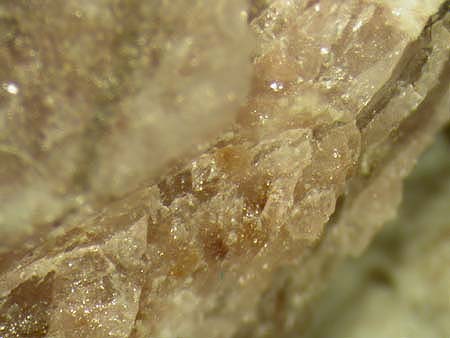
Specimens of abenakiite-(Ce) form small crystalline aggregates rather than large single crystals. Its color ranges from pale brown to tan, and specimens can have a glassy to dull appearance depending on grain size and impurities. The mineral is relatively soft — it can be scratched by fluorite, which has a Mohs hardness of about 4 — so abenakiite-(Ce) has a hardness lower than that. It also shows weak radioactivity in many samples, attributed to traces of radioactive elements often associated with rare-earth mineralization. Basic analytical and structural descriptions are available in published laboratory reports: analytical report.
Discovery and name
The mineral was first identified from material recovered in a Canadian quarry; locality details and collecting history are cataloged by specialists and local reports. Its name honors the Abenaki people, reflecting the cultural and geographic connection of the discovery site. The initial description and approval as a distinct mineral species appear in peer-reviewed mineralogical literature and curated specimen records: original description.
Uses and significance
Abenakiite-(Ce) has no industrial application due to its rarity and limited availability. Its value is primarily scientific and collectible: researchers study it to understand rare-earth element geochemistry and crystal chemistry, and mineral collectors prize well-formed specimens. For information on collecting practices and conservation of type localities see collecting guidance: collecting guidance.
Typical associations and handling
In the field and in hand specimens, abenakiite-(Ce) is commonly associated with other rare-earth bearing minerals and accessory phases that reflect unusual geochemical environments. Because some samples exhibit mild radioactivity, standard precautions are recommended when handling and storing specimens — use limited handling time, store away from living spaces, and consult radiological guidance if activity is measurable. Locality records and safety considerations are often summarized by regional mineralogical authorities: locality record.
Distinguishing features and related minerals
Key points for distinguishing abenakiite-(Ce) include its cerium-dominant composition (hence the "-Ce" designation), pale brown color, small crystal habit, softness relative to fluorite, and trace radioactivity. It belongs to the broader class of rare-earth minerals; other species carry suffixes such as "-(Y)" or "-(La)" when yttrium or lanthanum is dominant. For comparative data and classification schemes consult mineral classification resources: classification resource.
- Color: pale brown to tan
- Crystal habit: small crystals/aggregates
- Hardness: softer than fluorite (Mohs < 4)
- Radioactivity: typically weak/mild
- Occurrence: rare, known from a Canadian quarry and a few other localities
Related articles
Author
AlegsaOnline.com Abenakiite-(Ce) Leandro Alegsa
URL: https://en.alegsaonline.com/art/403
Sources
- webmineral.com : webmineral.com/data/Abenakiite-(Ce).shtml