
Achondrite — Stony Differentiated Meteorites
Achondrites are stony meteorites that lack chondrules and record melting and differentiation on their parent bodies. They include basaltic, plutonic, lunar, Martian, and primitive types important to planetary science.
An achondrite is a stony meteorite whose constituent minerals have been melted and recrystallized, producing igneous textures similar to terrestrial basalts or plutonic rocks. Unlike chondrites, achondrites generally lack the small, round chondrules that record primitive solar-system dust. They represent fragments of parent bodies that experienced thermal processing and differentiation, so their mineralogy and chemistry record planetary-scale melting, volcanism, or deep crustal crystallization.
Image gallery
2 Images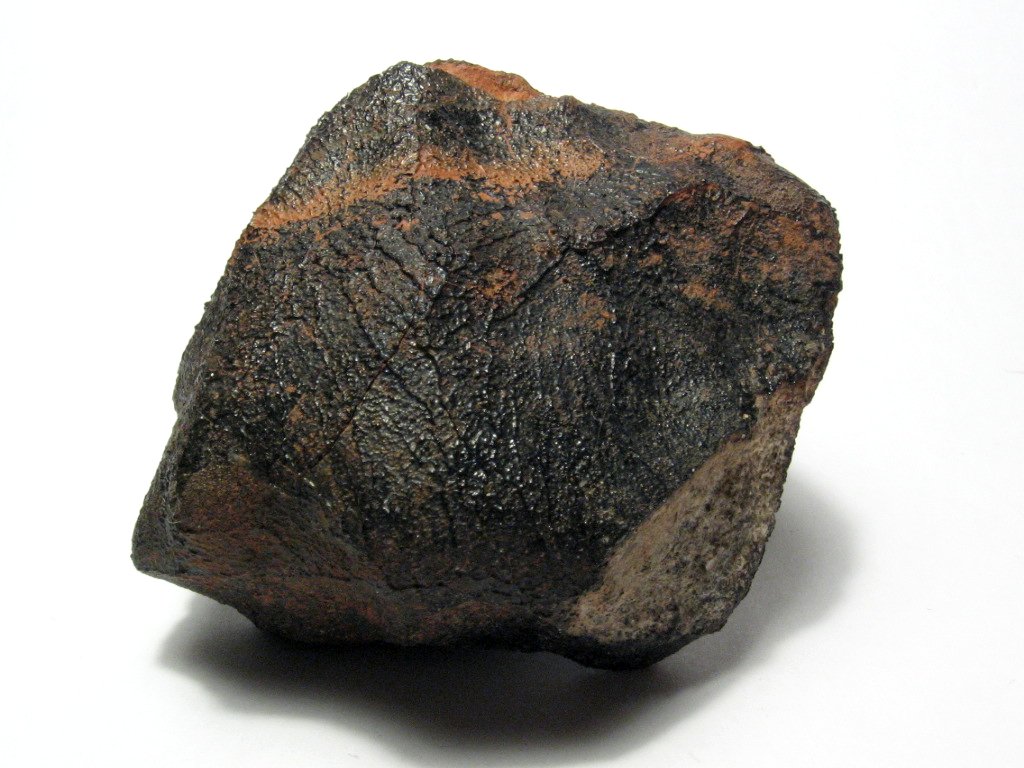

Characteristics
Achondrites are recognized by their igneous textures, absence or scarcity of chondrules, and geochemical signatures indicating partial or complete melting. Typical minerals include pyroxene, plagioclase, olivine, and minor iron–nickel metal. Oxygen isotopes, trace-element ratios, and mineral chemistries are used to link samples to specific parent bodies or to identify distinct groups.
Major groups and origins
- HED meteorites (howardites, eucrites, diogenites): basaltic and plutonic rocks thought to originate from asteroid 4 Vesta.
- Achondrites from the Moon and Mars: known by mineralogy and isotopes to come from these bodies and delivered by impact ejection.
- Angrites, aubrites, and other rare groups: represent different igneous histories and compositions from various asteroidal sources.
- Primitive achondrites: samples that show partial melting and recrystallization but retain some primitive chemical characteristics.
Researchers use classification schemes and databases to assign achondrites to groups; for more details see classification resources.
Formation and geological significance
Achondrites form when a parent body is heated enough for melting to occur—through radioactive decay, accretional heating, or impacts—producing igneous differentiation into crust, mantle, and core. Their textures can be volcanic (fine-grained basaltic) or plutonic (coarser-grained), reflecting cooling histories. These rocks provide direct samples of crustal and mantle processes on other solar-system bodies and help calibrate models of planetary differentiation.
Uses and scientific importance
Achondrites are crucial for understanding planetary evolution. Radiometric dating of achondrites yields ages of melting and crystallization, showing timing of differentiation. Isotopic studies (oxygen, chromium, etc.) connect meteorites to parent bodies and trace reservoirs in the early solar system. They also constrain thermal histories, magmatic processes, and impact events on asteroids, the Moon, and Mars.
Distinctions and notable facts
In contrast to chondrites, achondrites are products of igneous processing. Some achondrites (for example, lunar and Martian samples) have been matched to remote-sensing observations of planetary surfaces, confirming their origins. Others reveal the existence of many differentiated small bodies in the early solar system. For an overview of types and laboratory methods, consult specialized references or online databases such as meteorite classification guides.
Related articles
Author
AlegsaOnline.com Achondrite — Stony Differentiated Meteorites Leandro Alegsa
URL: https://en.alegsaonline.com/art/708