
Granola: ingredients, preparation, history, uses and varieties
Granola is a baked cereal and snack of oats, nuts, sweetener and mix-ins. This article covers common ingredients, preparation methods, history, nutrition, varieties, uses and storage tips for home and commercial granola.
Overview
Granola is a toasted, often crunchy breakfast and snack food made from rolled oats bound with a fat and a sweetener and mixed with nuts, seeds and other add-ins. It is eaten as a cereal with milk or plant-based alternatives, layered with yogurt and fruit, used as a topping, or formed into bars for portable snacks. Recipes range from lightly toasted, loose grains to dense clusters and pressed bars.
Image gallery
4 Images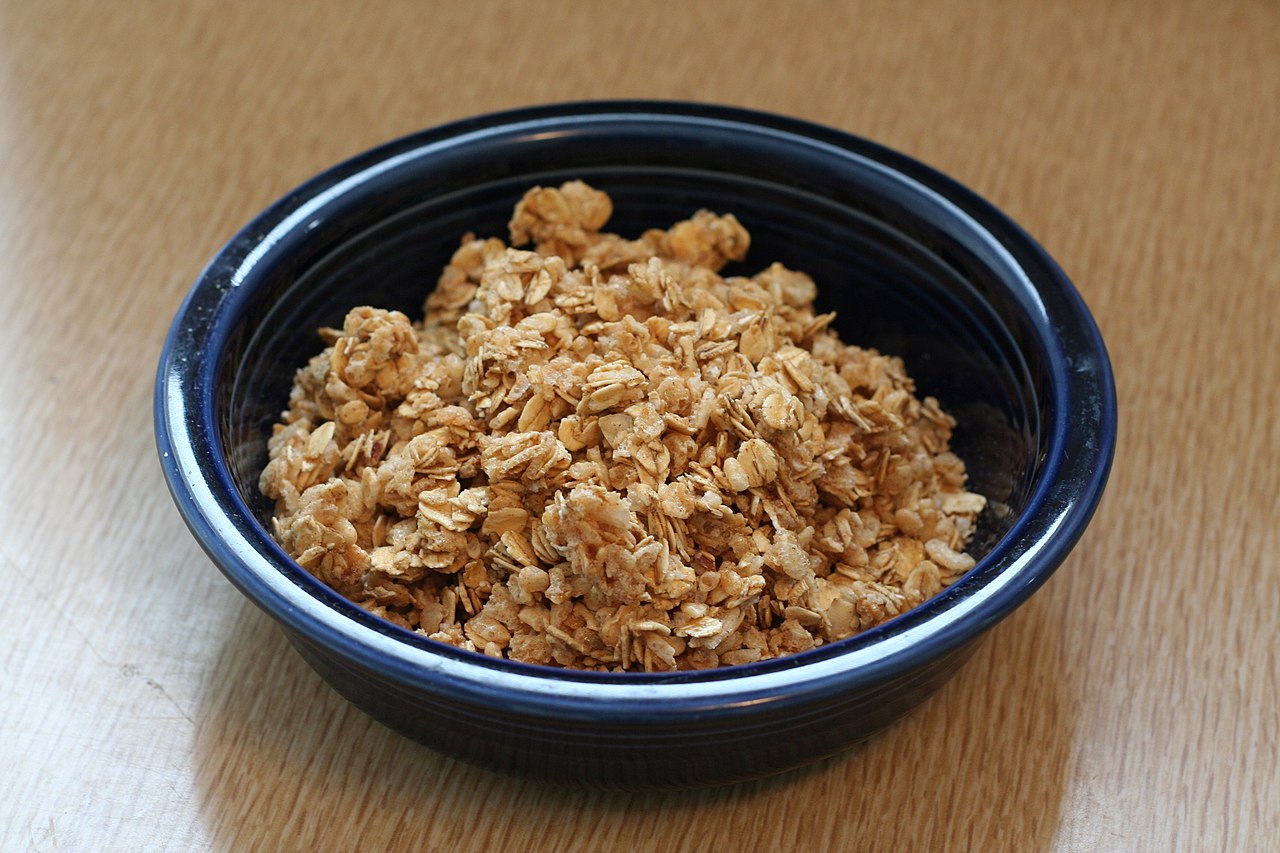


Common ingredients and basic preparation
The foundation of most granolas is rolled oats combined with a source of fat (oil or butter) and a sweetener to help bind and brown the mixture. Typical mix-ins include nuts and seeds, such as almonds, walnuts, sunflower seeds or flax, and dried fruits or confections added after baking.
- Grains: rolled oats (old-fashioned), sometimes puffed rice or other grains
- Fats and liquids: neutral oil, melted butter, or nut butters
- Sweeteners: honey, maple syrup, brown sugar or agave
- Mix-ins: dried fruit like raisins and dates, chocolate pieces, spices and extracts
To prepare granola, dry ingredients are tossed with oil and sweetener, spread in a thin layer on a baking sheet and baked at a moderate temperature. Stirring occasionally yields a loose, cereal-like texture; pressing and not stirring produces larger clusters. No-bake variations rely on nut butters and refrigerated setting or dehydration.
History and development
Granola’s origins trace to 19th-century health movements that promoted whole-grain, simple diets. Baked oat mixtures evolved from earlier grain-based health foods and were popularized in various forms through the 20th century. Interest rose again with the natural foods and outdoor-recreation movements, which favored portable, calorie-dense snacks for hiking and travel.
Uses and serving ideas
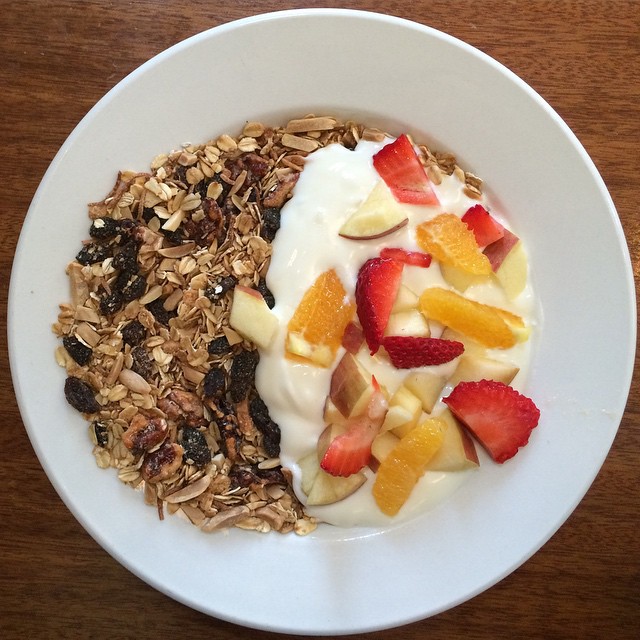
Granola is highly versatile. Common uses include as a breakfast cereal with milk, layered into parfaits with yogurt and fresh fruit such as sliced bananas or strawberries, sprinkled over smoothie bowls, or eaten by the handful as trail food. It also makes a crunchy topping for baked fruit or casseroles and an ingredient for cookies or muffin mixes.
Nutritional considerations
Granola can provide fiber, protein and unsaturated fats when made with whole oats, nuts and seeds. However, commercial varieties and some home recipes can be energy-dense due to added sugars and oils. Choosing recipes with moderate sweetening, increasing seed and nut content, and controlling portion size helps balance calories and nutrients. Seeds such as flax may add omega-3 precursors and fiber, but any health benefit depends on overall diet.
Varieties and related products
Closely related foods include muesli, trail mix and granola bars. Muesli typically mixes raw oats with dried fruit and nuts and is often eaten soaked; trail mix omits oats and binders, focusing on nuts, seeds and dried fruit; granola bars compress granola into convenient shapes for portability. Flavored variations may include spices, cocoa, fruit coatings or savory herb blends.
Storage, buying tips and making bars
Store granola in an airtight container at room temperature for several weeks, or freeze for longer storage. When buying, check ingredient lists for added sugars and oils, and compare fiber and protein content. To make granola bars, press baked or partially baked granola into a pan with an additional binder (honey, syrup or nut butter), chill until firm, and cut into bars. Baking in a sheet pan and breaking into clusters is a simple way to produce chunkier granola.
For more on recipes, ingredient swaps and culinary uses, see resources about breakfast, nuts and seeds, sweeteners, dried fruit such as raisins and dates, or treats like chocolate additions. Practical guides to serving include milk and plant-based alternatives at milk resources and yogurt-based parfaits at yogurt references.
Related articles
Author
AlegsaOnline.com Granola: ingredients, preparation, history, uses and varieties Leandro Alegsa
URL: https://en.alegsaonline.com/art/40291
Sources
- pericles.ipaustralia.gov.au : "IP Australia Trademark#32227"