
Green tea: origins, processing, varieties, and uses
Green tea is a lightly oxidized tea from Camellia sinensis with roots in East Asia. This article covers its production, major varieties, cultural history, brewing, uses, and distinctions from other teas.
Overview
Green tea is a category of tea made from the leaves of the plant Camellia sinensis (species Camellia sinensis) and is considered a true tea because it comes from that single species. In Chinese it is written 绿茶 (simplified) or 綠茶 (traditional), pronounced lǜchá in pinyin. Unlike fully oxidized black tea, green tea undergoes minimal oxidation during processing, which helps preserve its green color and many of its characteristic compounds.
Image gallery
10 Images


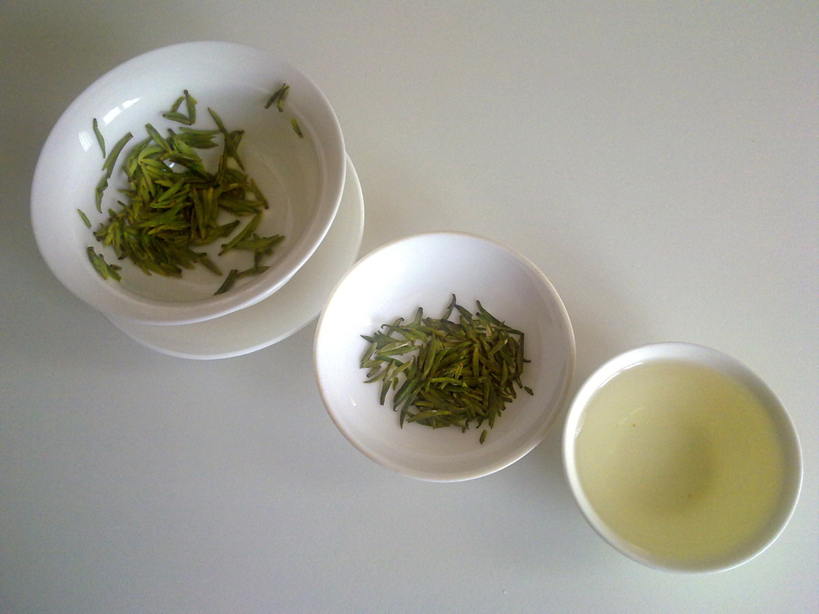


Processing and characteristics
Typical green tea production involves plucking, withering, and a rapid fixation step (steaming or pan-firing) to halt oxidation. The resulting leaves retain higher levels of catechins and certain volatile aromas. Green teas vary in color, aroma and body; they tend to be lighter-bodied than darker teas and can range from vegetal and grassy to sweet, nutty, or seaweed-like in flavor depending on cultivar and processing.
History and cultural role
Green tea has a long history in East Asia and remains central to daily life and ceremonial practices. It is especially associated with regions such as China, Taiwan, Hong Kong, Japan, and Korea. It has also been consumed across parts of the Middle East for centuries. In recent decades its popularity has increased in the West, where other tea types such as black tea were traditionally more common.
Major varieties and examples
- Japanese styles: sencha, matcha (stone-ground), gyokuro — often steamed during fixation.
- Chinese styles: longjing (Dragon Well), bi luo chun, and gunpowder — commonly pan-fired.
- Regional specialty teas: many provinces and tea gardens produce named local cultivars with distinct processing.
Uses, brewing, and culinary roles
Green tea is primarily consumed as a hot or cold beverage. Brewing parameters (water temperature, leaf amount, steep time) strongly affect flavor; lower temperatures and shorter steeps reduce bitterness. Ground matcha is used in tea ceremonies and as an ingredient in sweets, drinks and savory dishes. Leaves and extracts also appear in culinary recipes, cosmetics and some traditional remedies.
Distinctions and considerations
Key distinctions from other teas include the degree of oxidation and the typical processing step to fix enzymes quickly. Green tea contains caffeine and bioactive polyphenols; scientific studies explore possible health effects but conclusions vary and benefit claims should be stated cautiously. Quality depends on harvest timing, cultivar, and processing skill, so price and taste can range widely.
For further reading on names, cultivars and regional traditions see resources in Chinese script and transliteration: simplified, traditional, and pinyin, and consult plant and tea type references: plant, species, Camellia sinensis. Cultural and regional perspectives: China, Taiwan, Hong Kong, Japan, Korea, Middle East, and its rising popularity in the West compared with black tea.
Questions and answers
Q: What is green tea?
A: Green tea is a "true" tea made from the plant species Camellia sinensis that has undergone little oxidation during processing.
Q: Where is green tea popular?
A: Green tea is popular in China, Taiwan, Hong Kong, Japan, Korea, and the Middle East.
Q: How is green tea different from black tea?
A: Green tea has undergone little oxidation during processing, while black tea has undergone complete oxidation.
Q: What are the health benefits of green tea?
A: Green tea is believed to have various health benefits such as reducing the risk of heart disease, cancer, and Alzheimer's disease.
Q: Why has green tea been recently consumed more widely in the West?
A: Green tea has been recently consumed more widely in the West because of its perceived health benefits and taste.
Q: Can green tea be consumed by anyone?
A: Green tea can be consumed by most people, but individuals with caffeine sensitivity, sleep disorders, and gastrointestinal problems should consume it in moderation.
Q: Does all green tea taste the same?
A: No, the taste of green tea can vary depending on the processing, where it was grown, and the brewing method.
Related articles
Author
AlegsaOnline.com Green tea: origins, processing, varieties, and uses Leandro Alegsa
URL: https://en.alegsaonline.com/art/40706
Sources
- buddhistchannel.tv : "Kenninji key to Japan's tea culture"
- web-jpn.org : "Tea Ceremony"
- chanoyu.com : "Wa Kei Sei Jaku"
- whfoods.com : "WHMFoods"
- jacn.org : "Beneficial effects of green tea--a review"
- pubmed.ncbi.nlm.nih.gov : 16582024
- archinte.ama-assn.org : "Cholesterol-lowering effect of a theaflavin-enriched green tea extract: a randomized controlled trial"
- doi.org : 10.1001/archinte.163.12.1448
- pubmed.ncbi.nlm.nih.gov : 12824094
- ajcn.org : "Green tea extract ingestion, fat oxidation, and glucose tolerance in healthy humans"
- doi.org : 10.1002/ijc.24047
- pubmed.ncbi.nlm.nih.gov : 19048616