
Gingalain (Guinglain): Arthurian knight of the 'Fair Unknown' motif
Gingalain, also called Guinglain, is a knight of Arthurian romance best known from the medieval poem Le Bel Inconnu and related 'Fair Unknown' tales exploring identity, chivalry and courtly love.
Gingalain is a figure in medieval Arthurian romance who appears as a young knight of uncertain origin and rising reputation. In French tradition his name appears as Guinglain, and his story is usually framed within the wider Arthurian cycle. The best-known narrative presents him as a courteous but inexperienced youth whose adventures test his valor, courtesy and loyalty while he seeks both identity and love.
Names and variants
Image gallery
10 Images


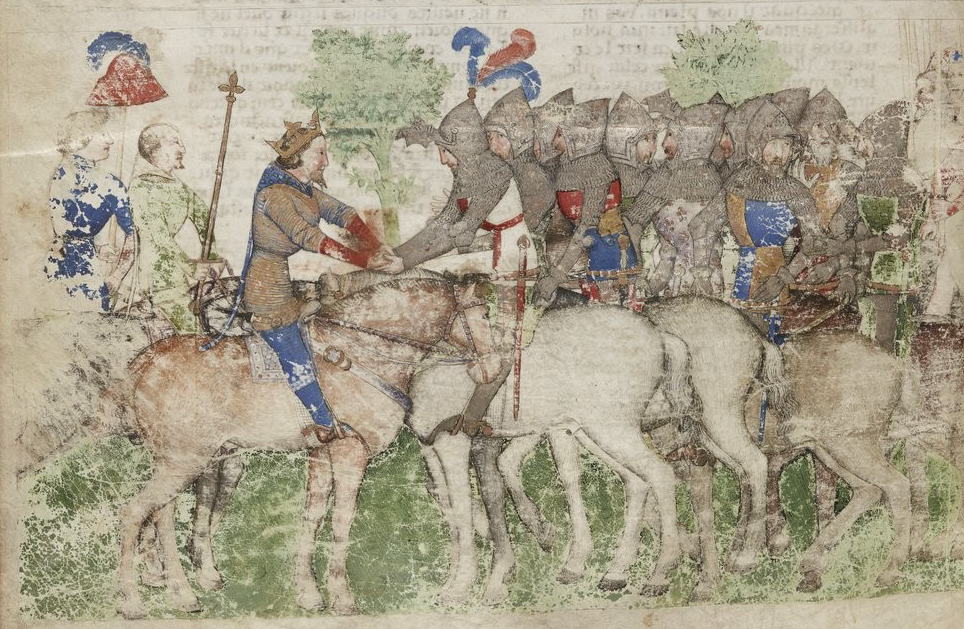
Sources and manuscripts
The principal surviving account of the character is the medieval poem Le Bel Inconnu, attributed to the poet Renaut de Beaujeu and composed in the late 12th or early 13th century. That poem follows the familiar pattern of a noble youth concealed or ignorant of his lineage who proves himself through trials. A second medieval witness, a manuscript known by the name Gliglois, once contained a related tale; that exemplum survives only in references and was destroyed or lost, leaving uncertainty about precise relationships between the texts. Gingalain is also associated with the fellowship of the Round Table in later retellings.
Literary significance and motifs
Gingalain is a representative of the widespread "Fair Unknown" motif in medieval romance: an apparently humble or unidentified hero who wins fame and love by demonstrating chivalric excellence. His adventures mix combat, courtly amour, and quests for reputation—elements that illuminate how medieval authors explored identity, lineage and social integration. Comparisons are commonly made with other Arthurian figures whose origins are secret or disputed.
Although not as famous as some knights of Arthurian legend, Gingalain's tale influenced later storytellers and helped perpetuate narrative themes about merit, inheritance and courtly behavior. Modern study of the character draws on textual criticism, manuscript history and comparative folklore to trace how one short-lived medieval hero joined a larger, changing tradition of knighthood and romance.
For introductions and editions see specialist catalogues and translated excerpts of the romances (French forms and annotated scholarship), manuscript surveys (knightly contexts), and literary studies that address the Arthurian corpus and the "Fair Unknown" motif in context or in editions and summaries of the poem. Further bibliographic and manuscript notes appear in reference works and digital catalogues that list entries for the poem and the lost Gliglois fragment as well as broader Round Table materials about Arthurian knights.
Related articles
Author
AlegsaOnline.com Gingalain (Guinglain): Arthurian knight of the 'Fair Unknown' motif Leandro Alegsa
URL: https://en.alegsaonline.com/art/38884