
Graeae (Grey Sisters) — trio of shared-eyed hags in Greek myth
The Graeae, or Grey Sisters, are three ancient hags in Greek mythology who share a single eye and a single tooth. They appear in the Perseus cycle and are commonly associated with the Gorgons.
Overview
The Graeae, often called the Grey Sisters, are a small but distinctive group of figures from Greek mythology. Classical accounts describe them as three old women who are born fully grown and share a single eye and a single tooth, passing these between them as needed. They are best known for their role in the story of the hero Perseus and his quest related to Medusa, and for their traditional association with the Gorgons and other monstrous sea-born figures.
Image gallery
2 Images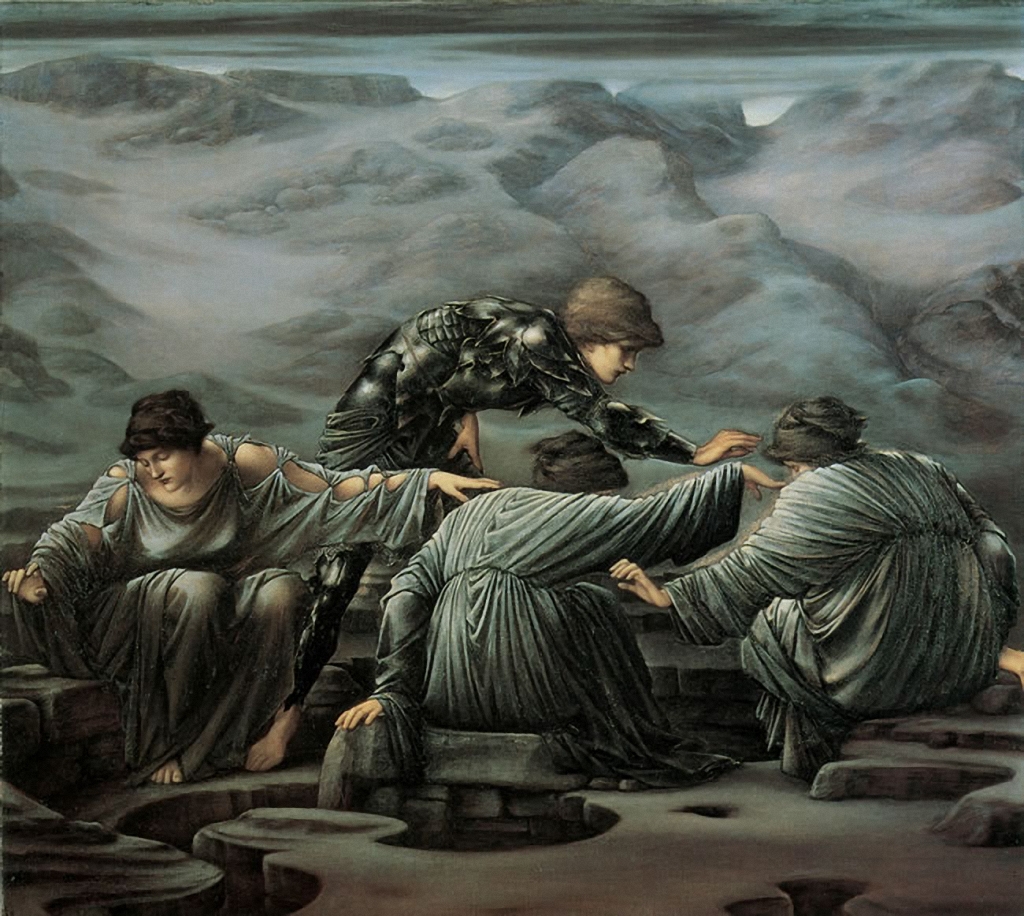

Names and characteristics
The three sisters are commonly named Deino, Enyo, and Pemphredo. Classical descriptions emphasize their shared possession of one eye and one tooth: the eye is often referred to simply as the shared eye and the tooth as the shared tooth. They are described as grey in complexion and hair, hence the sobriquet "Grey Sisters," and are portrayed as old, uncanny, and unattractive in most ancient depictions.
Origins and relationships
In mythic genealogy the Graeae are usually said to be daughters of older sea-deities, placing them in the same broad family as many chthonic and marine monsters. This connection explains why later accounts link them to the Gorgons and other daughters of the sea. Their Greek name, often translated as "old women" or "the grey ones," highlights age and sameness rather than individuality.
Mythic role: the Perseus episode
The Graeae play a pivotal role in the narrative cycle surrounding Perseus. When the hero needs information about the location of Medusa, he consults these sisters. By seizing their shared eye and denying it back, he forces them to reveal the information he needs. This tactic—robbing a magical object to compel prophecy or direction—appears in several classical stories and underscores the Graeae's reputation as guardians of knowledge as well as liminal figures between the human and monstrous worlds.
Associations and cultural legacy
The Graeae are closely affiliated with the Gorgons in many retellings, appearing in the same narrative contexts and sometimes in the same artistic representations. Over centuries they have been reinterpreted in art, literature, and modern media as symbols of enforced dependence, the power of shared knowledge, or simply as eerie companions to more famous monsters. Modern retellings and scholarship examine them as expressions of ancient attitudes toward age, femininity, and otherness.
- Names: Deino, Enyo, Pemphredo.
- Distinctive features: one shared eye and one shared tooth.
- Notable interaction: confronted by Perseus to learn Medusa's location (Medusa).
- Related figures: often grouped with the Gorgons and other monstrous siblings in mythic genealogies.
For further reading see classical summaries and modern treatments of Greek myth where the Graeae are discussed as part of the Perseus tradition and the wider family of chthonic monsters. General introductions to Greek mythology and compilations of mythic genealogies place the Grey Sisters among the minor but narratively significant figures of the heroic age. Graeae remain a small but evocative element of ancient storytelling, frequently cited to illustrate how myth uses shared or stolen objects to drive plot and reveal character.
Questions and answers
Q: Who are the Graeae?
A: The Graeae are characters from Greek mythology, a trio of hags called Deino, Enyo, and Pemphredo.
Q: Why are they called the Grey Sisters?
A: They are called the Grey Sisters because they were born with grey skin and hair.
Q: How many teeth and eyes do the Graeae have?
A: The Graeae share one tooth and one eye.
Q: How do they take turns using the tooth and eye?
A: They take turns using the tooth and eye.
Q: What is their affiliation with the gorgons?
A: The Graeae are affiliated with the gorgons.
Q: What did Perseus do to make the Graeae tell him where Medusa was?
A: Perseus took their eye and said he would not give it back until the Grey Sisters told him where Medusa was.
Q: Did Perseus get the information he wanted from the Graeae?
A: Yes, after Perseus took their eye, the Grey Sisters told him where Medusa was.
Related articles
Author
AlegsaOnline.com Graeae (Grey Sisters) — trio of shared-eyed hags in Greek myth Leandro Alegsa
URL: https://en.alegsaonline.com/art/40070