
Round Table (Arthurian legend and legacy)
The Round Table: a legendary assembly symbolizing equality among King Arthur's knights, its literary origins, variations, historic associations like the Winchester table, and modern cultural impact.
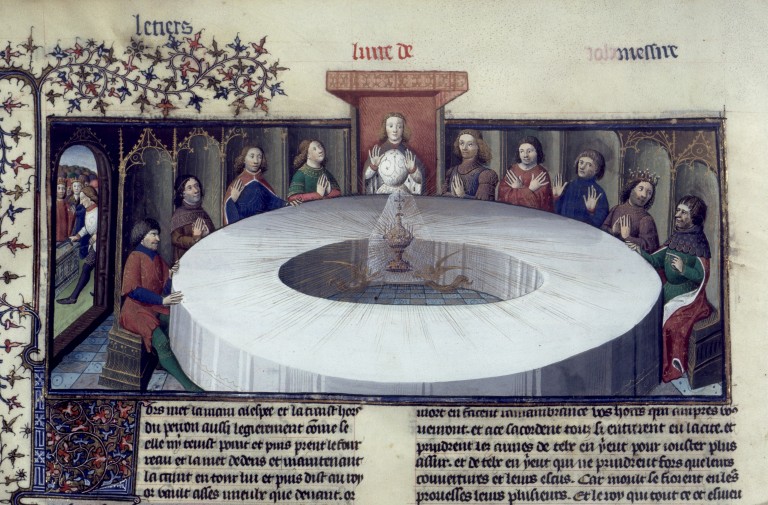
The Round Table is a central object in the body of stories about King Arthur. In medieval romances it is the place where Arthur's knights gathered at his court in Camelot to plan the defence of the realm, receive quests and settle disputes. The image of a circular table rather than one with a head is a recurring motif in the legends, intended to represent a fellowship of equals rather than a rigid hierarchy.
Image gallery
6 Images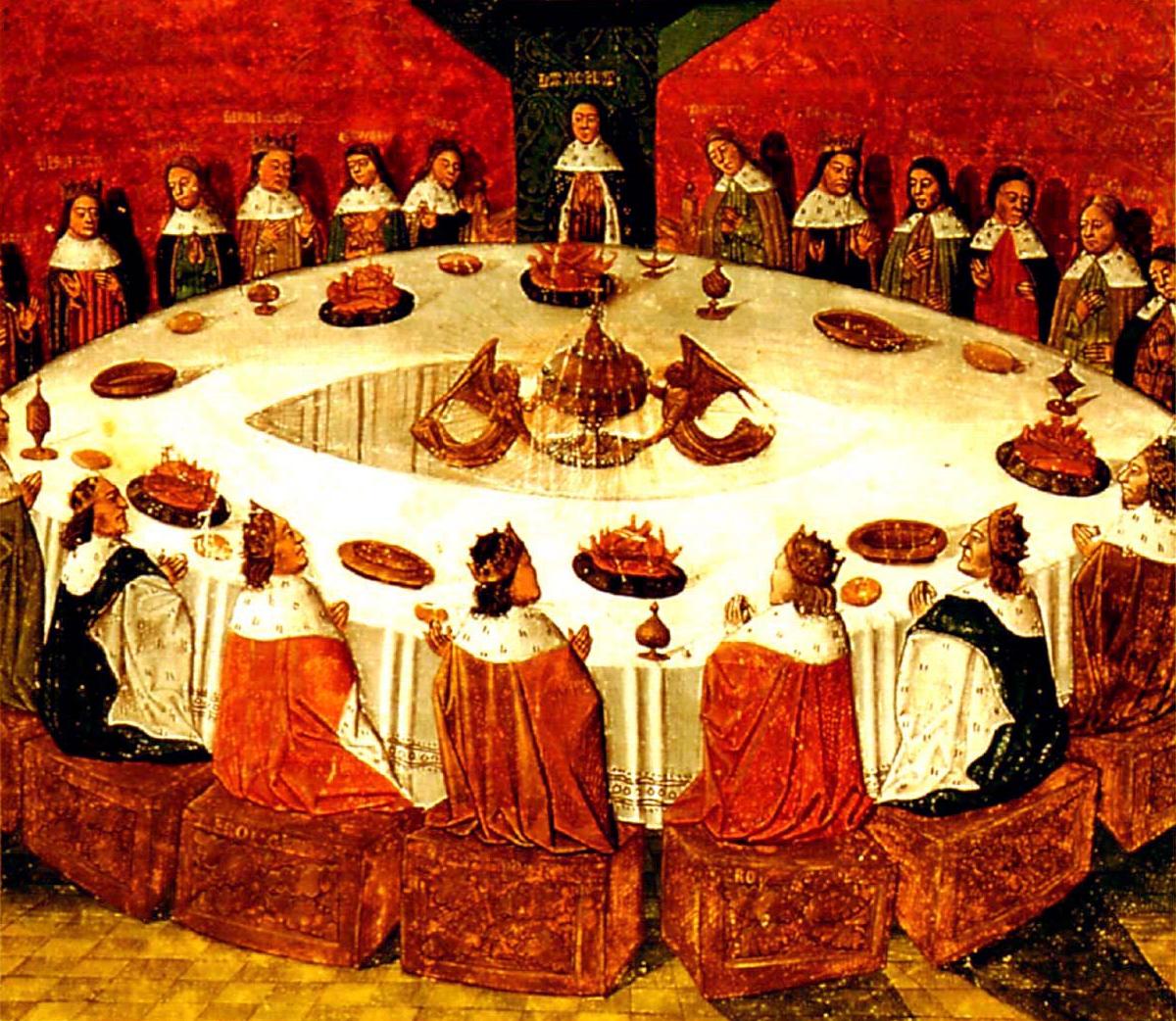




Function and symbolism
Within the narratives the Round Table functions as a meeting place, a site for ceremonial investiture and a narrative device that defines membership in the knightly order. Its defining feature — the lack of a distinguished head — symbolizes collective responsibility, corporate chivalry and the idea that each knight had an equal claim to counsel and honour. Many stories connect the table with quests and moral tests, such as the pursuit of the Holy Grail.
Literary development
The conception of the Round Table emerged gradually across medieval European literature. Early chroniclers and poets shaped Arthurian material at different times; later writers expanded and codified the table’s role. Different texts offer varying lists of knights and different rules about who may sit there. The narratives often link seats and quests so that individual episodes grow out of the table’s community life and expectations.
Variations and notable episodes
- Membership and size: medieval authors disagree about how many knights belonged to the order and who could claim a place.
- Associated adventures: many tales begin as deliberations at the table and send knights on separate adventures, especially quests for honour or sacred relics.
- Moral tests: entry to the table or success in its missions often depends on virtue, faith or prowess.
Historic associations and artifacts
A large painted wooden table long displayed at Winchester Castle has been called the "Winchester Round Table" and has linked the legend with a tangible object. That artefact dates from centuries after the supposed era of Arthur and was repainted in later periods, yet it helped fix a physical image of the table in public imagination.
Legacy
The Round Table endures as a cultural symbol of equal deliberation and chivalric fellowship. Its influence reaches modern literature, drama and film, and the phrase "round-table" has entered common language to describe inclusive conferences or discussions. While its precise origins remain part of literary history rather than documented fact, the Round Table remains one of the most resonant icons of the Arthurian tradition.
Questions and answers
Q: Who used the Round Table?
A: King Arthur and his knights used the Round Table.
Q: Where was the Round Table located?
A: The Round Table was located in Camelot, the castle where King Arthur and his knights lived.
Q: What did the knights discuss at the Round Table?
A: The knights discussed the safety of Camelot and the kingdom, as well as what adventures and quests they could go on.
Q: How did the knights get their name?
A: The knights got their name, "The Knights of the Round Table," from their meetings at the table.
Q: What was the purpose of the Round Table?
A: The purpose of the Round Table was for King Arthur and his knights to discuss important matters about the safety of their kingdom and to plan adventures or quests together.
Q: Was the Round Table just a regular table?
A: No, the Round Table was not just a regular table. It was a special table used by King Arthur and his knights.
Q: What was special about the Round Table?
A: The Round Table was special because it was used by King Arthur and his knights to discuss important matters and plan adventures. It also had a unique shape that allowed everyone seated at the table to have an equal voice in the discussions.
Related articles
Author
AlegsaOnline.com Round Table (Arthurian legend and legacy) Leandro Alegsa
URL: https://en.alegsaonline.com/art/84336