
Gettysburg National Cemetery
National cemetery on Cemetery Hill in Gettysburg, Pennsylvania, established after the 1863 battle; site of Abraham Lincoln's Gettysburg Address and the reinterment of Union dead.
Overview
The Gettysburg National Cemetery occupies a prominent position on Cemetery Hill in Gettysburg, Pennsylvania. Created in the months after the July 1863 Battle of Gettysburg, the cemetery was intended to give proper and honorable graves to Union soldiers who had been hastily buried on the battlefield. It became one of the most significant memorial sites of the American Civil War and is best known as the setting for President Abraham Lincoln's Gettysburg Address.
Image gallery
10 Images




Origins and planning
After the battle, many Union dead lay in shallow battlefield graves. State and local leaders organized a reburial effort to create a dedicated cemetery. Pennsylvania Governor Andrew Curtin supported the project, and local attorney David Wills took primary responsibility for acquiring the land and arranging the dedication ceremony. Earlier organizational work was advanced by another local lawyer, David McConaughy, who also sought to preserve burial plots and monuments from the battlefield. The landscape plan was prepared by William Saunders, who laid out orderly plots, paths and a central monument area.
Dedication and the Gettysburg Address
The grounds, at first known as the Soldiers' National Cemetery at Gettysburg, were formally dedicated on November 19 1863. The principal orator of the day was Edward Everett, who spoke at length; President Abraham Lincoln delivered a brief but enduring address that came to be called the Gettysburg Address. The dedication ceremony is often described in histories of the war and of American civic culture. Contemporary accounts and later scholarship discuss how the event combined commemoration, politics and national reconciliation.
Design, burials and memorial features
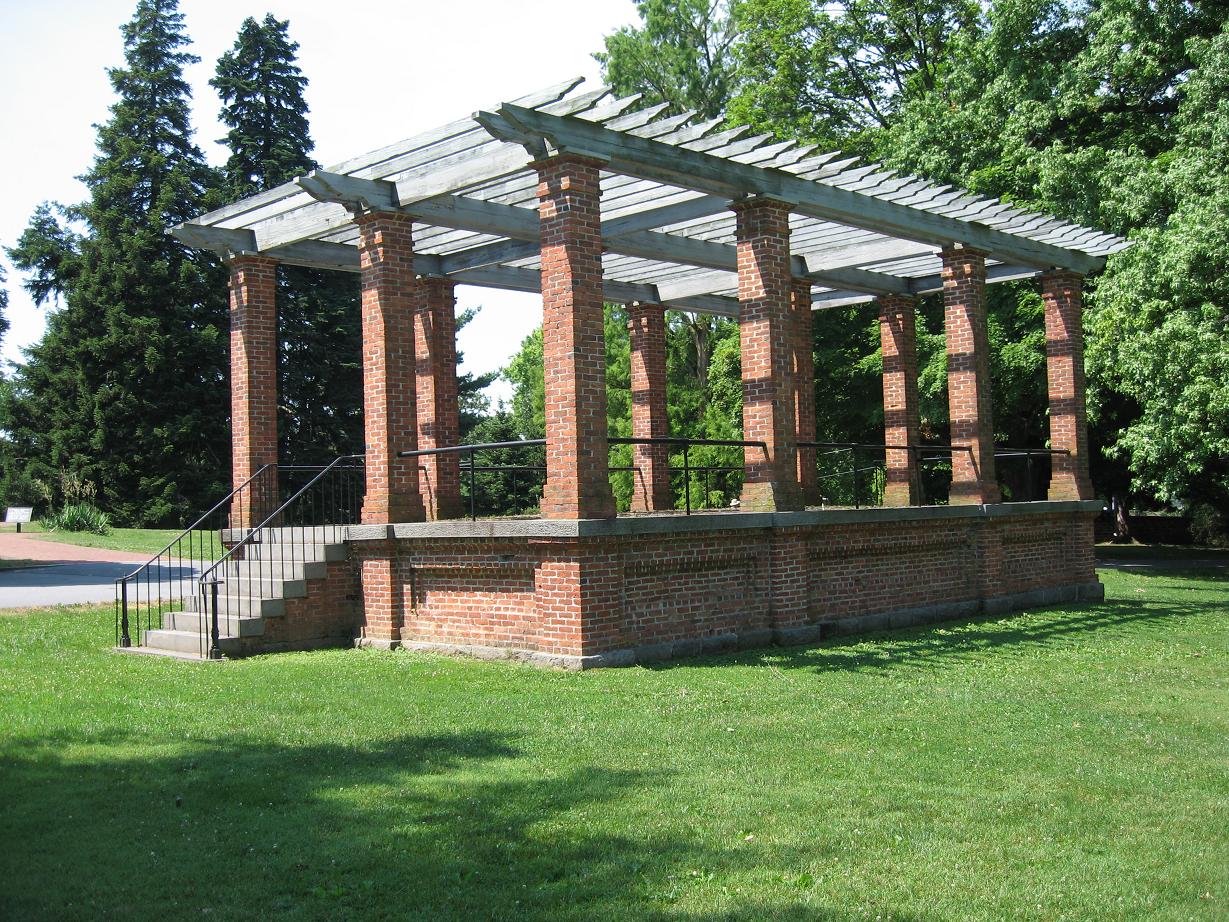
Designed by William Saunders, the cemetery arranges graves in neat rows on terraced slopes and includes walkways and a central monument area. Originally 3,512 Union soldiers were interred there; among them, 979 were recorded as unknown. Burials were moved from battlefield graves and reinterred with headstones or markers. Over time additional monuments, regimental markers and commemorative tablets were added to recognize units and states represented at Gettysburg.
Administration and significance
The site, created for the Union dead and supported by the state, eventually became part of the broader Gettysburg battlefield preservation effort. It is managed within the national park framework and receives visitors who come to study the battle, pay respects, and see the place associated with Lincoln's brief address. The cemetery represents both a practical response to wartime casualties and a symbolic landscape for national memory.
Related points and further reading
- Battle of Gettysburg — the engagement whose casualties prompted the cemetery.
- Union burials — purpose was to inter Union soldiers with dignity.
- Dedication ceremony — notable for its speakers and civic meaning.
- Speakers: Edward Everett and Abraham Lincoln, whose words remain historically consequential.
For more formal inventories, conservation history, visitor information and original documents related to the cemetery and dedication, consult national park materials and curated collections held by historical institutions and archives. See also memorial listings and interpretive guides at Cemetery Hill and within the broader Gettysburg site.
Related articles
Author
AlegsaOnline.com Gettysburg National Cemetery Leandro Alegsa
URL: https://en.alegsaonline.com/art/38594