
Glamis Castle — Historic Scottish country house and family seat
Glamis Castle in Angus, Scotland, is the ancestral seat of the Earls of Strathmore and Kinghorne, noted for royal connections, notable architecture, public tours and gardens, and a long tradition of legends.
Overview
Glamis Castle is one of the best-known historic houses in the United Kingdom and a prominent example of a Scottish country castle. Visitors and writers often cite its picturesque silhouette and long family associations as reasons for its fame. It combines fortified medieval elements with later domestic additions and has been a continuous family home for centuries. For a general introduction see Glamis Castle.
Image gallery
9 Images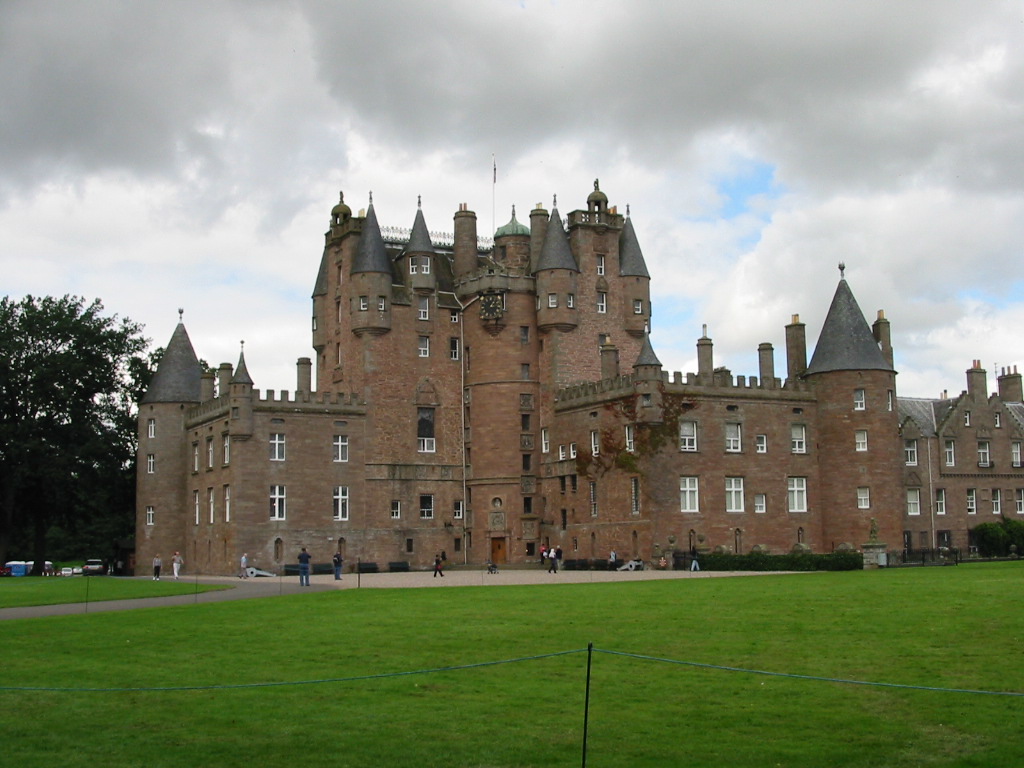


Location and setting
The castle stands near the village of Glamis in the county of Angus, in eastern Scotland. It sits within extensive woodlands and landscaped parkland that were developed over generations to provide both a working estate and formal gardens. The surrounding estate contributes to the visual impact of the house and to the opportunities for visitor walks and seasonal events.
History, architecture and ownership
Glamis has a medieval core but was enlarged and remodeled at several points, giving it the layered appearance seen today. Many of the present interiors and external features reflect work carried out in the post-medieval period, with nineteenth-century improvements that emphasized comfort and a romantic, baronial aesthetic. It remains the family home of the Earls of Strathmore and Kinghorne.
Royal connections and public profile
The castle is particularly associated with the British royal family through the Bowes-Lyon family. Elizabeth Bowes-Lyon, later Queen Elizabeth The Queen Mother, spent part of her childhood at Glamis, and her younger daughter, Princess Margaret, was born there. The castle's image has also been used in national iconography: it has appeared on banknotes and in official portrayals, for example on the Royal Bank of Scotland depiction of a ten-pound note.
Visiting, interiors and events
Parts of the castle and its gardens are open to the public. Typical visitor offerings include guided tours that focus on family rooms, historic interiors and collections, seasonal displays, and access to the walled garden and estate walks. On-site facilities often include a tearoom and a small shop; the house continues to serve as private apartments for the family alongside areas prepared for visitors.
Legends, culture and distinctions
Glamis has accumulated a range of stories and local legends, from its literary association (the title Thane of Glamis appears in Shakespeare's Macbeth) to tales of mysteries and private rooms that have long intrigued the public. Modern accounts treat these stories as part of the castle's cultural heritage rather than proven history. Together with its architectural layering and royal links, these traditions make Glamis Castle a notable example of Scotland's country-house landscape.
- Key features: medieval core, later baronial additions, formal gardens.
- Access: guided tours, garden visits, seasonal opening hours.
- Notable associations: Bowes-Lyon family, Shakespearean reference, public exhibitions.
Questions and answers
Q: What is Glamis Castle?
A: Glamis Castle is one of the most famous castles in the United Kingdom, located near the village of Glamis, in Angus, Scotland.
Q: Who lives in Glamis Castle?
A: The Earl and Countess of Strathmore and Kinghorne currently live in Glamis Castle.
Q: Who is the Queen Mother?
A: The Queen Mother's name was Elizabeth Bowes-Lyon. She grew up in Glamis Castle and is best known for being the mother of Queen Elizabeth II.
Q: Where was Princess Margaret born?
A: Princess Margaret was born in Glamis Castle.
Q: What can visitors do at Glamis Castle?
A: Parts of the castle and gardens are open to the public, and there is also a tea room for visitors to enjoy.
Q: What is Glamis Castle featured on?
A: A picture of Glamis Castle is featured on the Royal Bank of Scotland ten pound note.
Q: Are there any legends or stories associated with Glamis Castle?
A: Yes, there are many famous stories and legends about Glamis Castle.
Related articles
Author
AlegsaOnline.com Glamis Castle — Historic Scottish country house and family seat Leandro Alegsa
URL: https://en.alegsaonline.com/art/39090
Sources
- megalithic.co.uk : C.Michael Hogan, Eassie Stone, The Megalithic Portal, ed. Andy Burnham, Oct. 7, 2007
- books.google.com : Tayside Village Walks
- glamis-castle.co.uk : "Myths and Legends"