
Gloucester Cathedral
Medieval Anglican cathedral in Gloucester, England, founded as an abbey in the 7th century; noted for Norman and Gothic architecture, fan-vaulted cloisters, the tomb of Edward II, and use as a cultural and filming location.
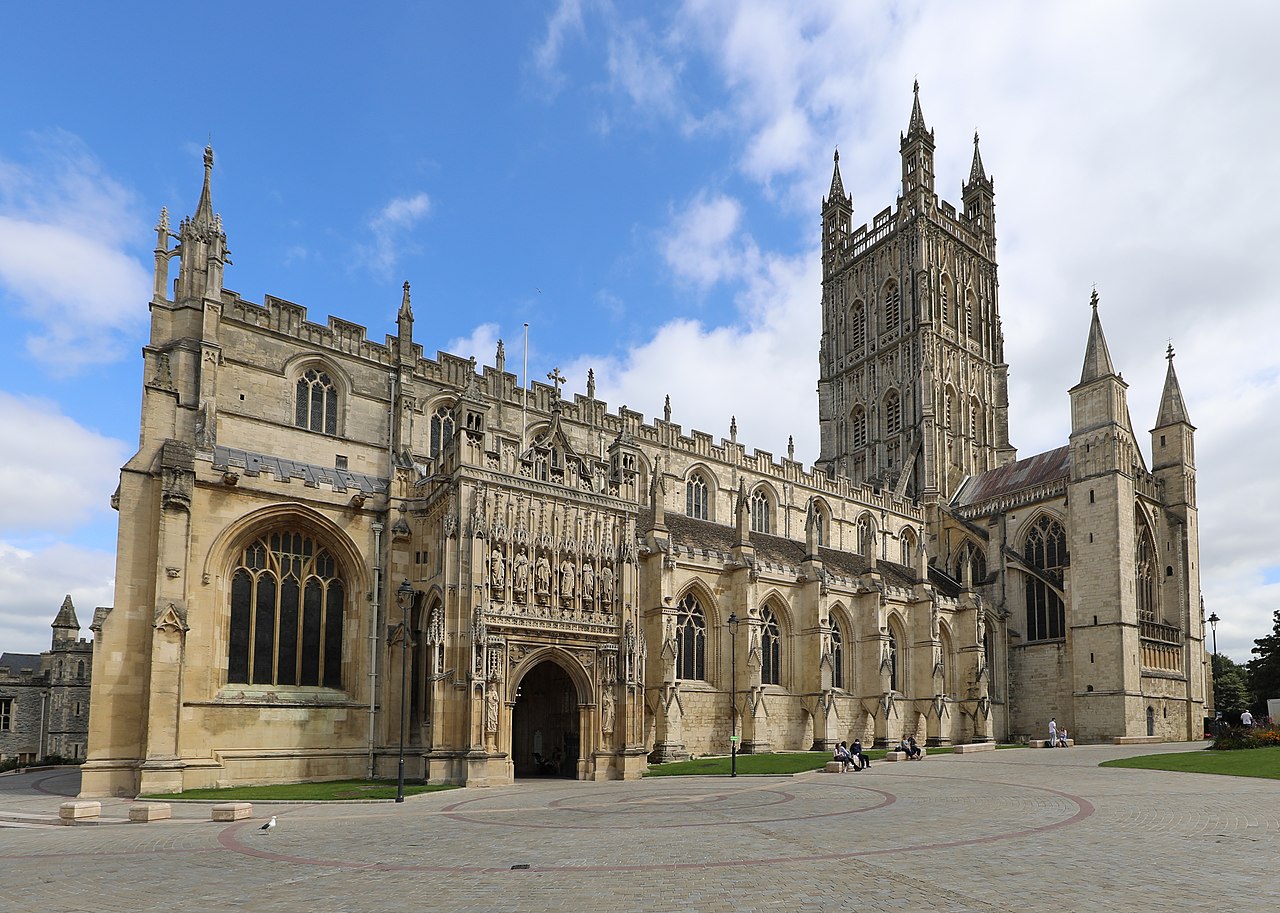
Gloucester Cathedral stands near the River Severn in the city of Gloucester. Its origins lie in a religious foundation dedicated to Saint Peter in the late 7th century; after centuries of rebuilding and enlargement it became the seat of the Bishop of Gloucester following the dissolution of the monasteries under Henry VIII in the 1540s. The site is easily located at 51°52′3″N, 2°14′48″W.
Image gallery
10 Images



History
The place began as an early medieval abbey and developed through successive phases of construction from the Norman period into the later Gothic ages. As a Benedictine house it accumulated wealth and land, then—like many monastic institutions—was surrendered to the Crown during the Tudor reorganisation of the English church. In 1541 the former abbey church was designated a cathedral, creating the new diocesan seat for the area. Subsequent centuries brought repairs, conservation and Victorian-era restoration efforts to maintain its fabric.
Architecture and notable features
The cathedral presents an interplay of styles: sturdy Romanesque and Norman elements survive alongside elaborate Gothic work. Visitors commonly note the following:
- an original Norman crypt and rounded arches;
- a richly decorated choir and nave showing Gothic detail;
- famous fan-vaulting in the choir and cloisters, one of the best-known examples of this English technique;
- medieval stained glass, carved misericords and a variety of funerary monuments.
Uses and cultural significance
Gloucester Cathedral remains an active place of worship within the Anglican tradition and hosts regular services, concerts and educational programs. Its atmospheric cloisters and interiors have attracted visitors for centuries and have been used as locations for films and television, bringing historic architecture to a wider audience. The building also plays a role in civic ceremonies and local festivals.
Burials, traditions and visitor information
The cathedral contains important memorials and burials that draw attention from historians and pilgrims alike. It is associated with royal and local history and is interpreted on site for visitors. Practical visitor information, opening hours and event listings are maintained by the cathedral’s staff; further background materials and guided tours explain its layered history and architectural development.
For more illustrations of its setting and past, readers may consult local archives and specialist studies on English cathedrals, or visit the cathedral in person to experience its scale and craftsmanship at close range. See also broader resources on England and regional heritage initiatives for context.
Saint Peter, coordinates, Anglican, Gloucester and England provide entry points for further research and travel planning.
Related articles
Author
AlegsaOnline.com Gloucester Cathedral Leandro Alegsa
URL: https://en.alegsaonline.com/art/39266