
Germania (Roman name for Germanic lands and peoples)
Roman-era term for the peoples and territory north of the Alps, used by classical writers to describe Germanic tribes and the forested lands between the Rhine, Danube and Vistula.
Overview
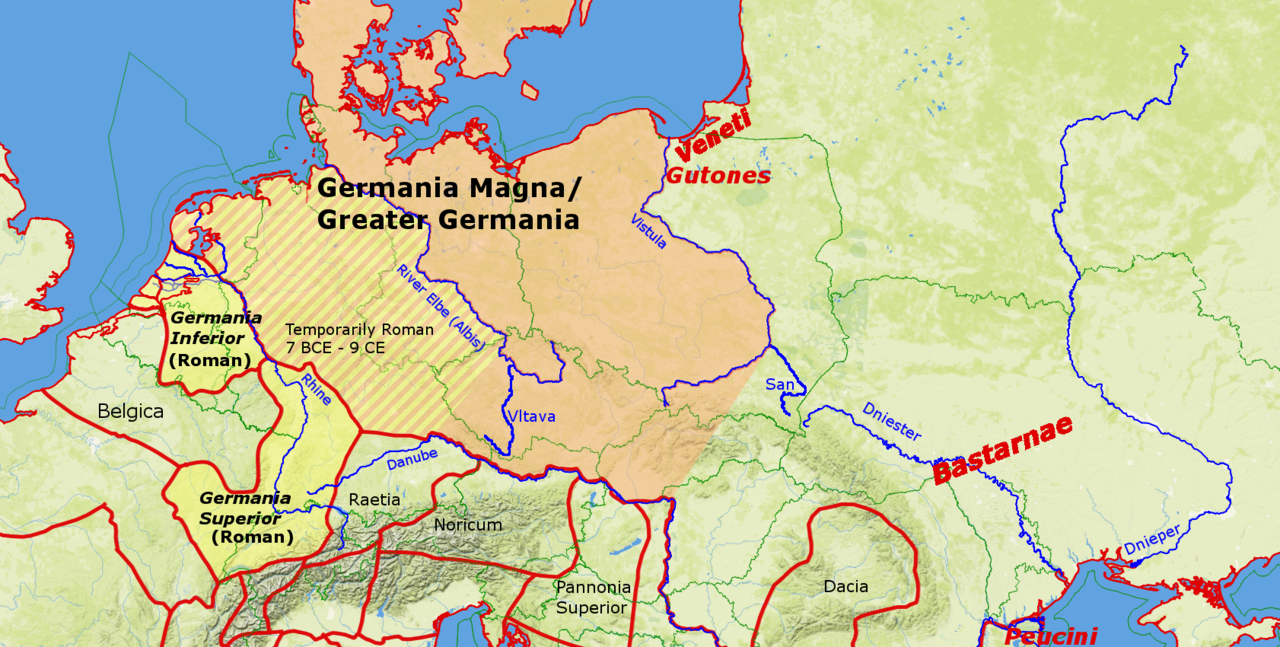
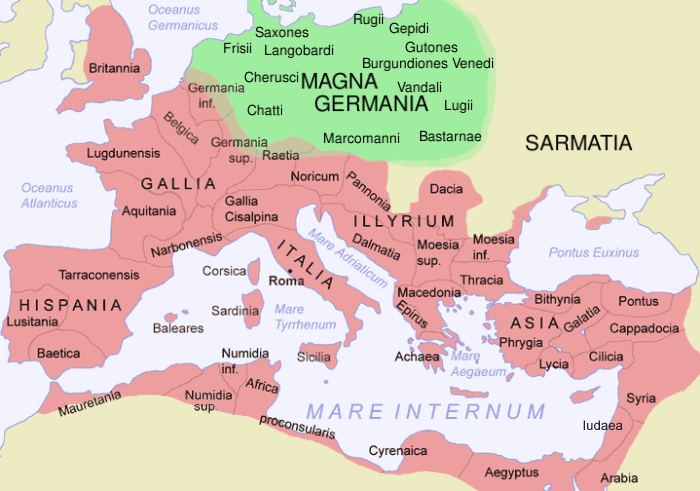
"Germania" was the name used in Roman and neighbouring accounts to designate a broad region and a collection of peoples living north of the Roman frontiers in central Europe. Initially applied to particular tribes, the name came to indicate a large area stretching roughly between the Rhine and the Vistula and from the North Sea to the Danube. Classical writers portrayed Germania as a landscape of forests, marshes and rivers inhabited by communities the Romans called Germanic.
Image gallery
10 Images






Geography and boundaries
Roman descriptions emphasized natural limits rather than precise political borders. Writers commonly located Germania:
- to the west by the River Rhenus (Rhine),
- to the east toward the Vistula and the Carpathians,
- to the north by the North Sea, and
- to the south by the River Hister (Danube).
Peoples, language and culture
The inhabitants grouped under the label "Germanic" were not a single polity but a variety of tribes with related Indo-European languages and shared cultural traits such as certain weapon types, burial customs and social arrangements. Roman ethnographers offered sketches of customs, law and character that mixed observation, stereotype and literary convention. Archaeology provides independent evidence of settlement patterns, agriculture, craft production and long-distance contacts.
Contact with Rome and historical impact
Contacts between Romans and the peoples of Germania ranged from trade and diplomacy to border warfare. Military clashes and alliances shaped frontier provinces along the Rhine and Danube. One of the best-known episodes is the defeat of three Roman legions in the Teutoburg Forest, often cited as a turning point that checked Roman expansion beyond the Rhine in the early imperial era. Over subsequent centuries, periods of migration, raiding and settlement—especially during the later Roman Empire and Migration Period—transformed the political map of Europe.
Literary and later legacy
The most famous literary account is Tacitus's ethnographic work commonly called Germania, written for a Roman audience and surviving as a key source on early Germanic societies. The name "Germania" itself persisted as a geographic and literary term in medieval and later sources and was adapted in various cultural and political contexts. Modern scholarship treats ancient literary sources alongside archaeology and linguistics to reconstruct the region's complex history.
Further reading
- Roman usage and origin of the name Germania
- Studies of tribal identities in early Germania
- The Rhine frontier and Roman border policy
- The term "Teutonic" in later sources
- Classical mentions and early chronology
- Relations between Gauls and northern peoples
- Germania as a territorial concept in antiquity
- Forested landscapes and environment
- Roman descriptions of wilderness and frontier life
- Coastlines and northern limits of the region
- Western boundaries and the Rhine (Rhenus)
- Eastern reaches and the Carpathian approaches
- The Carpathian area in antiquity
- The Vistula and eastern frontier zones
- Maritime access across the North Sea
- The Danube (Hister) as a southern margin of Germania
Questions and answers
Q: Who were the Germanic people?
A: The Germanic people were a Teutonic tribe of people who initially lived along the Rhine River.
Q: When was mention made of the Germanic people?
A: The Germanic people were first mentioned in the 4th century BC.
Q: What did the Gauls do to the name Germania?
A: The Gauls changed Germania from being a name for a people to a name for the territory.
Q: How extensive was the territory known as Germania?
A: Germania was a vast forested wilderness that ran from the west on the River Rhine to the east and the Carpathian Mountains and the River Vistula. It was bounded on the north by the North Sea and on the south by the River Hister.
Q: Did Rome know much about Germania?
A: No, Rome knew very little about Germania.
Q: Where was the northern boundary of Germania located?
A: The northern boundary of Germania was the North Sea.
Q: What was the southern boundary of Germania?
A: The southern boundary of Germania was the River Hister (Danube).
Related articles
Author
AlegsaOnline.com Germania (Roman name for Germanic lands and peoples) Leandro Alegsa
URL: https://en.alegsaonline.com/art/38476
Sources
- smithsonianmag.com : "The Ambush That Changed History"
- thelatinlibrary.com : "Germania"
- unrv.com : "Germania"
- villa-rustica.de : "2. The Roman Occupation of Southwest Germany"
- news.bbc.co.uk : "Roman 'disaster' that shaped Europe"
- kalkriese-varusschlacht.de : "The Varus Battle"