
George Biddell Airy: Astronomer Royal, mathematician, and scientific administrator
Overview of Sir George Biddell Airy (1801–1892), his scientific work in astronomy and mathematics, role as Astronomer Royal, and his lasting legacy and controversies.
Overview
Sir George Biddell Airy (27 July 1801 – 2 January 1892) was a prominent English mathematician and astronomer who served as Astronomer Royal from 1835 until 1881. During a long and active career he combined theoretical work with observatory administration, producing contributions in celestial mechanics, optics, geodesy and mathematical physics. His name survives in several technical terms, and his tenure at the Royal Observatory, Greenwich, shaped modern timekeeping and the adoption of the Greenwich meridian as a reference for navigation and mapping.

Image gallery
10 Images


Scientific contributions
Airy worked across several fields. In mathematics he developed methods for solving linear differential equations that later led to the concept of the Airy function in wave and diffraction theory. In optics he studied diffraction patterns; the central bright spot of a circular aperture’s diffraction image is known as the Airy disk. In applied mechanics he introduced a stress function that simplified two-dimensional elasticity problems. He also engaged with problems of planetary motion and orbital calculation, producing tables and approximations used by observers of his time.
Role as Astronomer Royal and practical work
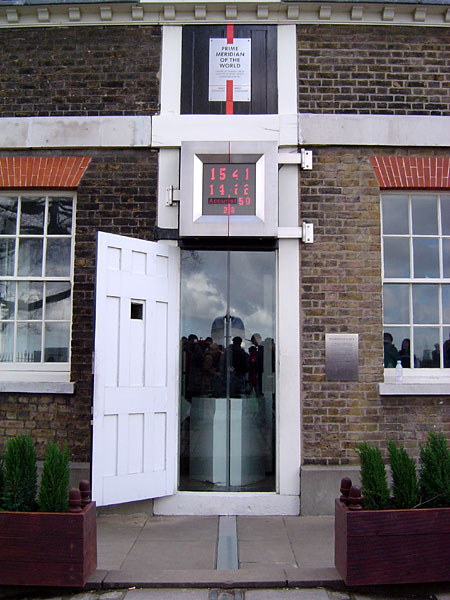
As head of the Royal Observatory, Greenwich, Airy modernized instruments, organized observations, and emphasized precision in timekeeping—an essential service for navigation and commerce. He established the site and instrumentation that fixed the observatory's meridian, which became the basis for local civil time and later played a central role when an international prime meridian was adopted. His office coordinated work on star positions, chronometers and geodetic projects that linked astronomical and terrestrial measurements.
Notable ideas and eponyms
- Airy function: a solution to a second‑order linear differential equation that appears in quantum mechanics and optics.
- Airy disk: the diffraction pattern of a circular aperture, important in imaging and telescope design.
- Airy stress function: a mathematical device for solving planar elasticity problems.
- Airy points: positions used to support a beam so as to minimize bending during precision measurement.
Controversies and legacy
Airy's long administration also attracted criticism. The handling of external claims concerning the predicted planet Neptune has been described as contentious: historians note that delays and procedural choices at Greenwich contributed to a perception that Britain missed a chance to claim priority. Evaluations of this episode have varied, but it remains a well-known blemish on an otherwise influential career. Despite such disputes, Airy was widely respected in his lifetime and played a formative role in organizing practical astronomy in Britain.
Further reading and resources
For concise biographical summaries, technical discussions and archival material, see the following resources:
- Biography and career overview
- Mathematical works and Airy functions
- Astronomical contributions and observatory records
- Role as Astronomer Royal
- Details on instrumentation and meridian work
- Contemporary correspondence and debates
- Studies on planetary theory and orbit calculations
- Optics and diffraction studies
- Geodetic and terrestrial measurements
- Elasticity and engineering applications
- Selected publications and historical sources
This article summarizes widely accepted aspects of Airy's life and work while avoiding disputed specifics. His blend of theoretical insight and institutional leadership left an enduring imprint on 19th‑century science, and terms bearing his name remain in active use across optics, mechanics and astronomy.
Related articles
Author
AlegsaOnline.com George Biddell Airy: Astronomer Royal, mathematician, and scientific administrator Leandro Alegsa
URL: https://en.alegsaonline.com/art/38183