
George Catlin: Painter, Author, and Early Documentarian of Native American Life
American painter and writer George Catlin (1796–1872) traveled the early American West to record Native American peoples in paintings and writings; his 'Indian Gallery' influenced art, museums, and ethnography.
Overview
George Catlin was an American painter and author born in Wilkes-Barre, Pennsylvania. He is best known for traveling into the American interior to record the lives and appearances of Native American peoples in the Western United States. Catlin combined portraiture, landscape, and written observations to create a large body of work intended as both art and ethnographic record. He died in Jersey City, New Jersey, where he had returned after decades of travel and exhibition (Wilkes-Barre and Jersey City mark his beginning and end).
Image gallery
10 Images




Travels and major projects
In the early decades of the nineteenth century Catlin left a brief legal career to concentrate on painting. He traveled up rivers and across plains, visiting camps and settlements and asking permission to paint scenes of daily life, ceremony, and posed portraits. His best-known effort was the "Indian Gallery," a touring collection of paintings and objects that he intended to preserve as a visual record of peoples he feared were changing rapidly under pressure from expansion.
Subjects and method
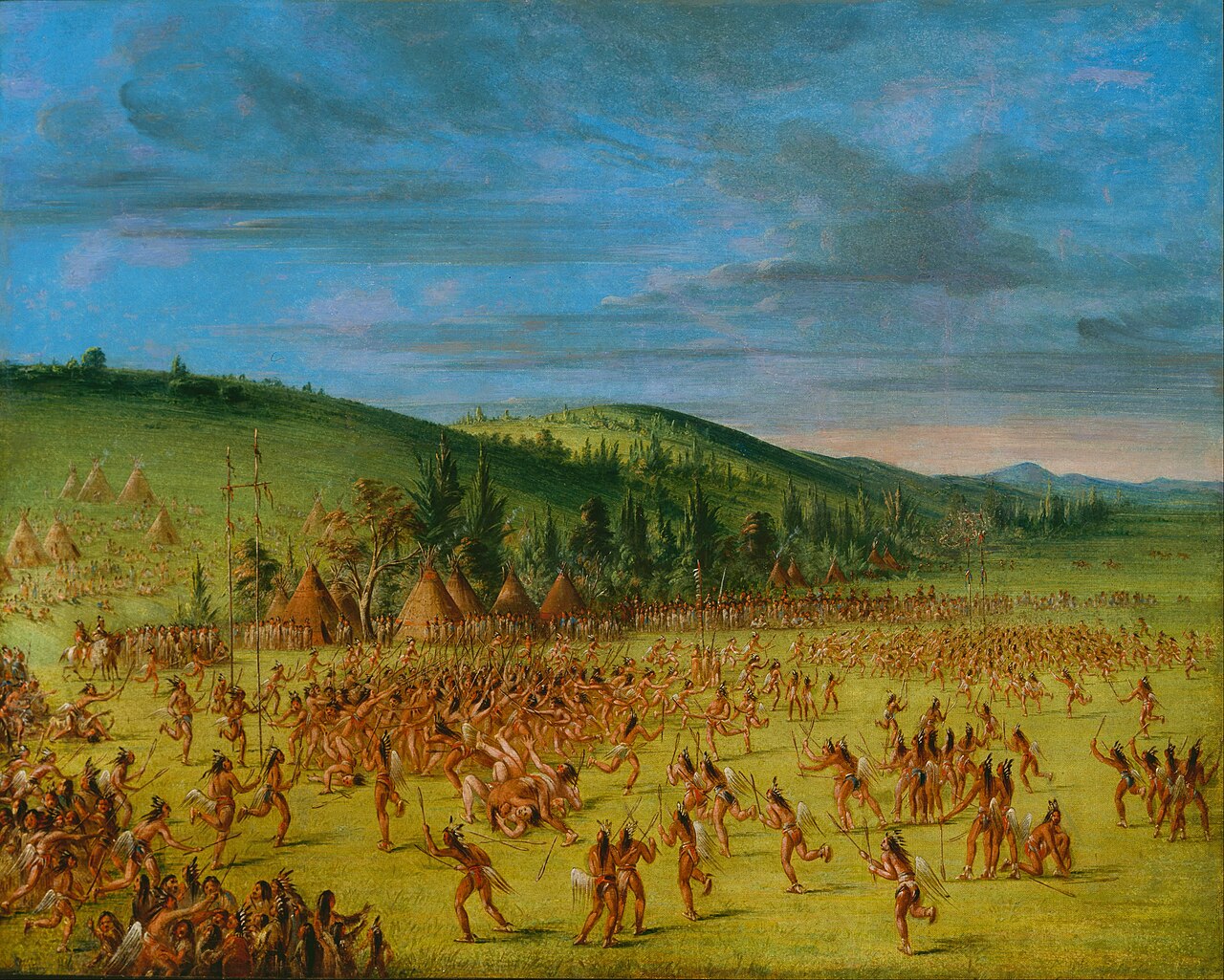
Catlin worked in oil and watercolor, sketching on site and completing larger studio paintings later. His subjects ranged from individual portraits to group scenes of hunting, ceremony, and council. He often included detailed notes on dress, ritual, and material culture, which he published alongside engraved plates and written accounts. While his compositions could emphasize drama and character, he aimed to document facial features, costume, and tools with care.
Publications and exhibitions
Beyond paintings, Catlin wrote travelogues describing his journeys and the peoples he met, combining anecdote with observation. He exhibited his collection in American cities and in Europe, hoping to raise awareness and funds. These exhibitions introduced many viewers to Plains cultures for the first time and made Catlin a recognized public figure, though he often struggled financially while promoting his work.
Legacy and critical perspective
Catlin's work is valued as an early visual archive of Indigenous lifeways at a time of rapid change, and many of his canvases entered museum collections or public exhibitions. At the same time historians and Indigenous scholars note limitations: his perspective was that of an outsider, and some images reflect the romantic or theatrical conventions of his era. Today Catlin is studied both for the ethnographic detail of his images and for how those images shaped nineteenth-century views of Native American peoples.
Collections and notable facts
- Catlin amassed hundreds of portraits and scenes that he toured as the "Indian Gallery."
- He published illustrated narratives to accompany his paintings, blending art and reporting.
- Many of his paintings are now held by major American museums and institutions, where they remain important but sometimes contested sources for the study of Indigenous history.
For introductions to his life and work, consult museum overviews and the published editions of his travel accounts, which provide examples of his images and the commentary he used to explain them.
Related articles
Author
AlegsaOnline.com George Catlin: Painter, Author, and Early Documentarian of Native American Life Leandro Alegsa
URL: https://en.alegsaonline.com/art/38196