
George Boole: mathematician and founder of Boolean algebra
English mathematician and logician whose 19th-century algebra of logic became the foundation for modern digital circuits, search, and computer science.
Overview
George Boole was an English mathematician and philosopher, born on 2 November 1815 and died on 8 December 1864. He is best known for creating an algebraic system for logic, now called Boolean algebra, which formalizes reasoning with binary values and logical operations.
Image gallery
10 Images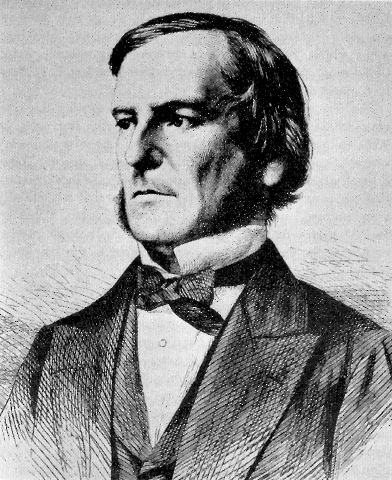


Main contributions
Boole developed a symbolic approach that treated logical statements algebraically. In this system, logical combinations such as AND, OR and NOT correspond to algebraic operations. His ideas showed that logic could be expressed with equations and manipulated like other algebraic structures. These concepts later became central to the design of switching circuits and to theoretical computer science.
Life and academic career
Mostly self-taught in mathematics, Boole began by teaching and producing elementary textbooks before gaining broader recognition. He was appointed to an academic chair at Queen's College, Cork, where he continued research and teaching. His work combined interests in algebra, differential equations and the formal foundations of probability and logic. He married Mary Everest, who helped preserve and promote his intellectual legacy.
Selected works
- The Mathematical Analysis of Logic (1847) — an early statement of symbolic logic ideas.
- An Investigation of the Laws of Thought (1854) — a more complete presentation of his algebraic approach to logic and probability.
Legacy and influence
Boole's algebra provided the language and rules later used to design electrical switching systems and digital circuits. The term "Boolean" now names a class of algebraic structures and operations used in programming, database queries and search engines, as well as in theoretical work on computation and formal logic. Modern computer hardware and software trace part of their conceptual foundations to his ideas.
Notable facts and distinctions
Although his original work was developed in the mid-19th century with philosophical as well as mathematical aims, its practical relevance became clear only after electronic switching made binary logic physically realizable. Today Boole is remembered both for formal advances in symbolic logic and for founding an algebraic tradition that underpins much of information technology.
Further reading and reference links: biographical treatments, technical introductions.
Questions and answers
Q: When was George Boole born?
A: George Boole was born on November 2, 1815.
Q: What was George Boole’s nationality?
A: George Boole’s nationality was English.
Q: What were George Boole’s areas of expertise?
A: George Boole’s areas of expertise were mathematics and philosophy.
Q: When did George Boole pass away?
A: George Boole passed away on December 8, 1864.
Q: How would you describe George Boole’s contribution to mathematics?
A: George Boole was a pioneer in symbolic logic and Boolean algebra, which laid the groundwork for modern computer programming and electronic circuitry.
Q: What impact did George Boole have on philosophy?
A: George Boole’s work in logic was influential in the development of analytic philosophy.
Q: What is George Boole commonly referred to as?
A: George Boole is commonly referred to as the “father of the digital age”.
Related articles
Author
AlegsaOnline.com George Boole: mathematician and founder of Boolean algebra Leandro Alegsa
URL: https://en.alegsaonline.com/art/38185